
Road to Solutions — Forestry, Agriculture & Food Systems
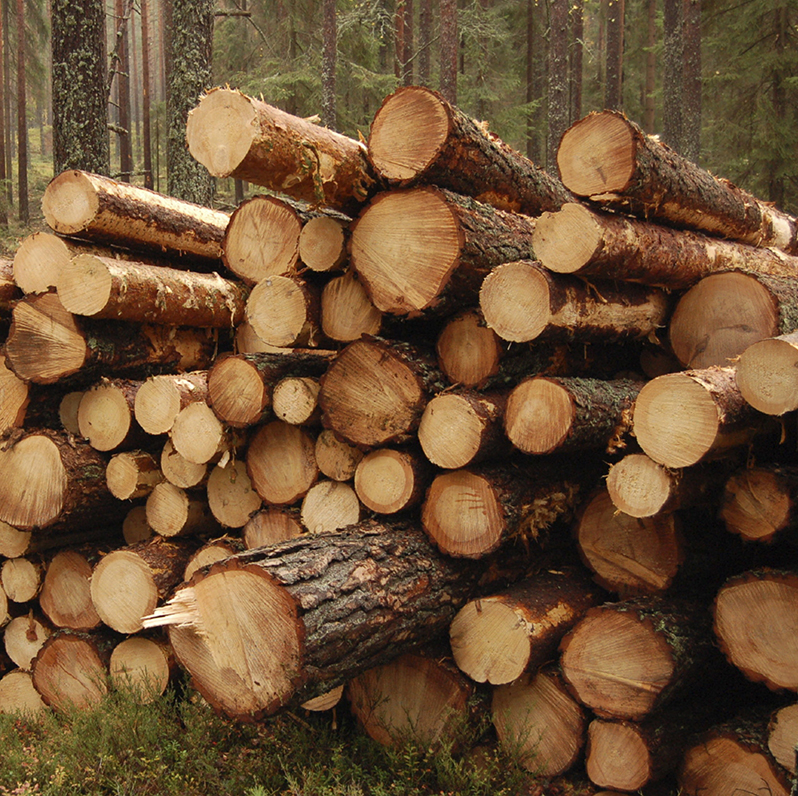
Exploring Barriers to Prescribed Fire Adoption in the Northeast
Prescribed fire is increasingly being employed in the United States to reduce flammable material, control unwanted species, enhance habitat, support culturally important species, and train practitioners. In the Northeast, however, prescribed fire is not widely used despite its historical precedent.
Recent large wildfires in Massachusetts and Quebec demonstrate that the Northeast is not immune to wildfires, and project team leader Rose Abramoff believes prescribed fire could be a valuable land management tool in Maine.
While prescribed fire is used for a wide variety of objectives it can, in some contexts, help reduce surface fuels and mitigate the risk of fire to Maine’s forests, infrastructure, and livelihoods. This could be particularly important in Maine which is the most forested state and has a predominantly forest-based economy.
New Undergraduate Internship Builds Community and Food Security One Seed at a Time
Food insecurity remains a significant public health challenge in Maine. Local food systems offer solutions to food insecurity, yet community gardens, food pantries, and other partners need support to implement place-based, collaborative approaches.
This project aims to provide that support by piloting an undergraduate internship in UMaine’s School of Food and Agriculture, building on long-standing interdisciplinary collaborations between the School of Food and Agriculture, Cooperative Extension, and the College of Education.
Rogers Farm, UMaine’s 30-year-old demonstration and teaching site, will serve as the homebase for the internship. The student intern will assist with planting and harvesting crops, lead educational events like cooking demonstrations, and collaborate with local organizations to donate the produce.
Community partners including schools and non-profits will play a role in each step — from seed-to-plate — demonstrating that local solutions, rooted in food production and distribution, can help ease food insecurity.
Nourishing Mainers: Understanding the Potential of Local Seafood
Maine has the second-most rural coastline in the continental United States with the second-highest seafood landings, making Maine the most fisheries-dependent state in the continental United States. While the economic impact of these fisheries and aquaculture is well-studied, the role that these industries play in Mainers’ food security and diets is not.
“Limited attention has been devoted to understanding the contributions that marine species play in the local food system or their role in human health and well-being in Maine,” said Stoll. This knowledge gap is notable because seafood is an important source of nutrients, and there are high rates of food insecurity in Maine. Additionally, Maine has set the ambitious goal of increasing the proportion of locally-sourced food consumed in the state to 30% by 2030.
Empowering Maine’s Livestock Farms: Training the Next Generation and New Farmers in Sustainable Reproductive Practices
Livestock owners have long depended on the use of artificial insemination (AI) for impregnation. One benefit of AI is that it allows farmers to improve the genetics of their livestock; a Maine farm producing grass fed beef, for example, can source semen from a grass fed New Zealand bull. Genetic diversification via AI can help livestock gain weight faster and improve their disease resistance. AI can also improve on-farm safety because dangerous boars and bulls become obsolete. There’s also a biosecurity benefit because farms no longer have to bring male animals — and potentially disease — onto the farm. These benefits may ultimately improve a farm’s economic bottomline.
Hydrologic and hydraulic performance of novel shallow wells in agricultural landscapes (WRRI 104b 2023)
This project will leverage stakeholder engagement and participation to address water access in agricultural settings, of great importance to the state of Maine as climate change-driven droughts become more frequent and severe. The overarching goal is to assess novel shallow well performance in an agroecological context. Specifically, the team will investigate how the novel shallow well performs over a range of hydrologic conditions.
Socio‐Economic and Environmental Analyses for Using Woody Biochar to Conserve Water and Sustain Agriculture in Maine (WRRI 104b 2023)
Water resources will become scarcer in the future, and agricultural systems in Maine are facing the threat of increasing drought. As an iconic crop, wild (or lowbush) blueberries (Vaccinium angustifolium Ait.) may undergo severe drought impacts because they grow on sandy soils with a low water holding capacity. Biochar additions could be a prominent solution to increase soil water holding of sandy soils and crop productivity.
Feed Your Body, Not the Trash Bin
The goal of this project is to reduce school food waste volume, along with related social, economic and environmental measures like cost, student nutrition, and green house gas (GHG) emissions. while simultaneously improving nutrition intake. The project aims to provide insight into the opportunity to implement food waste reduction programs across Maine schools, aiming to develop a model program for school food waste reduction and nutrition improvement that will provide important economic, education, health, and climate benefits for students and the community. Daily food waste tracking and periodic food waste audits will be used to assess performance at each participating school.
Developing and Deploying a Risk Framework for PFAS Management in Rural America: Connecting Predictive Models of PFAS Contamination with Risk Perceptions to Guide Management Decisions (WRRI 104g)
Across the United States, there is growing concern about the widespread occurrence of PFAS (per- and polyfluoroalkyl substances) in our water, our food, and our bodies stemming from exposure through landfills, pesticides, atmospheric deposition, consumer products and fire suppressants. This is particularly true in rural America, where the land application of municipal and industrial biosolids to agricultural fields or septage disposal sites may be further contributing to PFAS contamination in groundwater and surface water.
Tracking the Effects of Forest Disturbances and Climate Change on Headwater Streams in Northern Maine (WRRI 2021)
Many northern Maine areas with a history of large-scale forest harvest operations are now experiencing rapid changes in climate conditions. Researchers from the University of Maine System are partnering with diverse stakeholders to develop tools to support watershed management decision-making that is based in solid scientific information and accounts for multiple objectives.
Integrated Assessment of Alternative Management Strategies for PFAS-contaminated Wastewater Residuals (WRRI 2021)
PFAS, also known as “forever chemicals,” are used in a range of consumer products from nonstick cookware to breathable rain gear and food packaging. Though PFAS have been in use since the late 1950s, it is only in the last 20 years that their toxicity has been well documented. Because these chemicals do not break down, they eventually end up in the wastewater streams sent to treatment plants. During treatment, much of the PFAS are removed from the wastewater and become concentrated in the wastewater sludge, or residuals, that remain. In 2019, the state stopped spreading wastewater residuals on farm fields due to the discovery of unsafe levels of PFAS in virtually all samples and PFAS contamination at several Maine dairy farms. An interdisciplinary research team is examining the environmental, social and economic consequences of a range of management options for PFAS-contaminated wastewater residuals.
Building Knowledge and Capacity for Community-Led Coastal Stewardship
Marine ecosystems and the human communities that depend on them are complex and dynamic social-ecological systems and knowledge of these dynamics is needed to sustain both ecological and human communities. Yet fine-scale data relevant to specific places are often lacking. The University of Maine Darling Marine Center (DMC), in partnership with the Damariscotta-Newcastle Joint Shellfish Committee and Lincoln Academy, is developing a community science research program in the Damariscotta River Estuary. The team is working with local scientists, students, educators, harvesters, and municipal leaders to collect information on shellfish and document how the estuary is changing.
Exploring the Potential for Reusable Take-out Packaging in Maine
Maine residents are generating more waste per capita over time, despite state-initiated goals to reduce this number. Much of the waste stream is made up of single-use packaging, including take-out containers. Reusable packaging models for restaurants are emerging across the United States and around the world and early research suggests that it can save restaurants money, build customer loyalty, and reduce negative environmental impacts. But very little is known about the costs and benefits of different models. This project will test reusable packaging pilot programs with participating restaurants and municipalities to better understand how these systems might operate in Maine.
Increasing Maine Consumer Food Waste Education and Awareness
The Mitchell Center has brought together a faculty/student food waste team to develop a Maine food waste education and action campaign as a key solution for ending food waste in Maine. The overall effort leverages support from the Maine Department of Environmental Protection (DEP), the University of Maine (UMaine), and key Maine food system stakeholders, to enable the team to create a statewide food waste education campaign. The campaign targets Maine residents, communities, schools, organizations and businesses and provides the “why” and “how” to end wasted food and food loss statewide.
Building Maine’s Circular (Zero-Waste) Food System Infrastructure
University of Maine System faculty and students are collaborating on a circular food system research team to focus on solutions for food waste in Maine. Development of Maine’s circular food system will end food waste by insuring that food is put to its best and highest use and never wasted. The research team is focused on building the infrastructure needed to support Maine farm food processing and meet both food waste and food insecurity challenges.
Harnessing Spatiotemporal Data Science to Predict Responses of Biodiversity and Rural Communities under Climate Change
In response to a changing climate, populations of plants and animals move to more hospitable locations. Predicting where species will end up, and how New England farmers and rural communities need to plan for such changes, is the focus of a new interdisciplinary research initiative led by the University of Maine. The project’s goal is to better understand how plant and animal species — including forest plants, wildlife, diseases transmitted from animals to people, and agricultural crops — will respond to a changing climate in the next century.
Archived Projects
Fishing in Hot Water: Defining Sentinel Indicators of Resilience in the American Lobster Fishery
Farms and Rivers for the Future (WRRI 2020)
Food Waste Management: Empowering Maine Businesses Toward Sustainability
Helping Maine Farmers Succeed in a Changing Climate
Assessing the Climate Mitigation Potential of Maine Agriculture
Making Maine’s Local Food System Sustainable: Opportunities to Address Hunger and Reduce Waste
The Emergent Risks of Food Waste Recovery: Characterizing the Contaminants in Municipal Solid Waste
Mitigating Environmental-Human Determinants of Tickborne Disease Risk in Acadia National Park
Maine Farm to Institution Food Project
Improving Weed Management on Organic Farms
Mobilizing to Fight the Emerald Ash Borer
Engaging Maine Blueberry Growers to Develop Tools for Native Bee Use and Conservation
Sustainability of widespread forest certification and the Maine Forest Practices Act
Sustainable Food Systems Research Collaborative
Enhancing Dialogue Between Wild Blueberry Growers and Researchers
Understanding An Insect Threat to Maine’s Hemlock Trees – Unity College
Evaluating Interactions Between Wild Turkeys and Maine Agriculture – University of Maine at Augusta