

SEED Model
What is the Seed Model?
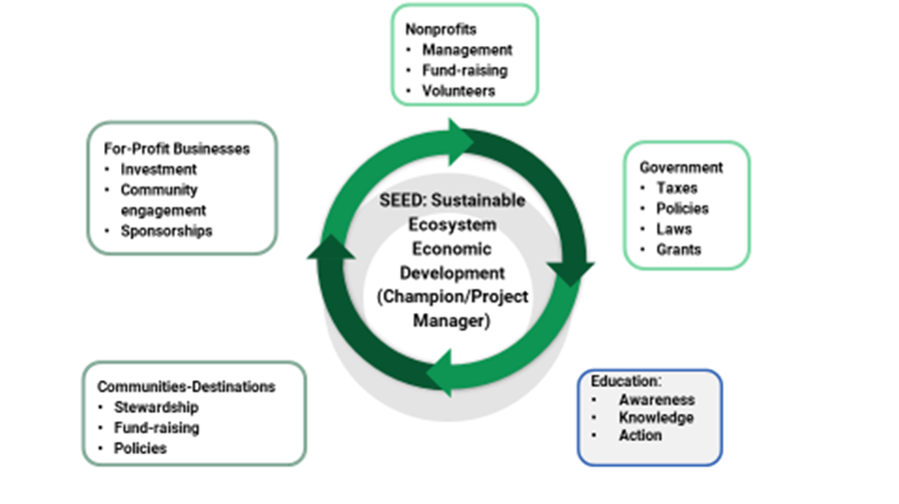
The SEED (sustainable ecosystem economic development) model is a collaborative system that unites stakeholders with unique, valuable knowledge, skills, and resources. Together, the collaborations create synergies to help with sustainable economic development in rural, remote areas.
In essence, we are developing a sustainable ecosystem!
We plan to test the system with one or more small pilot projects, working with a few “hidden gem” towns in rural, remote communities.

SUSTAinability
A critical part of the SEED model involves the incorporation of sustainable practices in every part. As shown in the classic “triple bottom line” approach, each stakeholder uses their knowledge and resources to integrate environmental, economic and social sustainability practices into the ecosystem.
TEST PILOT of the seed model
Small Rural Town Revitalization in Maine: Test Pilot of the SEED Model
By Nory B. Jones and Manuel Wörsdörfer
Abstract: The Sustainable Ecosystem Economic Development (SEED) model is a methodology designed to facilitate revitalization in small towns and rural communities. During the 2023–2024 academic year, our team of faculty advisors and students served as project champions to implement a pilot test of this model, leveraging the unique expertise and resources of relevant stakeholders to support a small town in rural Maine. The approach included communication and relationship-building with the town manager and stakeholders, a knowledge summit to discern needs and capabilities, an iterative process of resource-needs mapping, and providing deliverables based on the town’s requirements with sustainable practices.