
UMaine innovation accelerates nuclear construction for Kairos Power
Advanced 3D printing and digital engineering at the Advanced Structures and Composites Center help solve one of the nuclear industry’s biggest challenges — building faster, cheaper and smarter.
For nearly a decade, Kairos Power has pursued an iterative, hardware-driven approach to reducing cost, schedule, and technical risk for next-generation nuclear technology. In collaboration with Oak Ridge National Laboratory (ORNL), Kairos Power and the University of Maine collaborated on approaches that could improve speed and efficiency in nuclear construction using additive manufacturing.
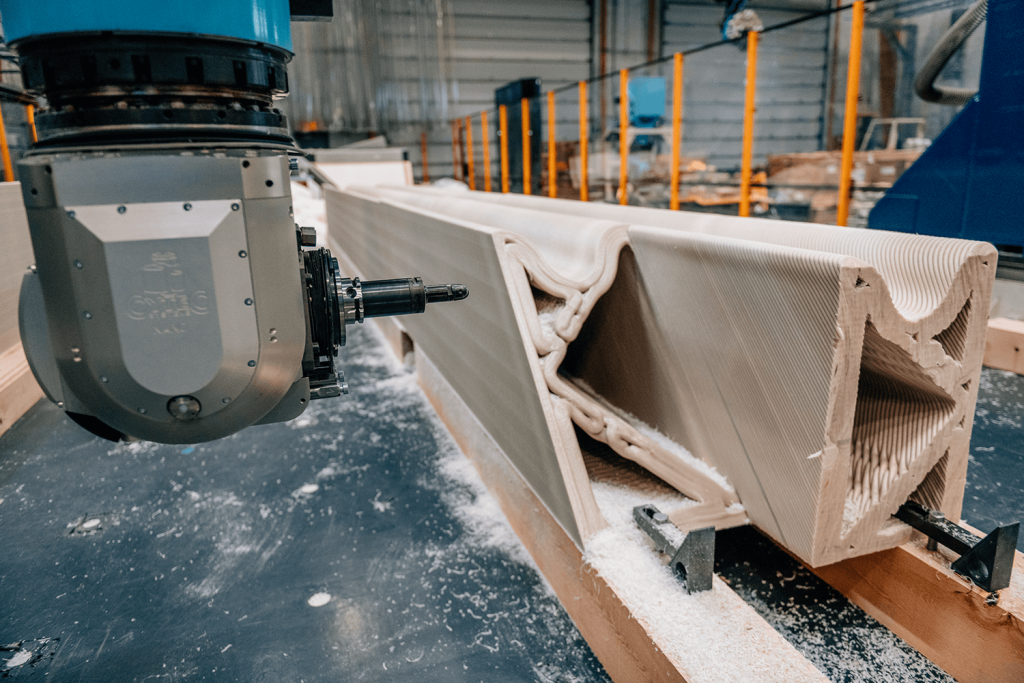
Engineers at UMaine’s Advanced Structures and Composites Center (ASCC) and ORNL designed and 3D-printed specialized sinusoidal concrete form liners to fit into a steel frame, creating a hybrid casting system for prefabricated structural elements that cuts costs and accelerates site construction.
Using its large-scale additive manufacturing capabilities, the ASCC produced full-scale wall segments measuring approximately 3 feet thick and 27 feet tall, providing a critical demonstration of how advanced manufacturing can support faster, more precise and cost-effective nuclear construction.
“This demonstration is a crucial step to expanding the use of precast construction to build our plants with greater efficiency and enhanced performance on significantly faster timelines compared to conventional methods,” said Kairos Power Chief Technology Officer Ed Blandford.
Large-scale manufacturing could reshape energy infrastructure
This partnership in innovation offers a glimpse of how large-scale manufacturing could reshape the future of American energy infrastructure.
“There was no margin for error. We met a commercial deadline with massive, high-precision components, a feat that felt astonishing for an academic center,” said Susan MacKay, the chief sustainable materials officer at the ASCC. “This partnership demonstrates that UMaine’s capability is truly operating at the speed of industry.”
The ASCC is home to the world’s largest polymer 3D printer, capable of printing hundreds of pounds of material per hour. That industrial scale allows UMaine to meet commercial deadlines typically reserved for private industry, a rare capability in higher education.
The work is part of the Specialized Materials and Manufacturing Alliance for Resilient Technologies, or SM²ART. The public-private partnership solves industry challenges and lowers manufacturing costs by using locally sourced materials and leveraging the advanced production capabilities of UMaine and the Department of Energy’s (DOE) Oak Ridge National Laboratory (ORNL) in Tennessee.
A model for how universities and national labs can work together
“UMaine is a model for how universities and national labs can work together to strengthen American manufacturing,” said Ryan Dehoff, director of DOE’s Manufacturing Demonstration Facility at ORNL. “Partnerships like SM²ART give industry a direct path to the tools and talent needed to build the nation’s next generation of energy and defense infrastructure.”
The Manufacturing Demonstration Facility is supported by DOE’s Advanced Materials and Manufacturing Technologies Office, is a nationwide consortium of collaborators working with ORNL to innovate, inspire and catalyze the transformation of U.S. manufacturing.
For more than half a century, nuclear energy has supplied the United States with steady, reliable electricity. Today, it generates nearly half of the nation’s carbon-free power and supports tens of thousands of high-paying jobs. But despite its promise, cost overruns and construction delays have long hindered new nuclear infrastructure — a barrier that threatens energy security at a moment when artificial intelligence (AI) data centers and other forefront technologies are driving unprecedented demand for power.
Meeting commercial timelines without sacrificing precision
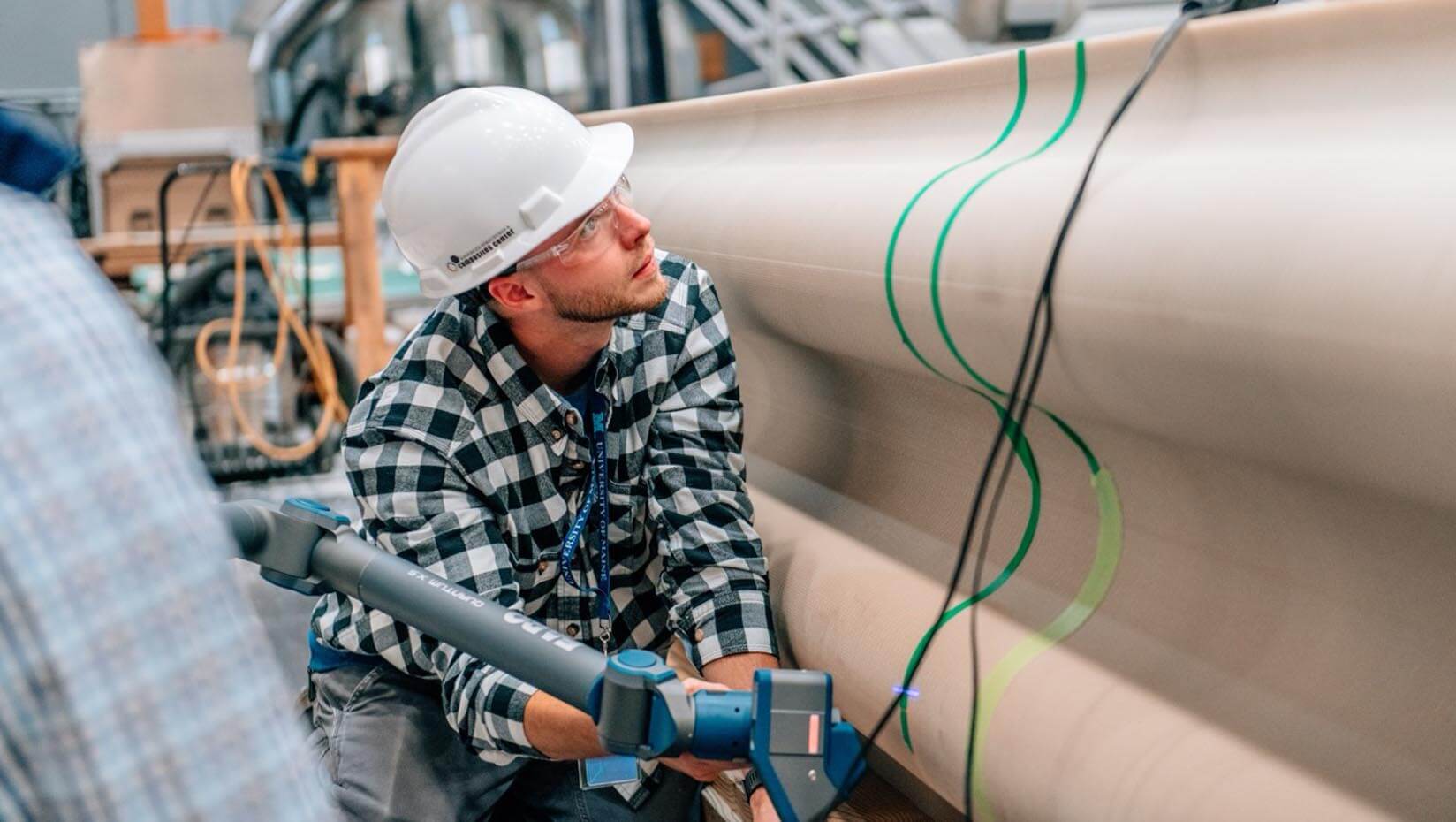
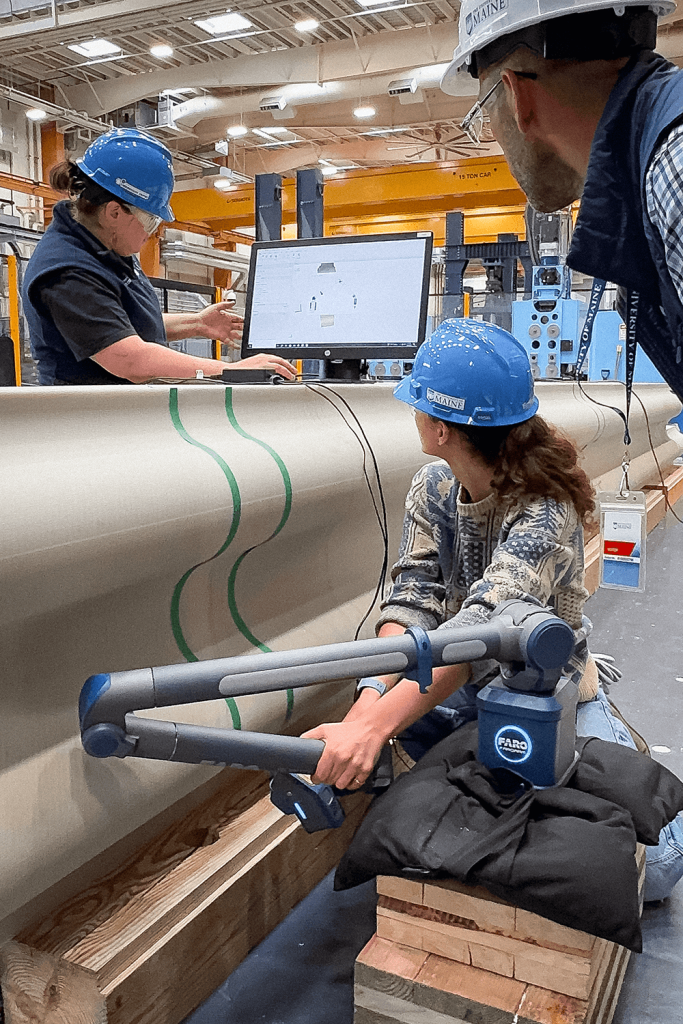
The ORNL, Kairos Power, and UMaine collaborations developed an approach that could meet commercial timelines without sacrificing precision. This required UMaine’s ASCC printing team to produce the longest forms ever made at the center, followed by precision machining to tight tolerances. The ASCC’s new scanning and metrology team verified every curve and angle against the digital model, ensuring tight geometric tolerances and part quality.
“This project was made possible by UMaine’s ASCC leading expertise in large-scale additive and convergent manufacturing, composites materials and structural applications, and a business model responsive to industry needs. The 29-year old center is housed in a 150,000-square-foot laboratory with 400 personnel, and has a long history of keeping pace with the high-stakes schedules typically associated with private industry,” said ASCC Executive Director Habib Dagher. “It’s an unusual level of performance for an academic institution — and a critical advantage as the U.S. seeks to modernize its energy infrastructure.”
Beyond physical infrastructure, UMaine is building digital assurance through its Material Process Property Warehouse (MPPW). This system uses AI and machine learning to capture and track every step of large-scale additive and convergent manufacturing. By creating a “digital thread,” the MPPW allows components to be “born certified” — a breakthrough that reduces cost, regulatory delays and risk for industries like nuclear energy and defense.
UMaine’s growing role in workforce development
The project also highlights UMaine’s growing role in workforce development. Students, graduate researchers and industry professionals work directly on projects like this, gaining real-world experience in high-demand fields such as advanced manufacturing, energy and defense. This approach helps build a new generation of skilled workers who can translate complex science into industrial solutions.
While Kairos Power is focused on nuclear power, the university’s innovation has applications far beyond nuclear energy. The same fast, large-scale manufacturing paired with digital certainty can be used for defense, transportation, housing, and AI infrastructure.
For Kairos Power, the partnership with SM2ART solved a critical construction challenge. For the nation, it demonstrated how innovation in Maine is helping build infrastructure faster, cheaper and smarter — a key step toward meeting the energy demands of the future.
The SM2ART program is funded by the Department of Energy’s Advanced Materials and Manufacturing Technologies Office. AMMTO supports a globally dominant U.S. manufacturing and industrial base for a resilient energy system and secure supply chain. Its mission is to drive and inspire innovation that transforms materials, manufacturing, and workforce and advances America’s energy economy.
Contact: MJ Gautrau, mj.gautrau@maine.edu