

Engineering more function into materials
The Howell Biointerface Engineering Lab investigates how interfaces, material structure, biological systems, and scalable manufacturing can create sophisticated function with fewer continuous inputs to build a more sustainable future.
Our Approach
Engineering at the Interface
Our work begins at interfaces: the places where materials, organisms, fluids, molecules, and environments meet. By controlling what happens there, we develop materials that do more through structure, growth, and fabrication.
Passive and low-energy function
We embed useful behavior into material structure so it can occur with less continuous power, chemical treatment, or maintenance.

Growing and transforming materials
We use organisms and biological processes as active participants in creating or modifying functional materials.

Resource-conscious manufacturing
We develop scalable, reusable, feedstock-conscious, and locally accessible ways to produce advanced function.
Learning from nature’s operating strategies
We study growth, replenishment, dynamic interfaces, distributed transport, and adaptation as operating strategies for engineering materials and systems.
Research in practice
Across different applications, our projects ask how more function can be built into material structure, biological processes, and scalable manufacturing.
Fungal-grown coatings
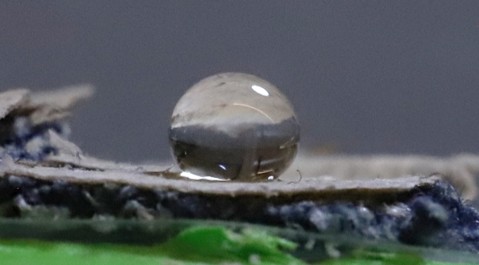
We grow thin fungal mycelial layers across paper, textiles, and wood to create water-, oil-, and oxygen-resistant surfaces through biological self-assembly.
Cellulose-based functional coatings
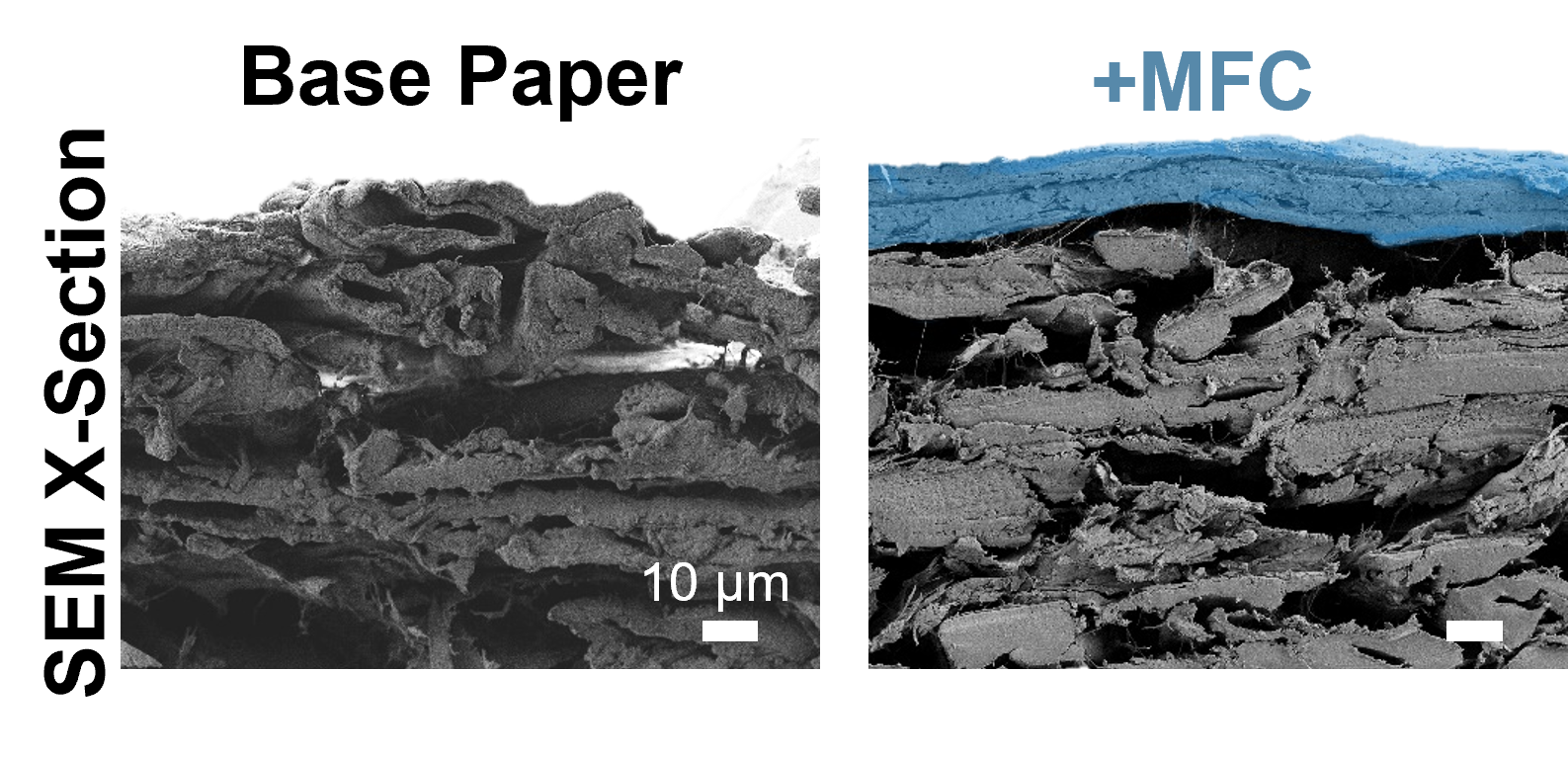
We develop vacuum-assisted and single-step methods for applying cellulose nanofibrils to paper, connecting renewable feedstocks with controllable, scalable barrier manufacturing.
Passive biointerfaces
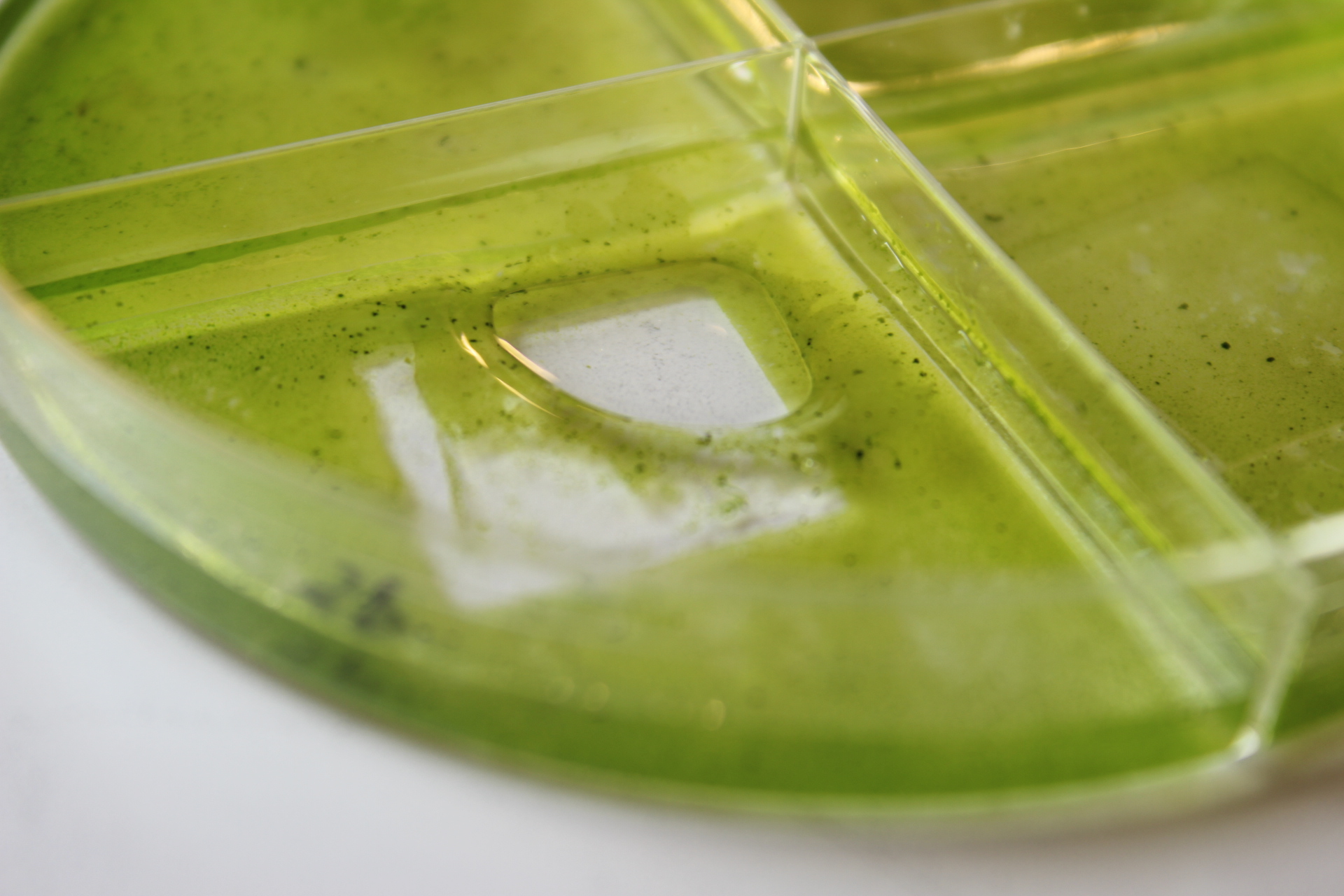
We design liquid-infused and vascularized materials that resist fouling, guide biological interactions, or replenish function through material structure rather than repeated external treatment.
Scalable sensing and diagnostics
We combine roll-to-roll diffraction structures with reusable microfluidic systems to move sensing and diagnostic functions into simpler, scalable platforms.

Questions we are pursuing
Our current work is extending these approaches toward materials and manufacturing systems that can operate under tighter resource constraints.
Growable functionality

How can growth be used not only to create a material, but to add, restore, or adapt function over time?
Bio-manufacturing

When can organisms and biological transformation replace energy- or equipment-intensive processing?
Local material use

What advanced functions can be created from abundant feedstocks using simpler and more accessible manufacturing?
Work with us
We welcome collaborators, partners, and curious people interested in creating sophisticated material function through interfaces, biological processes, and scalable manufacturing.
