Education

Our goal is to give students the tools they need to solve real-world problems using innovative techniques and creative approaches.” – Damian Brady

Esther Martin smiling while steering a skiff
Student works on scallop net on floating dock

Internships

Student internships are field-intensive aquaculture and fisheries experiences. Students will get a transdisciplinary experience that includes: deployment of oceanographic equipmentlaboratory analysis, shellfish growth and feeding trials, lease site maintenance, analyzing remote sensing imagery, and applying numerical models.

Students have opportunity to develop industry relevant skills including: laboratory analyses, scientific diving, small-boat operation, and computer programing/data analysis. 

Undergraduate Courses

Our lab is part of the field-intensive Semester By the Sea program at the Darling Marine Center. SBS is a hands-on residential program with courses ranging from marine ecology, fisheries science, microbiology, and scientific diving.

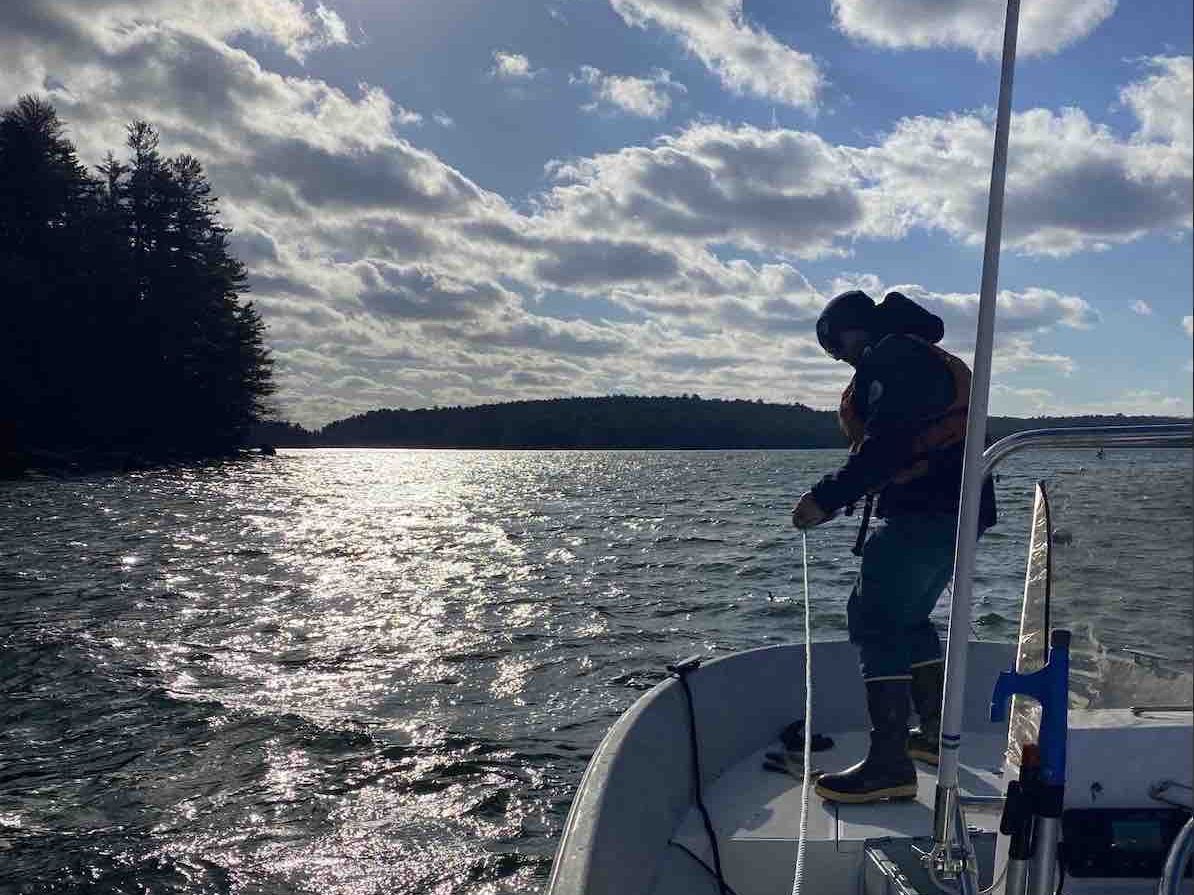
The course examines the principles of oceanography as seen in estuaries, with emphases on land-sea interactions and human impacts. We address how geomorphology, rivers, tides, and human alterations control the physical and biological properties of estuarine water column and benthic habitats. Fieldwork in mid-coast Maine estuaries includes visits to various habitat types, especially those with human impacts, and hydrographic surveys that use various water, sediment and biota samplers, field sensors, laboratory and modeling approaches. Students will emerge with the environmental context that controls growth of estuarine organisms – both wild and cultured. 

4 Credits.

Maine leads the country in marine aquaculture production. Finfish, bivalve, and macroalgae aquaculture is expanding rapidly along the coast of Maine. In this course, we use Maine as a case study to understand evolving aquaculture methods, technology, interactions with the environment, and aquaculture’s role in global food systems.


Graduate Students

Courses

We offer a variety of independent study opportunities with students to focus on specific topics on aquaculture and fisheries including spatial data analysis, bivalve growth modeling, global bivalve aquaculture, kelp carbon sequestration, and water quality modeling.

Research

Our funding is provided from a variety of agencies including National Science Foundation, United States Department of Agriculture, National Sea Grant, NOAA Saltonstall-Kennedy, Northeast Regional Association of Coastal Ocean Observing Systems (NERACOOS), and others. 

Student measuring scallops into a basket
Adam St. Gelais
Student measuring scallops on a growth line