
Safety
Cooking Area
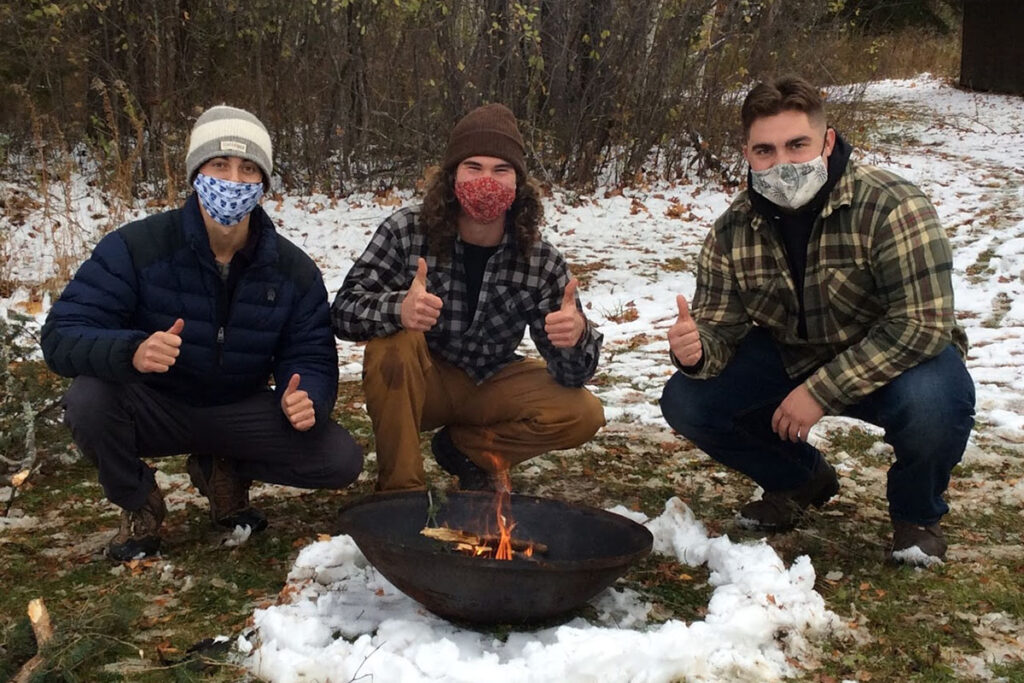
If you’re using a stove make sure that you find a flat area, ideally sheltered from wind, before you set up your stove. This will prevent it from falling over. If you use a fire try to use a spot that already has a fire ring if available or make sure that you clear the area thoroughly and pick a spot with no low branches above to build your fire. Go through this checklist:
- Have I selected a flat, stable area, preferably sheltered from the wind, to set up my stove so it won’t tip over?
- If I’m using a fire, am I choosing an existing fire ring whenever possible to minimize impact?
- If no fire ring is available, have I cleared the ground thoroughly before building a fire?
While cooking
While cooking with a stove make sure that you’re standing or sitting in a crouched position near the stove so you are able to move quickly if your stove or pot falls. Also keep your head away from the area directly above the stove so you will not get burned if the flames rise suddenly. Make sure that all your supplies are organized so there aren’t any sharp knives or utensils in the area that people could step on. Go through this checklist:
- Am I standing or sitting in a stable, crouched position so I can move quickly if the stove or pot tips over or flare up?
- Is my head positioned away from directly above the stove in case the flames suddenly while I’m cooking?
- Are all cooking supplies organized so nothing can fall, spill, or get knocked over?
- Have I made sure there are no sharp knives or utensils lying around where someone could step on them?
- Is the cooking area clear, safe, and arranged so that everyone can move around without tripping or getting burned?
After Cooking
Be sure to let your stove cool off before putting it away and clean up the area thoroughly. If you used a fire for cooking be sure to drench it with water so all the coals are fully put out once you are done. Go through this checklist:
- Have I allowed the stove to cool completely before packing it away?
- Have I allowed the stove to cool completely before packing it away?
- Did I thoroughly clean up the entire cooking area, removing all food scraps and trash?
- Is the fire area completely cold and safe before I leave it unattended?
- Have I ensured the site looks as natural as it did before cooking (or better)?
Ways to “Clean” Water
- Choosing the right water source:
- A good water source is usually running water, away from any disposal of waste (human, animal, or chemical), the less debris or sediment the better
- Water Filters:
- Gravity
- Pump
- Bottles with filtering straws/lids
- Water Purifiers
- Chemical Treatment (drops/tablets)
- UV Light Purifier
- Bringing your water to a rolling boil
Most Common and Risky GI Illnesses to be Aware of While Backcountry Cooking
Why Backcountry Dish Cleaning Is Risky
- Limited clean water, filtration can be easily complicated
- Shared cooking spaces
- Food scraps attract animals (rodents can spread additional diseases)
- Cold water makes degreasing harder
- People often skip proper sanitation due to weather or fatigue
The following illnesses come from bacteria, viruses, or parasites left on dishes, utensils, or cookware:
1. Giardiasis
- Caused by Giardia lamblia (colonizes the small intestine).
- Often spread through contaminated water or food residues on dishes.
- Symptoms: Diarrhea, gas, stomach cramps, nausea, fatigue.
2. Norovirus
- Highly contagious, often food-borne.
- Survives on unwashed dishes and cooking gear.
- Symptoms: Vomiting, diarrhea, stomach pain.
3. Campylobacteriosis
- Caused by Campylobacter bacteria.
- Results from undercooked food residue or cross-contaminated surfaces.
- Symptoms: Diarrhea (sometimes bloody), fever, cramps.
4. Salmonellosis
- Caused by Salmonella bacteria.
- Can occur if dishes touch raw meat juice or contaminated water.
- Symptoms: fever, diarrhea, stomach cramps.
5. E. coli Infection
- Pathogenic E. coli strains can linger on inadequately washed dishes.
- Symptoms: Severe diarrhea, cramps.
6. Cryptosporidiosis (Crypto)
- Caused by Cryptosporidium parasites.
- Hard to kill; Persists on surfaces and in water.
- Symptoms: Watery diarrhea, stomach cramps.
Skin & Soft Tissue Infections
Contaminated dishes don’t usually cause these directly, but dirty dishwater and handling filthy gear can increase risk.
7. Staph / MRSA
- If you have cuts on your hands while washing dirty dishes.
8. Fungal skin infections
- From prolonged exposure to dirty, moist equipment.
Secondary Risks
These are less direct but still possible when dishes aren’t cleaned well:
9. Food poisoning from spoiled leftovers
- Especially common when food particles remain on dishes exposed to heat or animals.
10. Mold-related illness
- Allergic Rhinitis, more of a mold allergy, but caused by inhaling mold spores
- Symptoms: sneezing, runny or stuffy nose, itchy eyes, coughing, wheezing
- Common in damp or poorly ventilated environments
- Aspergillosis, caused by Aspergillus mold
- Can range from mild lung infections to severe disease, especially in people with asthma or weakened immune systems
- Symptoms: coughing, shortness of breath, chest pain, fever
11. Residual Soap-Ingestion
- Stomach irritation: Nausea, upset stomach, vomiting, or diarrhea
- Bad taste and burning sensation in the mouth or throat
- Chemical irritation of the digestive tract, especially with strong dish soaps or detergents
12. Wildlife Encounters
How to Reduce Risk of These Diseases
To avoid these diseases, refer to the “Clean-Up” section of the “Cooking” page.