
Maine college of engineering and computing
As Maine’s leading engineering and computing program, the college prepares an educated workforce, conducts research that turns knowledge into innovative solutions, and provides outreach that includes STEM initiatives.


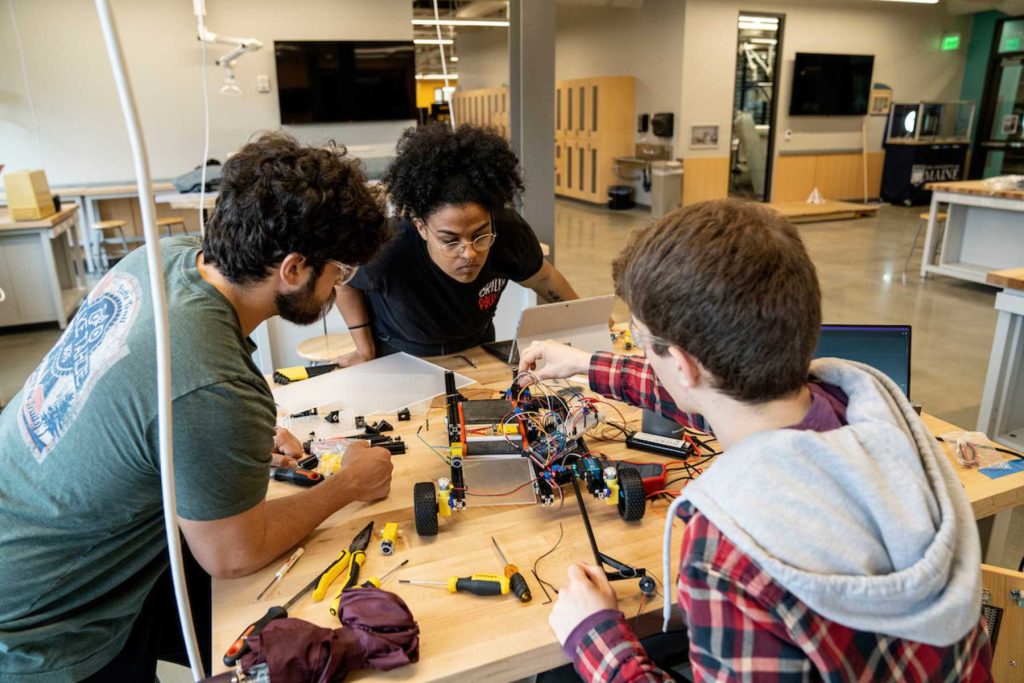
$150 million for a multi-university Maine College of Engineering and Computing cooperatively led by the University of Maine, including a $75 million commitment from the Harold Alfond Foundation with a match obligation of another $75 million. A statewide, integrated solution to providing the technical workforce and innovations that are critical to moving Maine’s economy forward
MCEC is focused on the future: High performing, impactful public higher education service has to include anticipating state workforce needs and delivering solutions that provide critical industries, communities, and employers with the skilled workers needed to meet demand and move Maine forward. It is about providing the number of graduates with the requisite skills to maintain our state infrastructure and institutions, pursue opportunities in emerging markets, and grow the Maine economy.
MCEC delivers solutions: Thousands of new engineering and computing graduates are needed to replace members of Maine’s existing workforce, and to fill new jobs that will have to be created in our increasingly interconnected, digital global economy. The development of the Maine College of Engineering and Computing is a transformational, forward-looking approach to planning and solution delivery for the University of Maine System.
MCEC is a statewide approach: The UMS TRANSFORMS MCEC initiative seeks a statewide solution that will provide additional undergraduate engineering programs at the University of Maine and University of Southern Maine, UMaine graduate engineering programs offered in Portland, expanded pathways into the statewide college from all University of Maine System universities, community colleges, and K–12, and new opportunities for shared programs, interdisciplinary structures and partnerships.
Learn more about the Maine College of Engineering and Computing and the University of Southern Maine’s Department of Engineering today!
83%
Student retention rate
15
MCEC Programs
97%
Job placement rate
With the support of UMS TRANSFORMS and other funders, MCEC facilities upgrades provide students and faculty with cutting-edge resources and technology, enhancing both learning and research opportunities. The new spaces are designed to foster innovation, collaboration, and hands-on experience, equipping students with the tools they need to succeed in today’s rapidly evolving engineering and computing fields.
GEM | Coming 2026!
The Green Engineering and Materials (GEM) building will (1) catalyze the convergence of computing and engineering, academia and industry; (2) support education, innovation and commercialization; (3) enable efficient, next-generation manufacturing with immersive, collaborative learning as its cornerstone.
Funded by
- UMS TRANSFORMS (Harold Alfond Foundation)
- United States Senate – Congressional Directed Spending
- State of Maine
- Department of Defense
- Maine Jobs and Recovery Plan
- National Institute of Standards and Technology (NIST)
- Northern Border Regional Commission
- Engineer Research & Development Center (ERDC)
- University of Maine System
Catalysis lab | Coming 2026!
New 2000 sq ft laboratory to house the UMaine Catalysis Group, which includes faculty, undergraduate and graduate students, and postdoctoral fellows, in chemical engineering, chemistry, physics, and mechanical engineering. The team focuses on developing molecular-level insight into processes that occur on catalytic surfaces, with diverse applications in biomass conversion, plastics upcycling, and decarbonizing petrochemicals. Recent projects have focused on bio-based synthetic rubber for car tires, new polymers to replace polyethylene paper coatings, polyethylene recycling, destruction of PFAS species in drinking water, and fossil-fuel-free production of propylene for making plastics.
Funded by
- UMS TRANSFORMS (Harold Alfond Foundation)
- The University of Maine
Student Success and Advising Center | Completed!
The mission of the Student Success and Advising Center within the Maine College of Engineering and Computing (MCEC) is to ensure that all students receive the necessary resources and support to graduate within four years. The center focuses on five priorities:
Funded by
- UMS TRANSFORMS (Harold Alfond Foundation)
AMC B.O.T. Loft | Completed!
B.O.T. Loft Mission
The AMC B.O.T. Loft empowers Maine’s manufacturing workforce through hands-on training, cutting-edge technology, and industry-driven education in Automation, Robotics, and Networking. We bridge innovation and skill-building to shape the future of smart manufacturing in Maine and beyond.
Funded by
- UMS TRANSFORMS Harold Alfond Foundation
- United States Senate – Congressional Directed Spending
- Department of Defense Industrial Base Analysis and Sustainment (IBAS)
- Innovation Capability and Modernization (ICAM)


Guidoboni appointed Interim Vice President For Research, will continue as MCEC Dean
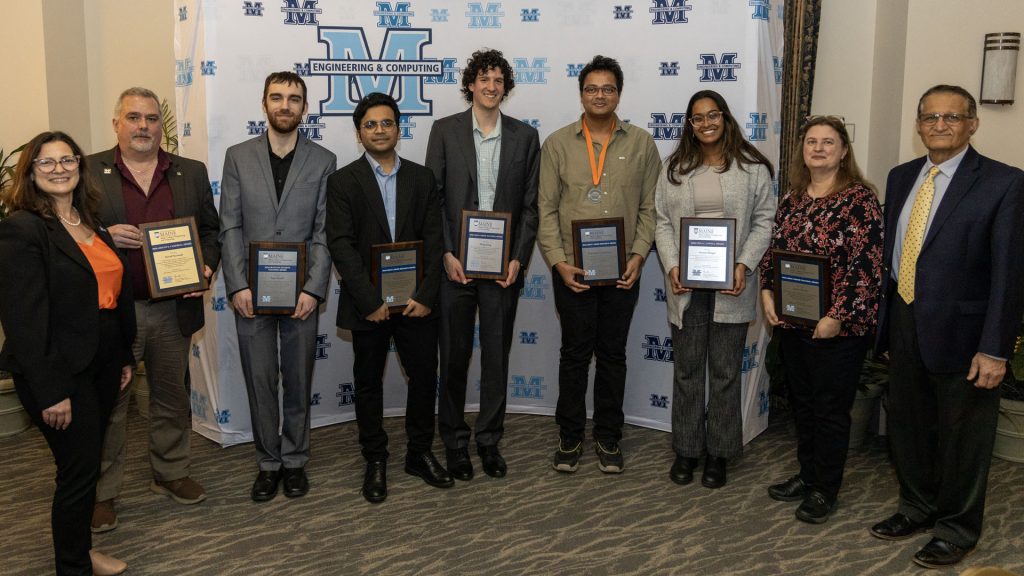
The University of Maine has appointed Giovanna Guidoboni as interim vice president for research while she continues to serve as the inaugural dean of the Maine College of Engineering and Computing (MCEC). In this dual leadership role, Guidoboni will help foster education, research, and innovation at the University of Maine while strengthening collaboration across the University of Maine System and state.
As dean of MCEC, Guidoboni leads one of the university’s largest academic units, home to more than 2,600 students and a key driver of the UMS TRANSFORMS initiative, a systemwide effort to expand engineering and computing education, research and workforce development in Maine. Under her leadership, the college has bridged disciplines, strengthened research and innovation, fostered statewide partnerships, modernized labs and built new buildings to prepare the next generation of innovators and problem solvers.
In her interim vice-presidential role, Guidoboni will oversee UMaine’s research enterprise, support faculty and student scholarship, and build new opportunities for collaboration with industry, government and community partners. Her appointment reflects UMaine’s continued commitment to advancing discovery and innovation that serve Maine and the world.
a next generation workforce
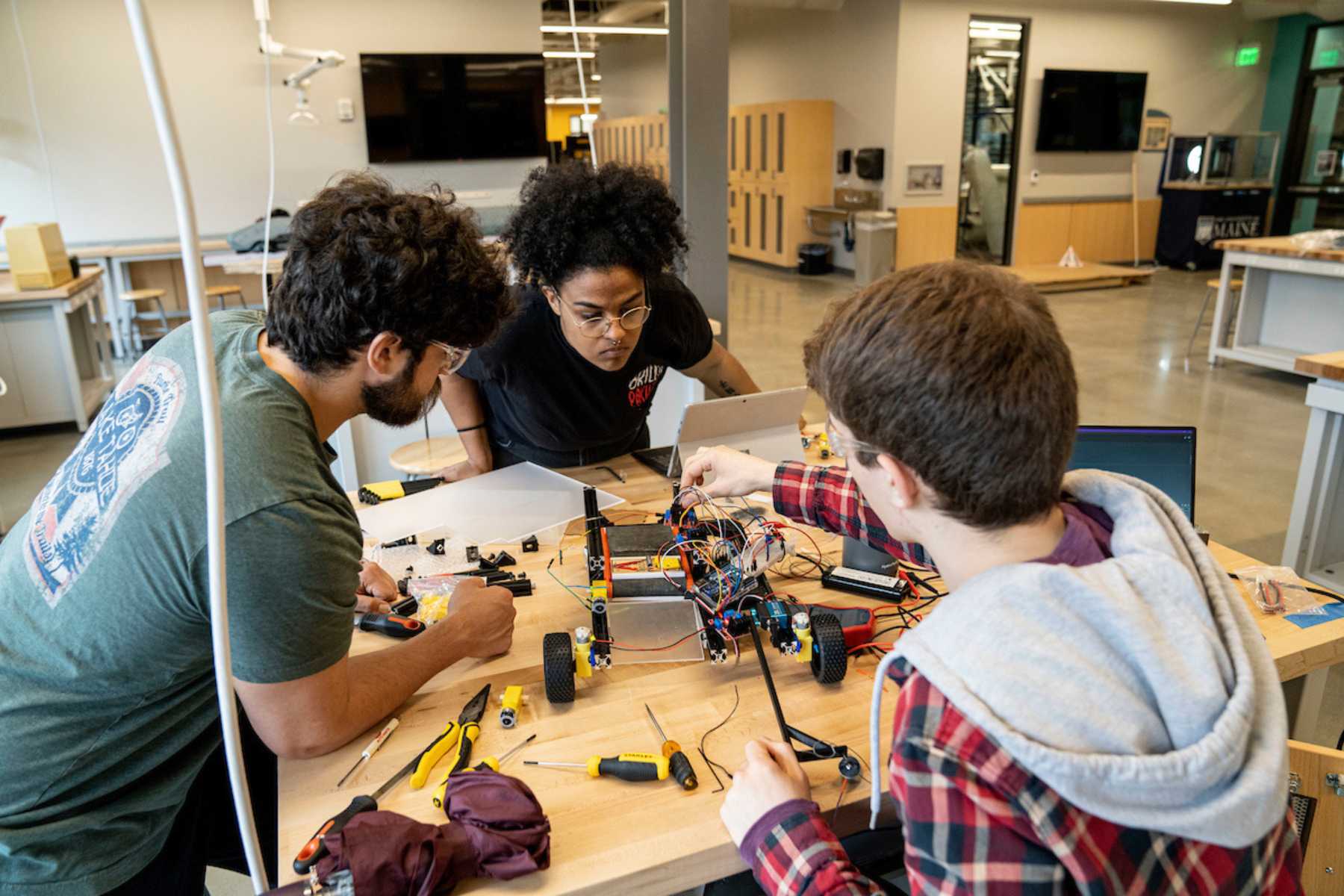
Maine currently has one of the oldest populations in the country. What this means is that as the current workforce begins to retire, they will leave behind a large gap in the workforce. In the next 10 years, Maine will need to replace 4,000 engineering and computing jobs. MCECIS plans to meet that demand head on by increasing the number of industry leading graduates.
The state is not only looking toward job replacement, it also is looking toward job growth. As Maine’s economy continues to grow, the expected need for graduates in the next 10 years is expected to reach up to 5,000 new engineering and computing jobs.
“I firmly believe that our institution is more than just a place of learning; it’s a catalyst for transformative progress. By intertwining interdisciplinary education with cutting-edge facilities, we are not merely teaching but empowering a new generation to push the frontiers of engineering and computing into new realms of innovation and impact.”
Giovanna Guidoboni
Dean of the Maine College of Engineering and Computing