First-Year Course Descriptions

Supported by a generous grant from the Harold Alfond Foundation as part of UMS TRANSFORMS.

Signups for this fall’s Research Learning Experiences will open in Spring 2026.
Bridge Week: Monday, Aug. 24 – Friday, Aug. 28, 2026

Open to students in any major

Charismathic

RLE 150.0001: Unleash your CharisMATHic Superpowers!

Arieana Mangra | Maine College of Engineering and Computing

  • Fall Credits:
    1 credit
  • Bridge Week Type:
    Black Bear Bridge
  • Participants:
    Open to all majors

Have you ever wondered how algebra, pre-calc, and calculus are useful in solving problems that really matter, like climate change and accessible healthcare? Then come find your inner charisMATHic powers! Join a thriving community aiming to make the world a better place. Experience math as the universal language across disciplines and learn to use math as a virtual laboratory to explore and test solutions.

A photo of students studying

Exploring Marine Pathways

RLE 150.0006: Discover a Blue Future

Assistant Research Professor Katrina Armstrong | UMaine MARINE

  • Fall Credits:
    1 credit
  • Bridge Week Type:
    Full Bridge Week

Exploring Marine Pathways is a 1-credit Research Learning Experience for first-year students who are curious about the ocean and the many ways marine science, engineering, policy, and innovation shape our world. Open to students across majors, from marine sciences and aquaculture to engineering, economics, anthropology, and beyond, this course introduces you to real research, real people, and real career pathways connected to Maine’s coastal and marine systems.
 
Through hands-on activities, guest speakers, field trips to UMaine research facilities, and interactive modules focused on coastal resilience, the blue economy, and marine innovation, you’ll explore pressing marine challenges while learning how research happens and how you can get involved. You’ll build foundational skills like asking strong research questions, finding internships and lab opportunities, creating a resume, and networking with faculty, peers, and professionals. By the end of the semester, you’ll have a clearer sense of your interests, your options, and how you can start shaping your academic and professional future in marine and coastal fields.

A photo of a boat in the ocean

Innovative Manufacturing in Maine (IM2)

RLE 150.0007: Developing Solutions for Manufacturing’s Future

Justin Willis | Advanced Structures and Composites Center; Roberto Lopez-Anido | Maine College of Engineering and Computing

  • Fall Credits:
    1 credit
  • Bridge Week Type:
    Partial Bridge Week
  • Participants:
    Open to all majors

“IM2” (Innovative Manufacturing in Maine) is a Research Learning Experience (RLE) and a digital microbadge in Industry 4.0/5.0 manufacturing practices. These practices are being advanced through UMaine’s GEM initiative and include automated manufacturing cells, collaborative and mobile robotics, and the development and testing of bio-based and recycled composites.

A photo of students working with robots

Economic and Policy Analysis

RLE 150.0004: Analyze Data to Inform Policy

Professor Todd Gabe | School of Economics; Mary Mahoney-O’Neil | Margaret Chase Smith Policy Center

  • Fall Credits:
    1 credit
  • Bridge Week Type:
    Full Bridge Week
  • Participants:
    Open to all majors. Required for students majoring in Economics and Financial Economics.

Learn more about the issues facing Maine and other regions through the lens of economic analysis. Bridge week activities include a field trip to state government offices in Augusta, group activities that build economic research and leadership skills, and social events with other students. This experience is offered jointly by the School of Economics and the Margaret Chase Smith Policy Center.

A photo of economists looking at a screen

Visual Language, Visual Thinking

ART 104: Think Visually, Picturing New Ideas

Associate Professor Michael Grillo | Department of Arts

  • Fall Credits:
    1 credit
  • Bridge Week Type:
    Partial Bridge Week
  • Participants:
    Open to all majors. Highly recommended for students majoring in Studio Art, Art Education, and History of Art.

Visual Language, Visual Thinking will open up new means of envisioning innovative ideas and understandings our world by exploring the visual world as a means of thinking and communicating thoughts that evade verbal language.  We’ll explore diverse media for their unique capacities for thought, in shaping our vision to better understand our human experiences, framing study in the Visual Arts as a vital tool for thinking and communicating in our increasingly visual age.

A photo of students looking at artwork

Becoming a Historian

HTY 130: Inquire Deeply, Transform your Future

Professor Liam Riordan | History Department

  • Fall Credits:
    3 credits
  • Bridge Week Type:
    Partial Bridge Week
  • Participants:
    Open to all majors. Required for History majors.

Behind the scenes tours of campus historical resources and meetings with professional staff and faculty will immerse you in the rich possibilities of being a History major, while also getting to know your classmates. Our Bridge Week concludes with off-campus collaborators focused on internships for next summer. The fall course will help you to become a historian through a guided research project that concludes with a public presentation of your original project.

A photo of students looking at historical objects

Explore our Campus Ecosystem

EES 117: Get your hands dirty in UMaine’s campus ecosystem

Katharine Ruskin | School of Biology and Ecology

  • Fall Credits:
    2 credits
  • Bridge Week Type:
    Partial Bridge Week
  • Participants:
    Open to all majors. Highly recommended for Ecology and Environmental Sciences majors.

This course offers an introduction to college and provides an interdisciplinary perspective on ecological and environmental issues. Students will learn field data collection methods here on UMaine’s campus—identifying aquatic insects and measuring trees.  They will develop hypotheses about our campus ecosystem, test them, and present results to their peers.

A photo of students in a woodsy area

Conserving Fish and Wildlife

WLE 100: Discover Maine’s Fish and Wildlife

Lindsay Seward | Department of Wildlife, Fisheries, and Conservation Biology

  • Fall Credits:
    1 credit
  • Bridge Week Type:
    Full Bridge Week

Students will spend time in the Cobscook Bay region of coastal Downeast Maine to explore, discover, and learn about fish and wildlife in streams, lakes, the ocean, wetlands, and forests and work as part of a team to develop habitat management strategies on local private, state, and federal lands. Students will continue their research and present their work during the Fall 2026 semester.  

A photo of fish in a net

Open to Students with Specific Majors

Rage of PHage

BMB 150/HON 150: Hunt for Viruses

Edward Bernard, Sally Molloy, Emily Whitaker, Melody Neely | Department of Molecular and Biomedical Sciences

  • Fall Credits:
    4 credits
  • Bridge Week Type:
    Full Bridge Week
  • Participants:
    Highly recommended for Biochemistry, Microbiology, and Molecular & Biomedical Sciences majors

Learn about the diversity of viruses that infect bacteria that include both pathogenic and non-pathogenic organisms important to human health. Develop skills in virus isolation, nucleic acid extraction, DNA sequencing, and genome annotation. Through isolation and characterization of a novel virus from soil, students will learn to communicate their findings at scientific conferences and journals.

A photo of a student doing an experiment

The Language Lab: Exploring Communication Marvels

CSD 130: Dive into Communication Disorders

Jane Puhlman | Department of Communication and Science Disorders

  • Fall Credits:
    3
  • Bridge Week Type:
    Full Bridge Week
  • Participants:
    Required for CSD majors

This course employs inquiry-based learning to delve into speech, language, and hearing disorders. Students gain foundational knowledge and examine their impact on communication. They utilize diverse research materials to explore evidence-based practices. The course is designed to foster active learning, group brainstorming, and creative problem-solving.

A photo of a student working with a child

Education, Human Development, & Care

EHD 100/101: Think Like a Caring Professional

Dean Ezekiel Kimball, Associate Dean Faith Erhardt, Dominick Varney, Gabriella Fryer (EHD101) ; Jesse Kaye-Schiess (EHD100) | College of Education and Human Development
  • Fall Credits:
    1-4 credits
  • Bridge Week Type:
    Full Bridge Week
  • Participants:
    Course open to all majors. Required for all first-year students in the College of Education and Human Development.

Students in the College of Education & Human Development will have two distinct tracks available depending on their chosen major. 
 
In EHD 101, Education students step into the role of teacher and leader in this hands-on course. Using Mursion—an immersive, human-powered AI classroom—you’ll practice teaching, test ideas, and explore big questions about learning. You’ll design a research inquiry around what makes teaching effective and how students learn best.
 
In EHD 100, Kinesiology & Physical Education students will participate in experiential learning opportunities to build community, sense of place, and engage in deep reflection. Through hands-on experiences and connection with upper-level students and a Health Professions Career Counselor, you’ll learn about career paths, find your place at UMaine, and start planning what comes next.

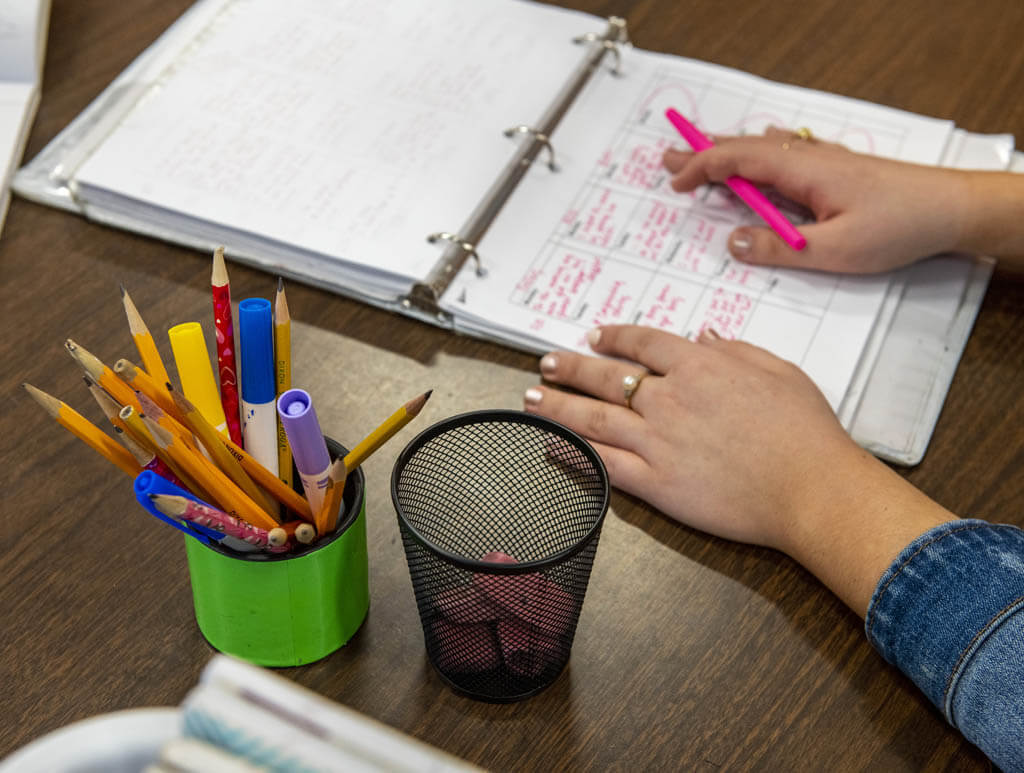
A photo of a binder and markers

From Ocean to Orono: Becoming a Biologist

ELH 117: Researching Biology in the Lab or Field

School of Biology and Ecology

  • Fall Credits:
    1 credit
  • Bridge Week Type:
    Full Bridge Week
  • Participants:
    Required for Biology, Zoology, and Botany majors
  • Location:
    Schoodic Institute

Biology, Zoology, and Botany majors will conduct life sciences research in the field, lab, or library while learning how to be successful as a scientist and a UMaine student.

An image of an ocean landscape

Learning Business through Side Hustles

MGT 101: What Will Your Business Be?

Dean Jason Harkins, Julia Van Steenberghe | Maine Business School

  • Fall Credits:
    3 credits
  • Bridge Week Type:
    Full Bridge Week
  • Participants:
    Required for Business majors

Website course description: Turn ideas into action in MGT 101: Introduction to Business. Start and run a real side hustle, learn how businesses make money, pitch your ideas, explore careers, and tackle real-world ethical challenges. Build skills in teamwork, communication, and decision-making—while discovering what business can be for you.

A photo of Jason Harkins lecturing

Majoring in Music

MUS 150: Mastering Skills for Musical Success

Associate Professor Philip Edelman | School of Performing Arts

  • Fall Credits:
    1 credit
  • Bridge Week Type:
    Fully Tailored Bridge Week
  • Participants:
    Required for Music, Music Performance and Music Education majors

Discover the keys to success as a music major! This course equips first-year students with essential skills, including effective practice habits, personal calendaring, school-life balance, and healthy routines. Through interactive activities and practical guidance, you’ll develop strategies to thrive academically, musically, and personally, setting the stage for a rewarding college journey.

A photo of students singing

How will you thrive as a Nursing Student?

NUR 150: Transforming Well-Being Through Experiential Research

Associate Dean Kelley Strout | School of Nursing

  • Fall Credits:
    1 credit
  • Bridge Week Type:
    Full Bridge Week
  • Participants:
    Required for Nursing majors

This evidence-based, immersive bridge week introduces students to scientific practices that shape health and well-being. Students engage in evidence-based resilience and well-being interventions, including mindfulness, belonging activities, student success workshops, and research design.

Following the bridge week, all students complete the one-credit course NUR150: Scholarship of Wellness and Mindfulness, which provides booster sessions of key interventions and structured assessments. Students collect and analyze qualitative and quantitative data to evaluate the impact of evidence-based health interventions on their own well-being, guided by research questions they design. The program culminates in a scientific lab report that informs an evidence-based guide to health and well-being for the future.

A photo of the UMaine Nursing WellNurse logos

Field Experience in Forestry

SFR 397: Learn in the Forest

Keith Kanoti | School of Forest Resources

  • Fall Credits:
    0-1 credit
  • Bridge Week Type:
    Full Bridge Week
  • Participants:
    Open to Forestry majors

A six-week field experience working on the University Forest with professional foresters and upper class students.  The course will take place in the Maine woods at the Demeritt Forest.  You will learn hands on skills that will start you on your journey to becoming a professional forester.

A photo of people walking through a forest

UMaine Machias RLES

Exploration in Biology

BIO 101: Discovering Viruses in Our World

Gerry Zegers | Maine Center for Genetics in the Environment

  • Fall Credits:
    2 credits
  • Bridge Week Type:
    Full Bridge Week
  • Participants:
    Open to all majors
  • Location:
    UMaine Machias Campus

Phage Hunters – Learn cutting edge molecular biology techniques as you collect, isolate, and sequence the DNA of a novel Phage (virus that attacks a bacteria).

A photo of a teacher and students looking at a petri dish

Oceanography

SMS 104: Explore the Ecology of the Coast

Gayle Kraus | University of Maine at Machias

  • Fall Credits:
    4 credits
  • Bridge Week Type:
    Full Bridge Week
  • Participants:
    Required for Marine Biology majors
  • Location:
    UMaine Machias Campus

Oceanography-  recognize patterns, formulate and test hypotheses and collect data on a variety of physical, chemical, geological and biological aspects of marine and oceanic environments.

A photo of students among seaweed