A new study by University of Maine economist Todd Gabe estimates that Maine’s arts and cultural nonprofits support 7,333 jobs statewide through their operations, purchases from suppliers and employees’ household spending.
Gabe identified 1,424 organizations — including libraries, museums, theaters, musical groups, arts councils, event organizers and historical societies — using publicly available data from Internal Revenue Service non-profit records.
The study estimates that the organizations directly employ 5,650 full- and part-time workers, with $125 million in compensation and $322 million in direct annual statewide economic output.
The study was funded by a U.S. Department of Agriculture Rural Development Grant and the Maine Agricultural and Forest Experiment Station. It was conducted with input from the Cultural Alliance of Maine, which was established out of the COVID-19 pandemic to strengthen and amplify arts and culture through advocacy, research, and connecting cultural workers statewide.
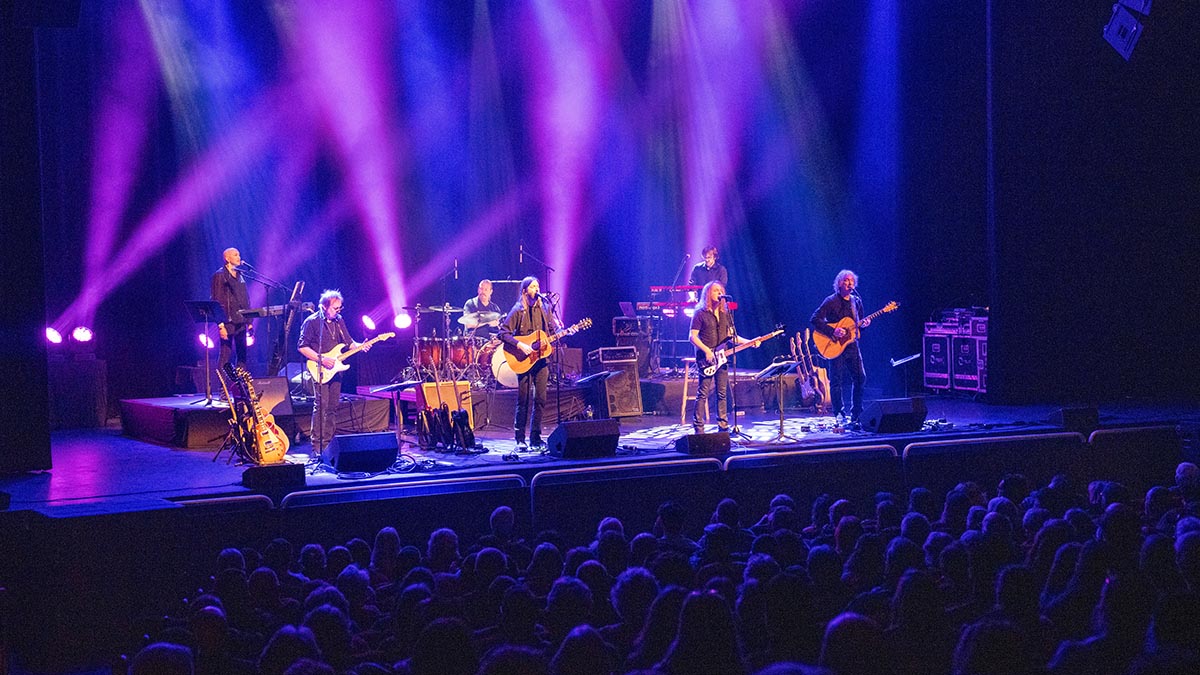
The arts and cultural nonprofits in Gabe’s study include the Portland Museum of Art, Bowdoin International Music Festival and Penobscot Theatre Company in Bangor, as well as small public libraries and nonprofit galleries in rural communities.
Gabe also evaluated the economic activity supported by these organizations’ business-to-business purchases — utilities, repairs, maintenance, supplies, equipment and professional services — and the household spending of their employees.
Together, the nonprofits’ operations, purchases from suppliers and employees’ household spending contributed an estimated $226 million in labor income and $660 million in economic output across Maine. These estimates of annual economic activity exclude spending by visitors at hotels, restaurants, stores and other local businesses when attending performances or visiting arts and cultural institutions.
“Most of these organizations are quite small, but collectively, they are sizable in terms of their employment and their economic impact,” Gabe said.
The new study also shows that Maine has the third-highest concentration of arts and cultural nonprofits per capita in the U.S., behind only Washington, D.C., and Vermont, at 103 per 100,000 residents. Maine also has the third most nonprofit museums, theaters and historical preservation societies per capita in the U.S., and the second most libraries per capita, Gabe said.
“Some of that’s explained by the state’s long history and interests of Maine residents and visitors. The numbers show that Mainers support libraries, historical preservation societies and museums,” Gabe said. “But it’s not just Maine, it’s the broader New England region with a relative abundance of nonprofits related to historical sites and preservation.”
Cultural Alliance of Maine Director Mollie Cashwell knows firsthand how these institutions can uplift a community. A native of the Bangor area, she recalled the role Maine Discovery Museum and Penobscot Theatre Company played in downtown Bangor’s revitalization in the 2000s. More people came to the city for shows and services offered by these organizations, and more businesses opened up to capitalize on the growing foot traffic, she said.
“Just seeing how the community reclaimed its downtown as a cultural destination was exciting,” Cashwell said. “Beyond the impacts of direct spending professor Gabe measured, we know of workers in healthcare and other high-demand industries who have accepted jobs here because of the arts and culture offerings we have. Statewide, there’s huge potential to strategically invest in arts and culture and increase these tangible economic and quality of life benefits.”
Cashwell said the employment figures and concentration of nonprofits reflect a “broad community effort to keep arts and culture accessible to all in every region.”
“A study like this really helps us understand what’s possible with strategic policy and investments,” she said. “It gives us pathways to make sure this generation and the next generation of arts and culture workers have everything they need to sustain that level of impact.”
The study is part of Gabe’s ongoing research into the economic value of arts and culture.
He has studied the creative economy since the early 2000s when Gov. John Baldacci explored how it could be incorporated into the state’s economic development strategy. Gabe’s other research includes multiple studies on the contributions of Waterfront Concerts to Bangor, the association between arts and cultural amenities and higher home values, and earnings in these sectors.
“To me, professor Gabe is one of the leading experts on the creative economy in the state of Maine,” Cashwell said. “I was immediately blown away by the depth of knowledge in his latest study.”
With help from a UMaine master’s student Katherine Grisham, Gabe collected similar data for every state and Washington, D.C. He next hopes to estimate the economic contributions of arts and cultural nonprofits at the county level in Maine and across the country.
“Instead of having the map show what’s happening in the 50 states, you’ll have a map that’ll show what’s happening in over 3,100 counties,” he said. “There is a huge amount of heterogeneity or differences across the counties. It’s fun comparing Maine to the other 49 states, but even within Maine, there’d be huge differences between coastal counties and inland counties, and north and south.”
Contact: Marcus Wolf, 207.581.3721; marcus.wolf@maine.edu