Libraries play an important role in many communities, not only providing books and other materials to patrons, but also social services that help bring people together. Fascinated by libraries and learning, Hunter Towne, who graduated from the University of Maine in May with a bachelor’s degree in elementary education, investigated how libraries in Maine’s Cumberland County were supporting the needs of young English language learners.
The project came about in part from Towne’s love of libraries, working in classrooms and her own experience growing up in Freeport, Maine. During her first year at UMaine, Hunter spent a week in a Portland classroom and was working with a student who did not speak English and struggled socially in the classroom.

“I got to work with him very closely over the course of that week,” said Towne. “With some pushing, he had formed some relationships with his peers, learned how to write his name and read a couple of sentences. He was so happy to connect with his peers. I still think about it to this day.”
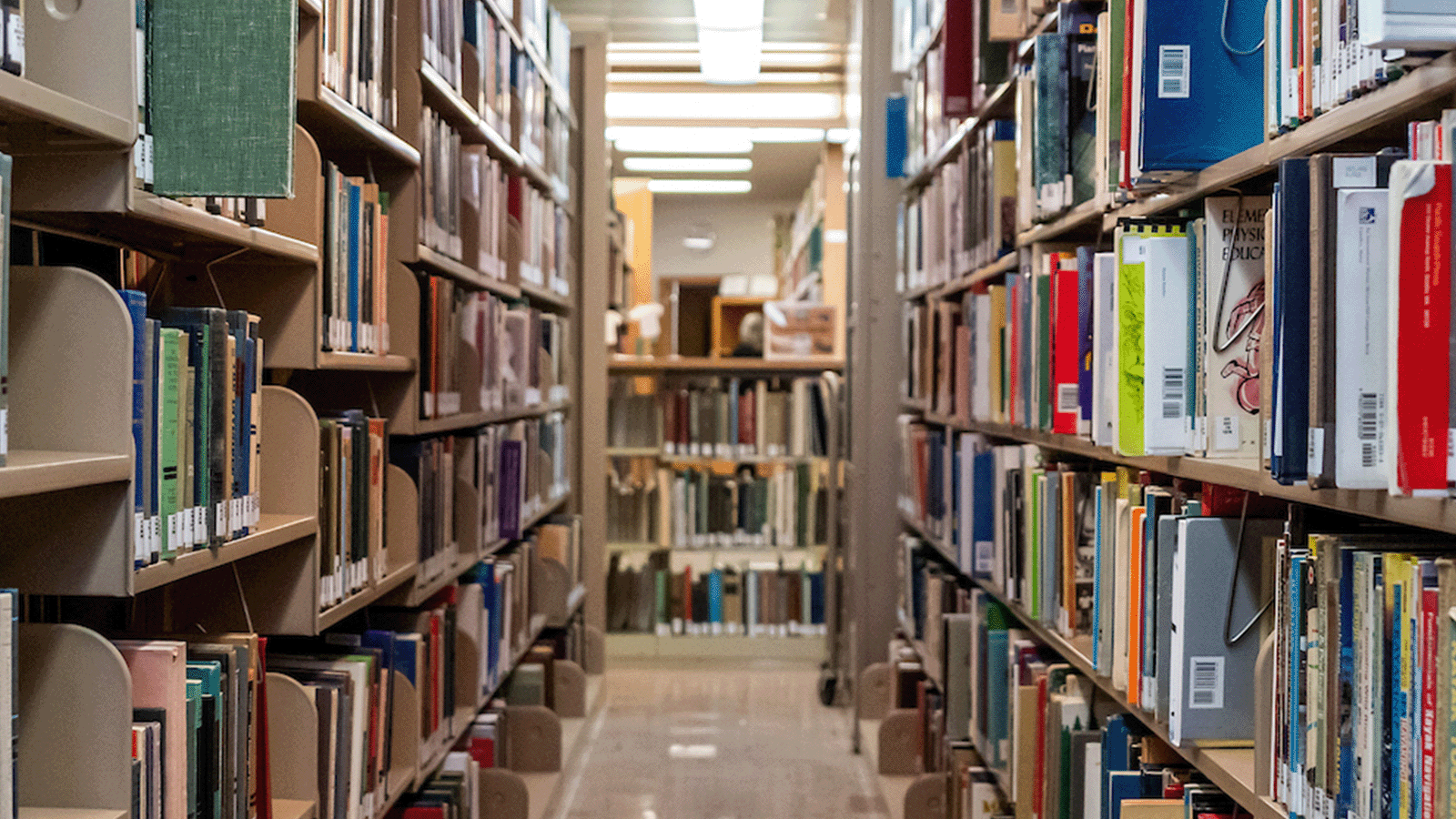
Working with her advisor, associate professor of early childhood development and education Julie DellaMattera, Towne refined the project and made it the focus of her Honors College thesis. She started by researching libraries and how surroundings impact children’s development. Then throughout the summer before her senior year, she drove and took boats to 35 libraries, almost everyone in Cumberland County. Towne entered each library as if it was her first time.
“I wanted to immerse myself in the experience, and see if I could walk into a space without communicating with anyone or reading signs, seeing if there was any sort of way I could navigate myself to resources that would help me,” said Towne. “I can walk in as an English speaker and find the language section in five seconds, right? I can read the signs, but a non-English speaker would have a very difficult time with that.”
The study also looked for programming for young English learners, other resources libraries provided, such as WiFi routers, and the physical space. A library might have good books for a child learning English, but if it is on the top shelf, the child might not be able to find it. Taking into account the level of funding different libraries had access to also helped Towne better understand how limited resources were being allocated.
The results were both encouraging and at times underwhelming. Some libraries were really able to provide great resources for young English language learners, even if one would expect less demand for it in the area. Some had limited resources for younger patrons but had great resources for adults.
At the library in South Portland, Towne observed them doing a lot with a little. “South Portland had a very small language support section, but it was incredible,” she said. “They had something like 50 languages represented with at least five books for everyone. It was so cool to see where they didn’t have a lot of funding, but were able to really make it work.”
After completing her Honors thesis, Towne shared the results of her study with Fogler Library. She hopes that this project helps drive more support to schools and libraries that support young students learning English.
“I hope people understand not only the need to support all learners in every area, working in a public school right now, but also the value of public libraries,” said Towne. “I want to make sure people understand the need to keep up with the changing world, because the guidelines that worked 20 years ago may not work now, and may not be able to support the community as they should.”
Starting in the fall, Towne will begin a master’s program at UMaine in curriculum, assessment and instruction with a concentration in library and media studies. She said she’s excited to be a Black Bear for at least two more years and to continue exploring her interest in libraries.
Contact: Daniel Timmermann, daniel.timmermann@maine.edu