I recently participated in a panel discussion entitled A Journey in Fisheries and Ecosystem Thinking: A Conversation About the Past, Present, and Future.* This was an excellent opportunity to reflect on my experiences related to ecosystem-based management. I share some of those below.
* Click on the link above to view the recording of the discussion.
When I hear the term “ecosystem-based management” or “ecosystem thinking,” I think of connections – connections among people who have different goals and values for ocean places and connections among people, place, and the more than human world, like the barnacles, mussels, and seaweeds living in the rocky intertidal zone.
Many people have helped me learn about those connections. The other participants in this panel (i.e., Robin Alden, Joshua Stoll, and Jessica Bonilla) are among those from whom I have learned so much.

I met Robin Alden, founding Executive Director of the Maine Center for Coastal Fisheries, for the first time when I visited Isle au Haut, an island off the Maine coast, nearly 30 years ago. The conversation we had about the connection between Maine marine ecosystems and the people who rely on them was formative for me, as were a number of other conversations that I had with Maine marine resource managers, conservationists and scientists at that time.
I carried those conversations with me, as I moved west to Oregon for graduate school. At Oregon State University, advised by Profs. Jane Lubchenco and Bruce Menge, I learned to be an ecologist. I learned to pay attention to how humans and other living beings interact with one another and the world around us. I also learned more about the deep and varied connections that people have with coastal and marine places.
When I finished my PhD, I realized I still had research questions I wanted to tackle. So I went on to a postdoctoral fellowship with Prof. Simon Levin at Princeton University. There I co-edited one of the first books on marine ecosystem-based management, Ecosystem-Based Management for the Oceans.
Josh Stoll, moderator of the panel, asked me why I wrote the book. The short answer is: I was asked to. My PhD mentor, Jane Lubchenco, is very good at sharing opportunities. When she explained to my co-editor Karen McLeod and me that Island Press was interested in publishing a book on marine ecosystem-based management, and that she thought we’d be good people to lead the effort, the book began to take shape. Over the next several years, we collaborated with more than 40 other people to create the volume. The book covered everything from the ethics, law, and policy of ecosystem-based management to the science and practice of this emerging field.

While I am very proud of the book we published in 2009, and the impact our collective work has had on the science and practice of ecosystem-based management, what I am most proud of is the community we helped to create during the process of drafting the book. In the process of identifying key themes for the book and figuring out how to write about them in a coherent way, we developed a shared understanding of the state of ecosystem-related science and management of the oceans, particularly in North America. That shared understanding helped support later research and policy development, such as the drafting of the US’s first National Ocean Policy in 2010.
By the time we finished the book, I realized that my next research project already was clear. We had lots of theory about ecosystem-based management, but fairly little empirical work on how it played out in practice and what worked and why. I turned my attention to documenting ecosystem-based management in practice in multiple places around the world. As that body of work developed over the last 15 years, I also was able to identify places where new science would be helpful. That process kept me in the field, doing ecology and learning how to do social science fieldwork, both in New England and also in Mexico.
During the book project, I realized that one of the parts of research that I particularly enjoy is helping other researchers talk with each other and identify research challenges that they can tackle together. Since then, I have helped co-create research projects with people who have many different kinds of expertise and experiences, including other scientists, as well as community members, resource managers, and other partners outside of academia. My role is these projects often is as translator – helping people with different backgrounds identify their shared interests and research questions as well as translating knowledge into action. When I can see that a project has made a real impact on my community, as we’ve managed to do through this community science program, that has been particularly rewarding.
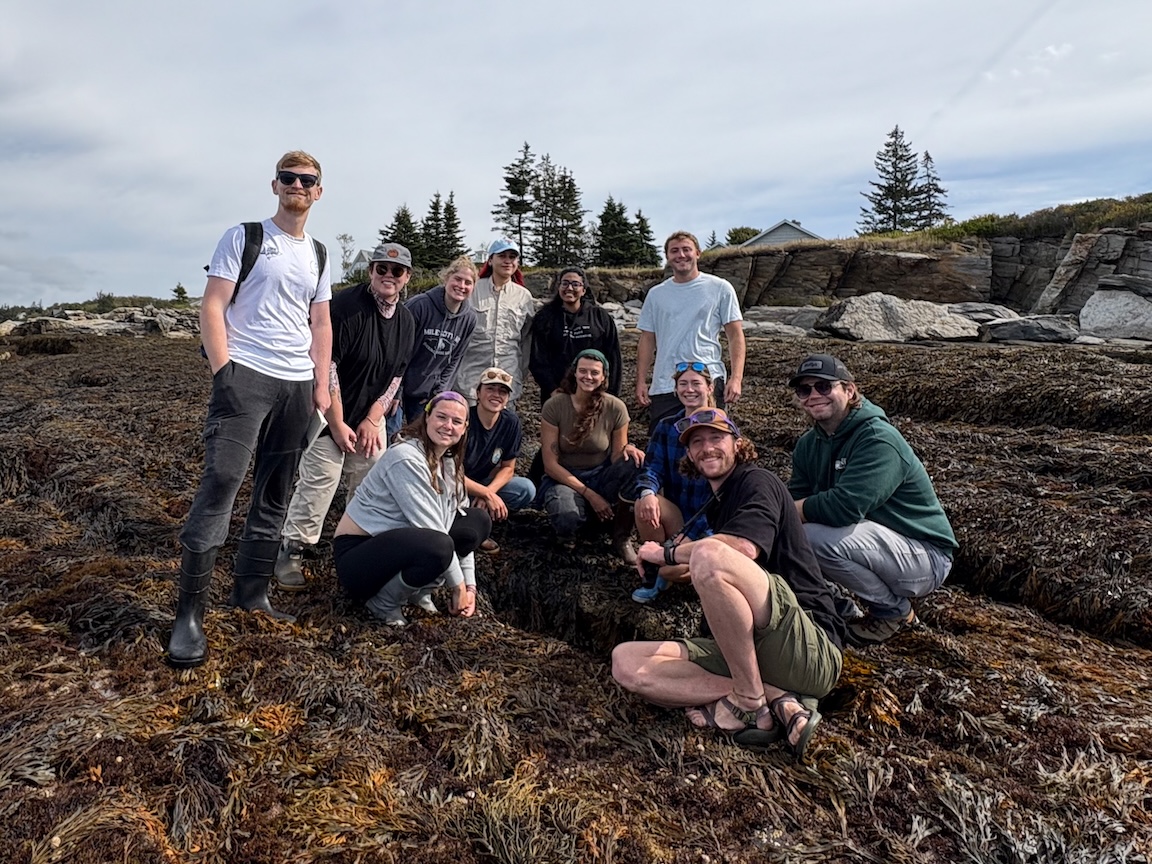
Several years ago, I joined a group of UMaine faculty, led by Joshua Stoll, to develop a proposal to the US National Science Foundation for the Ecosystem Science National Research Traineeship (NRT) program. I now have an opportunity to support graduate students and my fellow faculty in becoming translators of ecosystem science knowledge and tools. Thanks to this program, we have recruited students to UMaine from all over the country to learn how to do ecosystem science and to support ecosystem-based management better. Together, we are exploring what comes next in this field, both in terms of the scholarship and its applications. If you are interested in joining us, please check out our program website at https://umaine.edu/ecosystem-science/ or reach out to me directly at heather.leslie(at)umaine.edu.
Thank you for reading!