Summer research projects can be a huge part of a graduate student’s educational experience. Thanks to generous financial support through the Department of Mathematics and Statistics, including departmental funds, individual faculty research grants, and alumni donations, the department was able to sponsor eight Mathematics graduate school researchers over the course of the summer.
Each student worked on a project with a faculty advisor, with a weekly research group lunch that created a cohort and allowed everyone involved to discuss the work being done. Read on to hear from the students themselves about the work they did and the experiences they had.
Thishanka Alahakoon – Sri Lanka
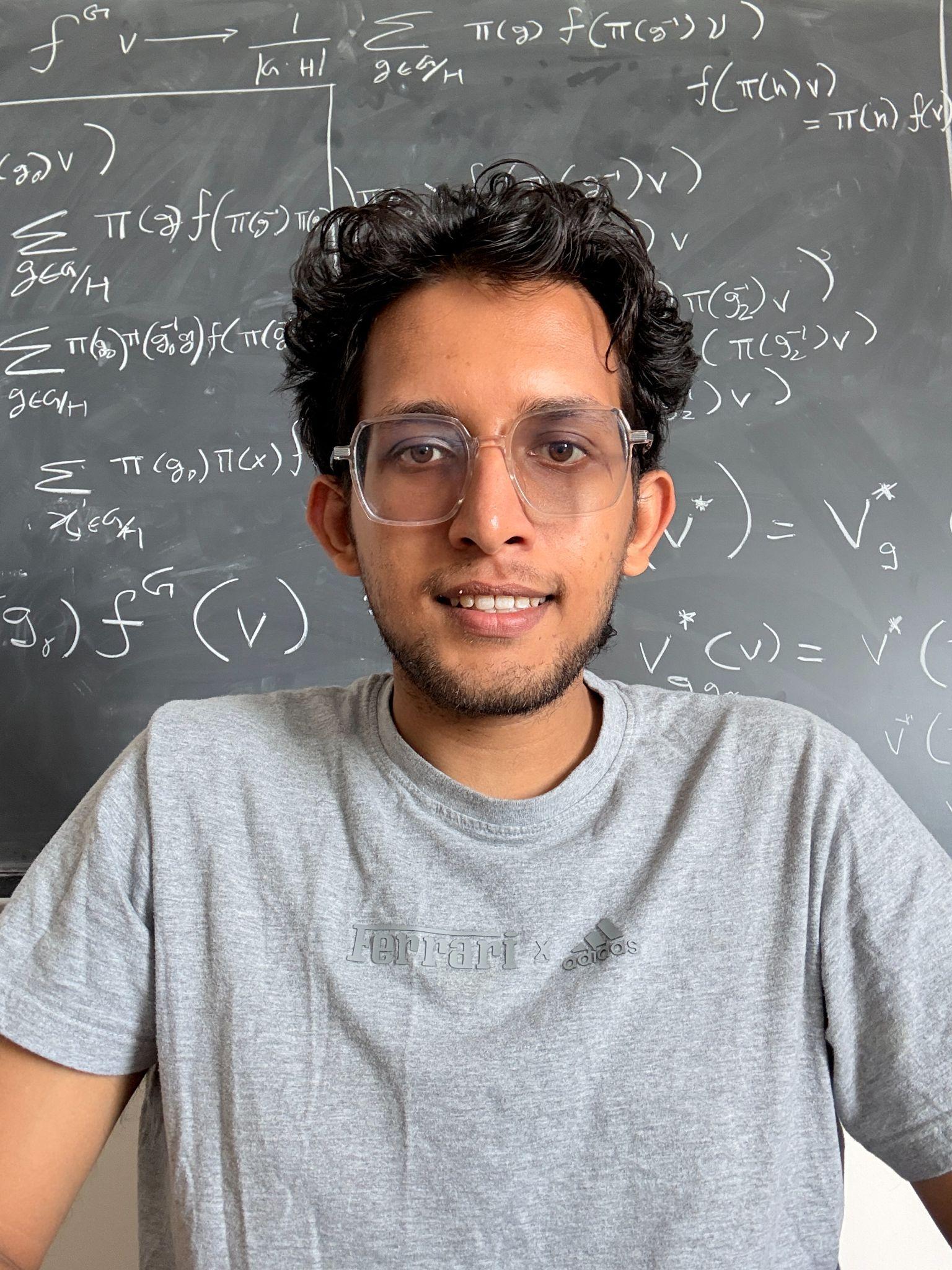
“I am currently a second-year master’s student in the Mathematics program at the University of Maine. I am currently working with Professor Gilbert Moss on a project to construct formal degrees for representations of GL(2,F) over rings in which the residue characteristic is invertible, where F is a non-Archimedean local field. Over the summer, I focused on understanding the representations of GL(2,F) and the classical definition of formal degree over the complex numbers. My summer research was supported by Professor Moss’s NSF grant.
Cadi Howell – Maine

“I graduated from the University of Maine with a BS in Mathematics in 2024 and have just graduated with my MA in Mathematics this summer (2026). For my MA thesis, I worked with Professor Peter Stechlinski to perform a sensitivity analysis of a nonsmooth Wilson-Cowan neural mass network model as well as develop a nonsmooth singular value sensitivity theory that I then used to determine the parametric influence to the singular values of the weight matrix of the nonsmooth Wilson-Cowan model. This summer, the Mathematics Department provided me with the opportunity to finish writing and defend my thesis which allowed me to graduate with my MA degree. Additionally, their funding support allowed me to revise and resubmit a journal article, based on the work I completed in my Honors Thesis, for publication in Mathematical Biosciences. I am grateful to have been able to complete these accomplishments, and my experiences at UMaine have also earned me a spot at the University of North Carolina in Chapel Hill where I am currently pursuing my PhD in Bioinformatics and Computational Biology.”
Henry Johnson – Maine
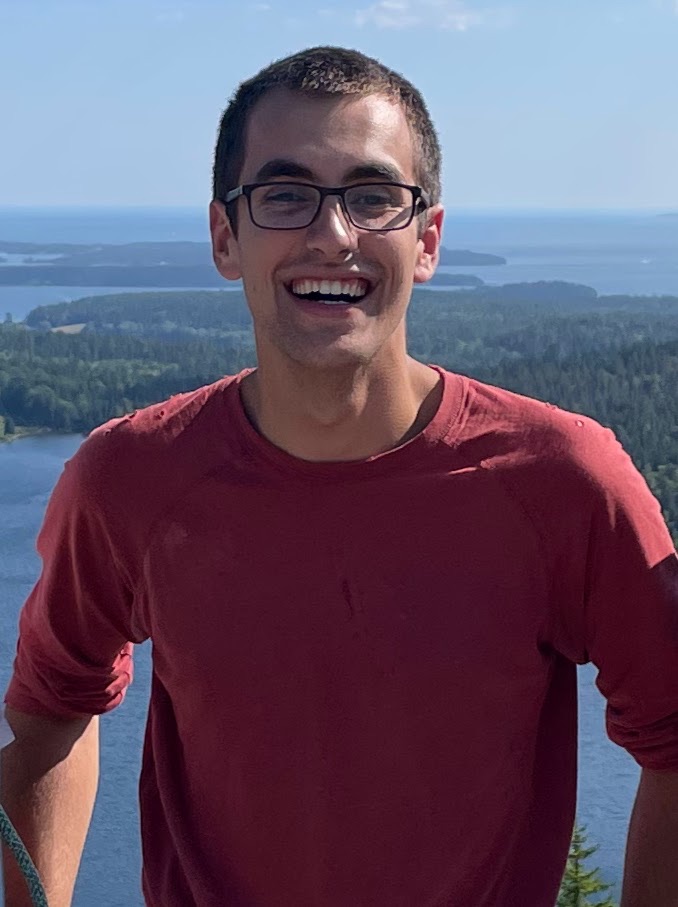
“In 2025 I graduated with my BA in math from UMaine to continue in the graduate program the next fall as a 4+1 student. After I finish my MA, I plan to move to work in industry, hopefully in a field that lets me incorporate some of the applied learning from my thesis. This summer I worked under Dr. Peter Stechlinski studying non-smooth bifurcation theory as part of my thesis work. The math department’s funding allowed me to spend several weeks focused on this work after the end of the spring semester and gain considerable progress on finishing my thesis. The aim of this work was to develop some theoretical test based on non-smooth sensitivity theory that could detect the presence of bifurcations. An important component of the research was for the theoretical tests to be reproduced in more complicated real-world models in order to apply them to the GR4J, a non-smooth discrete time rain runoff model commonly used in hydrology.”
Eva Junge – Rhode Island & Maine
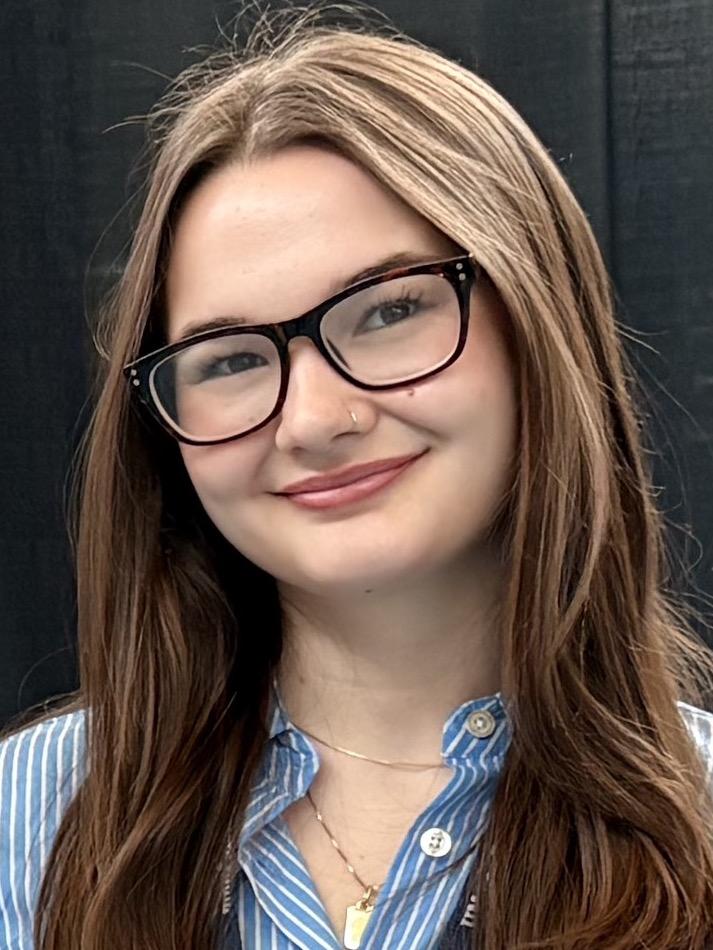
“I just completed a double degree from UMaine in English and Math, and now I am joining the math MA program as a 4+ student. This summer I worked with Professor Andrew Knightly on representation theory research, focusing on unitary discrete series representations of GL(2,R). We defined a compactly supported function to take the place of the non-integrable matrix coefficient for weight 2 discrete series representations, which will have an impact on modular forms research in number theory. This work will provide the basis for my MA thesis and give an important foundation for continued research in my academic career. My work this summer was supported both by the department and Professor Knightly’s AMS/Simons research grant.”
Nhi Luong – Vietnam
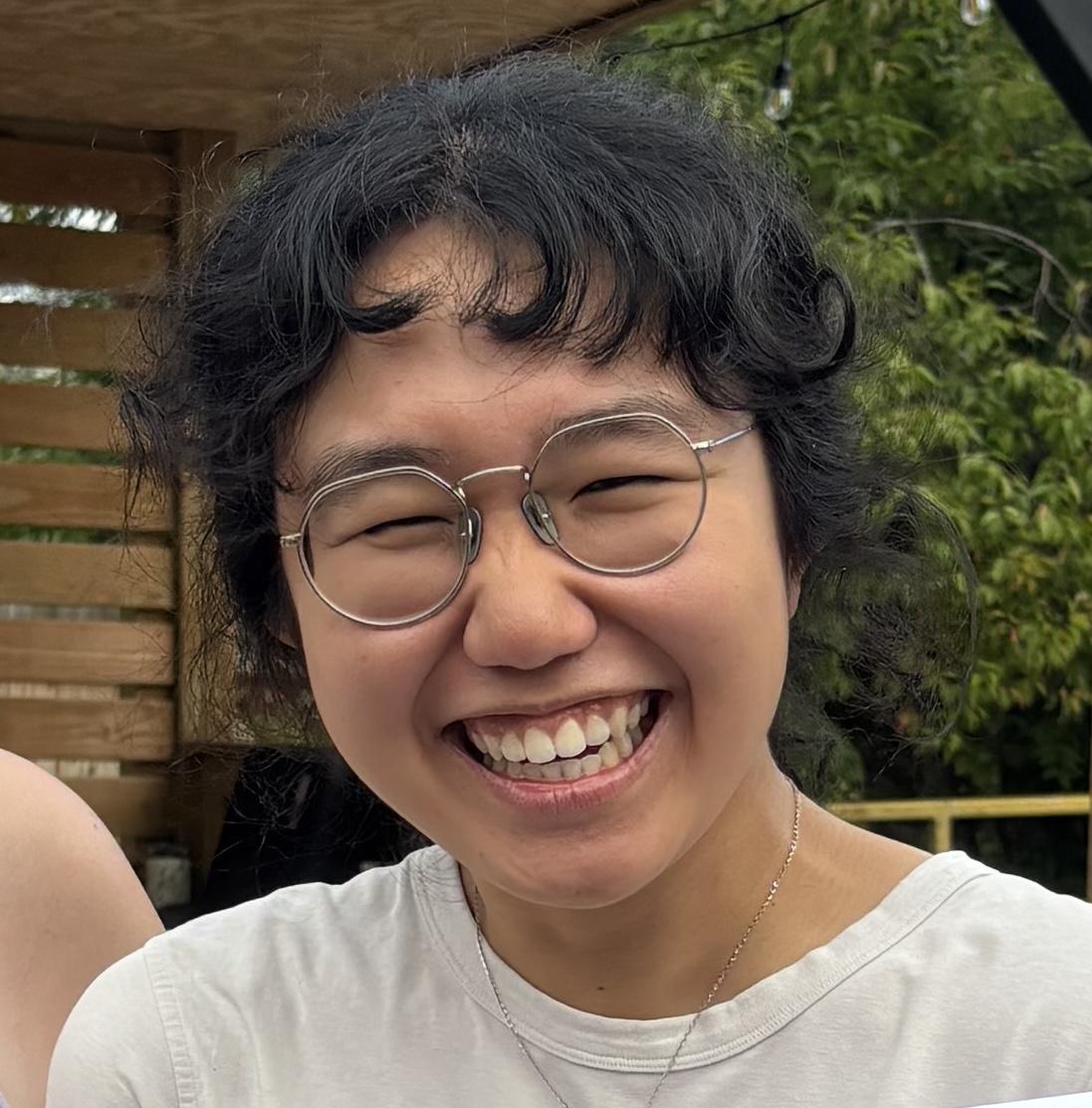
“I’m entering my second year of the MA in Math program at UMaine. Before this, I was a math major at Carleton College in Minnesota! This past summer, I worked with Professor Jane Wang on the topic of cutting sequences on translation surfaces, with financial support from Professor Wang’s NSF grant. The experience has given me a different mode of engaging with math and made the prospect of doing a thesis more manageable.”
Menelik Mekonen – Maryland
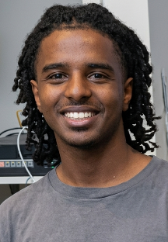
“I just graduated from UMaine with a degree in mathematics and am entering the math MA program this fall. This summer, with financial support from the Math Department, I worked with Professor Peter Stechlinski on extending reachability results for nonsmooth ordinary differential equations to nonsmooth parametric differential-algebraic equations, drawing on lexicographic derivative theory. Reachability theory is concerned with estimating where a system can end up after some amount of time, but current methods exist for nonsmooth ODEs and for smooth DAEs separately, not for systems that are both. This matters because many real-world systems, such as power systems and those used in process engineering, are naturally described by differential-algebraic equations and are often nonsmooth. The project grew directly out of my capstone research, supported by a CLAS fellowship last year, and has since shaped the direction of my MA thesis.”
Laura Thornburg – Illinois
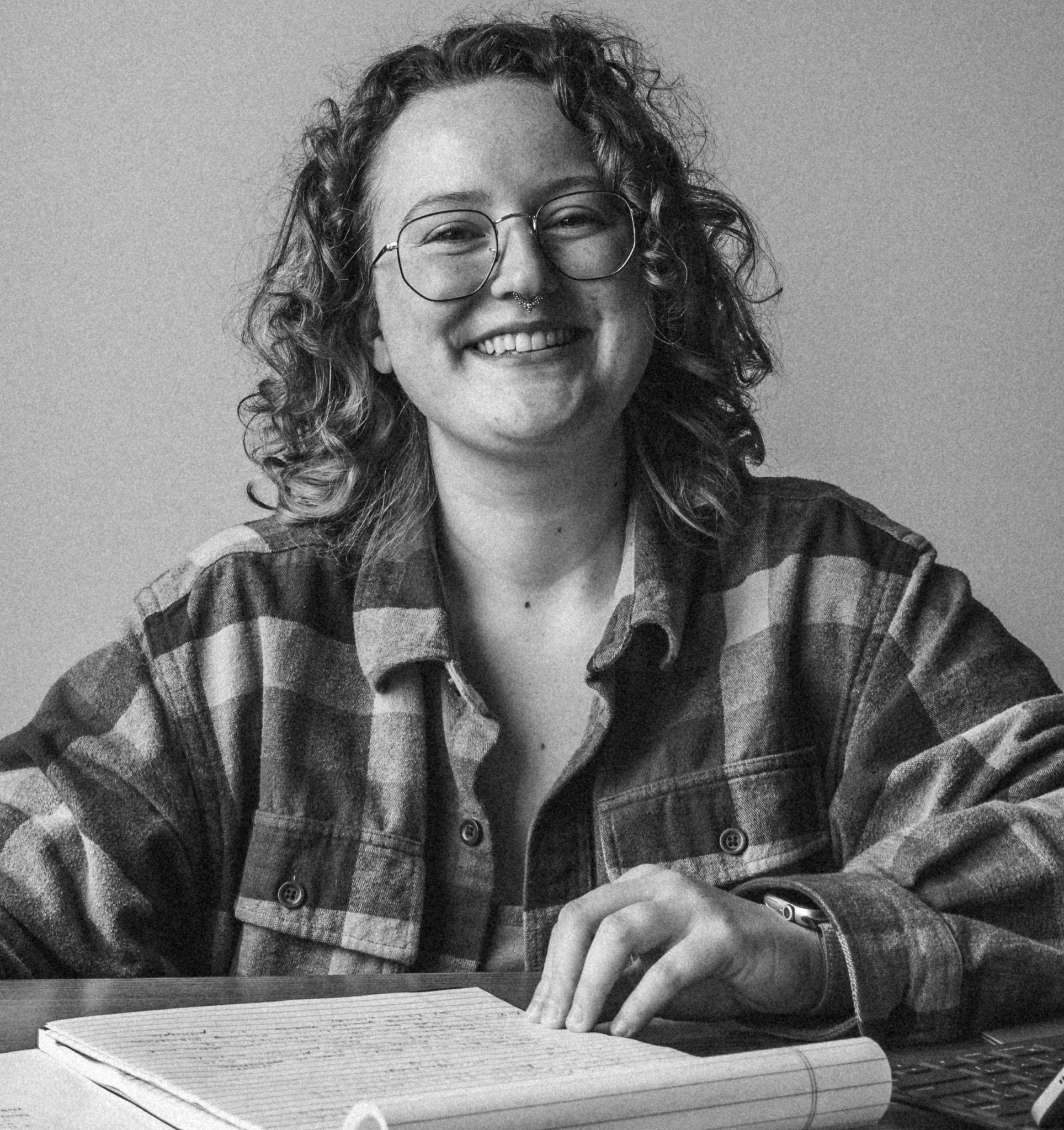
“I am starting my second year of the master’s program here at University of Maine. I completed my undergraduate degree at Mount Holyoke College in Massachusetts. This summer I worked with Professor Tyrone Crisp getting a head start on my thesis project. We developed a new construction of Hopf algebras of representations of combinatorial automorphism groups, and as we continue into the school year, we will study the antipode function on these Hopf algebras. This work was supported by Professor Crisp’s AMS/Simons research grant. I am motivated to complete a thesis because I am preparing to apply to doctoral programs to join academia as a professor.”
(Note: In addition to the students featured above, Alejandro Jimenez also worked on a project with Professor Jane Wang.)