Computer Engineering (M.S.)

About

Thesis and non-thesis options are available for the M.S. Computer Engineering. For a non-thesis degree, a minimum of 30 semester hours of coursework is required. Thesis options require 30 credit hours, of which six credits of ECE699 shall be devoted to individual study with a graduate faculty member. This work must culminate in preparing a written thesis on a significant problem of common interest and an oral defense of the thesis. Students completing a thesis must also complete one credit of Responsible Conduct of Research training.  At the advisory committee’s or Graduate Coordinator’s discretion, this credit may be substituted for one of the 6 required thesis/dissertation credits (ECE699).

To obtain a master’s degree in Computer Engineering, a student must have at least a GPA of 3.0 for all courses taken as a graduate student. In both the non-thesis and thesis options, at least 18 credit hours must be ECE course credit hours.

Requirements

For students to become candidates for a Master of Science degree in Computer Engineering, they must either have completed a Bachelor of Science degree in Computer Engineering or at least demonstrated its equivalent, with a cumulative GPA of 3.0 or better (on a 4.0 scale).  If students do not hold a B.S. degree in Computer Engineering, they must complete or demonstrate the equivalent to at least three of the following five prerequisite courses:  Introduction to Unix Systems Administration (ECE 331), Embedded Systems (ECE 471), Computer Architecture and Organization (ECE 473), Digital Signal Processing (ECE 486), and Neural Networks (ECE 490). A student may be provisionally admitted to the program pending the completion of prerequisite course(s) with a grade of B or better.

All students must register for one credit of ECE 598 Graduate Seminar during the first semester.  This seminar course’s pass/fail grade will be given upon graduation. At the advisory committee’s discretion, this seminar credit may be substituted for one of the 6 required thesis/dissertation credits (ECE699). 

Normally no more than 6 credits of ECE or COS 400-level coursework will be acceptable for graduate credit. In addition, no more than three credits of ECE599 courses may be taken toward fulfilling the requirements for a Master of Science degree in Computer Engineering. ECE699 cannot be counted as credits in the non-thesis Master’s programs. Degree candidates may also choose to take courses in Mathematics, Physics, Chemistry, and other disciplines which are consistent with his/her program goals.

Accelerated Program

In conjunction with the University of Maine Graduate School, the Department of Electrical and Computer Engineering offers the opportunity for ambitious Electrical or Computer Engineering majors to begin taking graduate courses during their senior year, double-counting up to 9 credits toward the BS and the MS. Enterprising students will then be able to get a non-thesis MS by staying in up to one extra year (i.e., the 4+1 program) or a thesis MS by staying in up to two extra years (i.e. the 4+2 program).

Admission Process
Students must be provisionally admitted into the 4+1 non-thesis or 4+2 thesis MS programs during their junior year.  To qualify for provisional admission, students must satisfy the following requirements

  • Students have completed at least 60 but no more than 100 credit hours applicable towards graduation
  • Students have an average GPA of 3.5 or higher

In the junior year, students must submit the following materials to the graduate coordinator by February 15

  • Undergraduate transcript (unofficial transcript is acceptable)
  • A plan of study that leads to graduation within 15 months after receiving the bachelors degree (Students must work with the graduate coordinator and their undergraduate faculty advisor to develop this study plan)

The graduate committee will make decisions on provisional admission for each applicant by April 15 of the same year. All application materials and admission decision will be submitted to the Graduate School.

In the senior year, provisionally admitted students must submit the formal application to the Graduate School (including payment of the application fee) by January 15. While submission of GRE score is optional for such students, GRE is highly recommended if the students wish to be considered for assistantships or scholarships.

During the senior year, provisionally admitted students would take up to 9 credits toward the masters degree. These courses would also count towards the bachelors degree (joint credits), but must be part of the Master’s Program of Study.

Upon graduation with a bachelors degree, and with satisfactory performance (defined as 3.5 cumulative GPA and no grade below “B” in the courses to be double-counted for the masters degree) in courses taken as an undergraduate, the student may be formally matriculated into the masters program. Students who meet these requirements must matriculate in their masters program within one semester/term after receiving their bachelors degree in order to use the joint credits. Under extraordinary circumstances, a student may petition to delay matriculation up to an additional 12 months.

To double count 9 credits toward the BS and the MS, the 4+1 degree requires students to complete the degree 15 months following matriculation, and the 4+2 degree requires students to complete the degree 27 months following matriculation.

Students can move between our 4+1 and 4+2 degree programs. If a student starts in a 4+1 program and requests to move to the 4+2 before the end of the 15 month 4+1 period, then in order to apply up to 9 credits of graduate courses taken as a senior to the master’s degree as well as to the undergraduate degree, the student must actually complete a thesis successfully in the 27 month period of the 4+2 program. If a student in the 4+2 option requests to drop back to the 4+1 option, s/he must complete all the requirements for the 4+1 within 15 months of finishing the bachelor’s degree, otherwise the graduate courses taken as a senior may not also be applied to the master’s degree. In addition, s/he cannot count ECE 699 as credits in the 4+1 program. A student may petition the Graduate School for an extension due to extenuating circumstances.

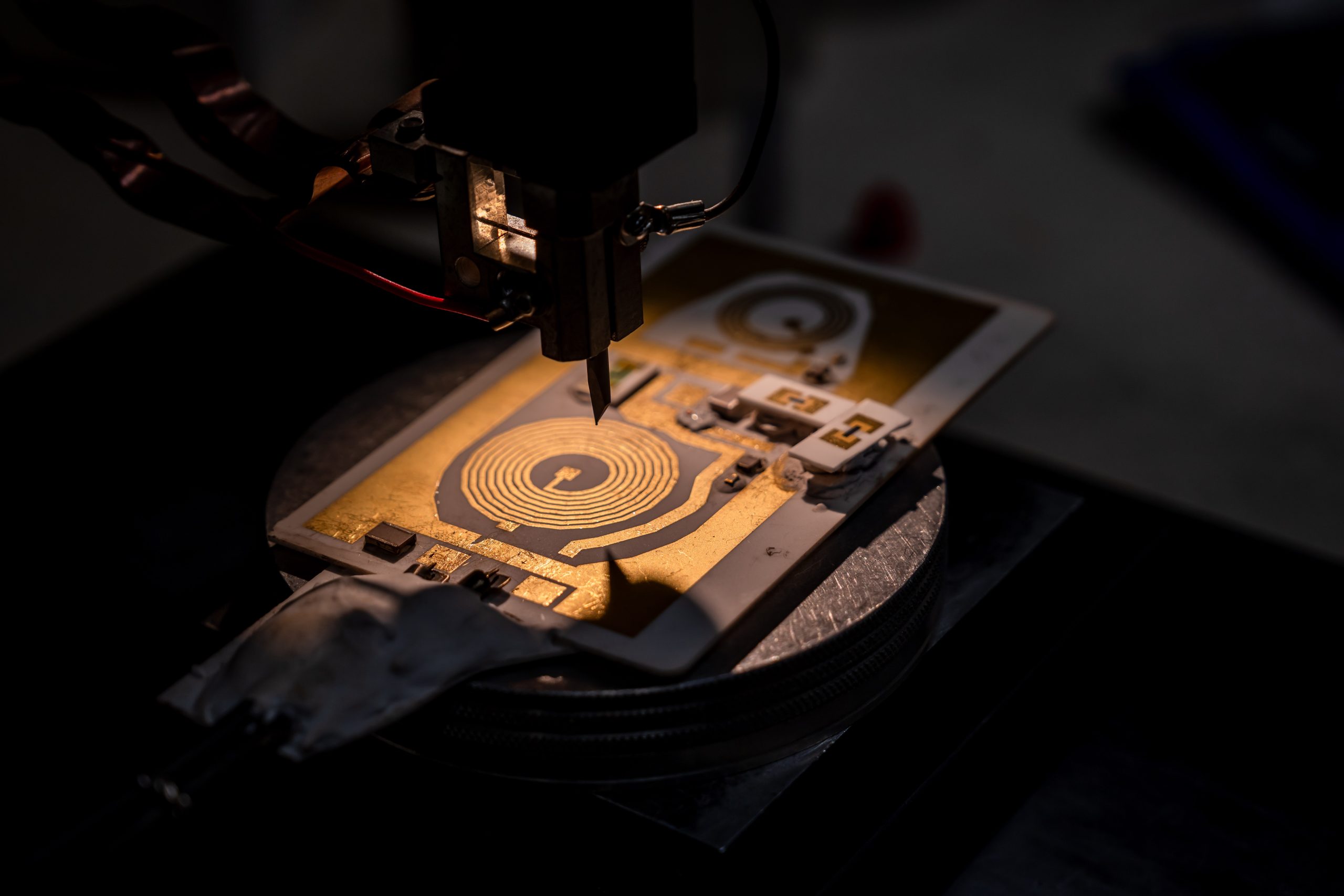
Computer and Electrical Engineering lab

At a Glance

Maine College of Engineering & Computing

Electrical & Computer


Degree Level

Master

Degree Earned

Master of Science in Computer Engineering

Mode of Study

In-Person

time to Complete Degree

30 Credits

Maine College of Engineering & Computing

Electrical & Computer


Degree Level

Master

Degree Earned

Master of Science in Computer Engineering

Mode of Study

In-Person

time to Complete Degree

30 Credits

Contact

Electrical & Computer

Yifeng Zhu

Barrows Hall, Room 101

mcec.umaine.edu/depts/ece/

P

207.581.2224

Admissions

Graduate

5775 Stodder Hall

umaine.edu/graduate/apply

P

207.581.3291

International

Chadbourne Hall, Room 122

go.umaine.edu/international-undergraduate-admissions/

P

207.581.3437

F

207.581.2920

Back to top