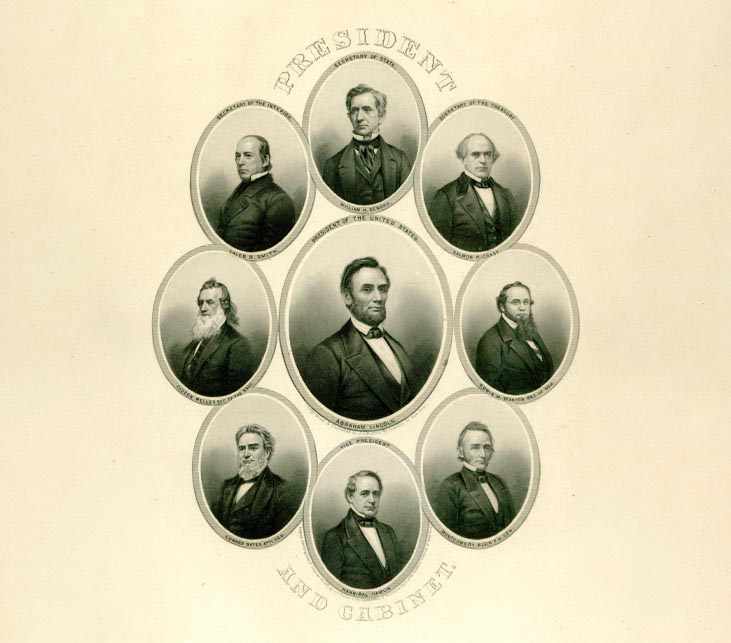
The Morrill Act was signed into law by President Abraham Lincoln on July 2, 1862, providing each loyal state with 30,000 acres of land for each senator and representative; Maine received 210,000 acres and chose to use the funds to establish a college.
The Maine State College of Agriculture and Mechanic Arts (MSC) was established by the Maine Legislature on February 24, 1865.
Classes began on September 21, 1868, with 12 students and 2 faculty members.
1870s
In 1871, the Reverend Charles F. Allen was appointed the first president of the college.
In 1872, the Board of Trustees voted to admit women; Louise Hammond Ramsdell became the first woman to enroll.
The first commencement was held in 1872, with six graduates.
Louise Hammond Ramsdell became the first woman to graduate, in 1874.
The first fraternity, Q.T.V., was established in 1874.
1880s
Percia Vinal became the first woman to receive a graduate degree, in 1882.
The Hatch Act of 1887 provided $15,000 annually to establish the Agricultural and Forest Experiment Station.
Coburn Hall was completed in 1888.
1890s
In 1890, White Hall burned, and Wingate Hall was constructed in 1891.
In 1893, Abram Winegardner Harris became president.
Phi Kappa Phi, the nation’s oldest and largest interdisciplinary honor society, was founded at the University of Maine in 1897.
In 1897, the name of the institution was changed to the University of Maine.
1900s
Alumni Hall was completed in 1901.
In 1902, Adelbert Sprague and Lincoln Colcord created the “Stein Song,” which later became the school song.
Andrew Carnegie donated $50,000 for a library in 1905.
The Senior Skulls, an honor society for men, was founded in 1906.
1910s
The Smith-Lever Act of 1914 created the Cooperative Extension Service.
In 1915, the men’s cross-country team won the national championship.
During World War I, the campus was converted into a military barracks (1917–1918).
1920s
In 1920, women’s basketball became the first women’s varsity sport.
The All Maine Women honor society was founded in 1925.
The Memorial Gymnasium and Field House were built in 1926 to honor those who died in World War I.
In 1926, the university established WGBX, the first college radio station in Maine.
1930s
In 1934, Arthur A. Hauck became president; he served for 24 years, longer than any other UMaine president.
The first Maine Day, a day of community service, was held in 1935.
1940s
During World War II, enrollment dropped sharply as many students enlisted.
After the war, enrollment surged with the return of veterans, peaking at more than 3,000 students by 1947.
The Raymond H. Fogler Library was completed in 1947.
1950s
The Memorial Union opened in 1953 as the center of student life.
In 1958, doctoral degrees were authorized, with the first awarded in chemistry.
1960s
In 1963, President John F. Kennedy delivered a convocation address on campus.
The University of Maine System was created in 1968.
1970s
The Franco-American Center was established in 1972.
Following the passage of Title IX in 1972, women’s athletics programs expanded.
By the late 1970s, enrollment exceeded 10,000 students.
1980s
The Women in Curriculum program was established in 1981.
In 1984, women’s ice hockey was added as a varsity sport.
In 1986, the name of the campus was officially restored to the University of Maine.
Under coach Shawn Walsh, men’s hockey gained national prominence.
1990s
The women’s basketball team achieved national recognition in the 1990s.
In 1991, UMaine was designated as Maine’s Land and Sea Grant university.
Enrollment peaked at about 12,000 students in the mid-1990s.
2000s
The University celebrated its 135th anniversary in 2000.
Renewable energy and sustainability initiatives expanded during the decade.
2010s
The Blue Sky Plan was launched in 2011 to guide academic and research growth.
In 2018, UMaine was classified as an R1 university by the Carnegie Foundation.
Enrollment stabilized around 11,000 students by the late 2010s.