
Papermaking
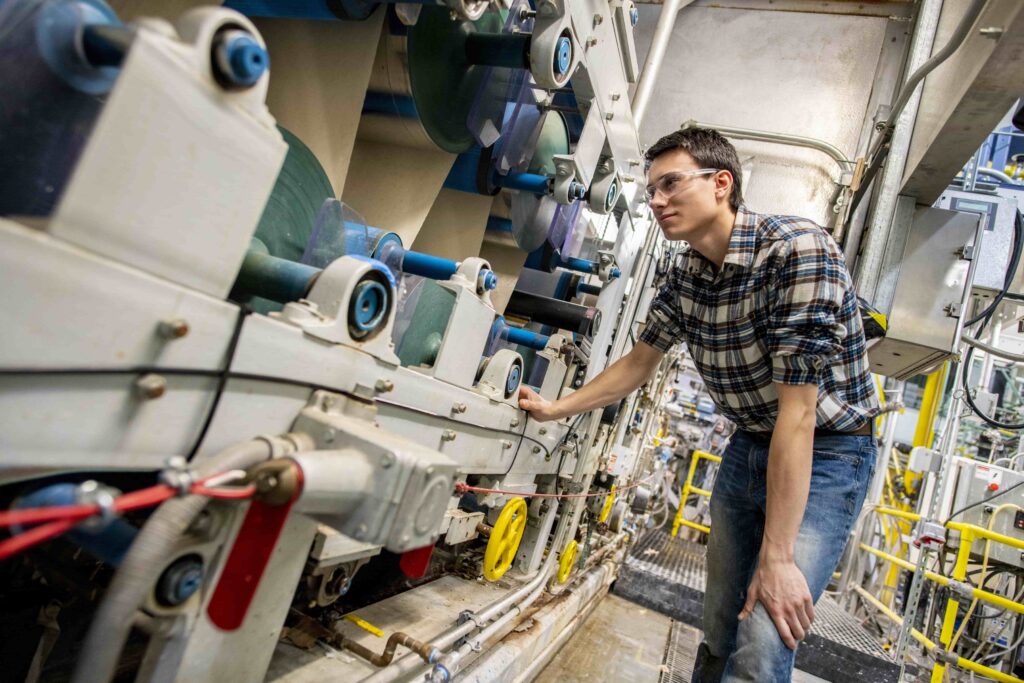
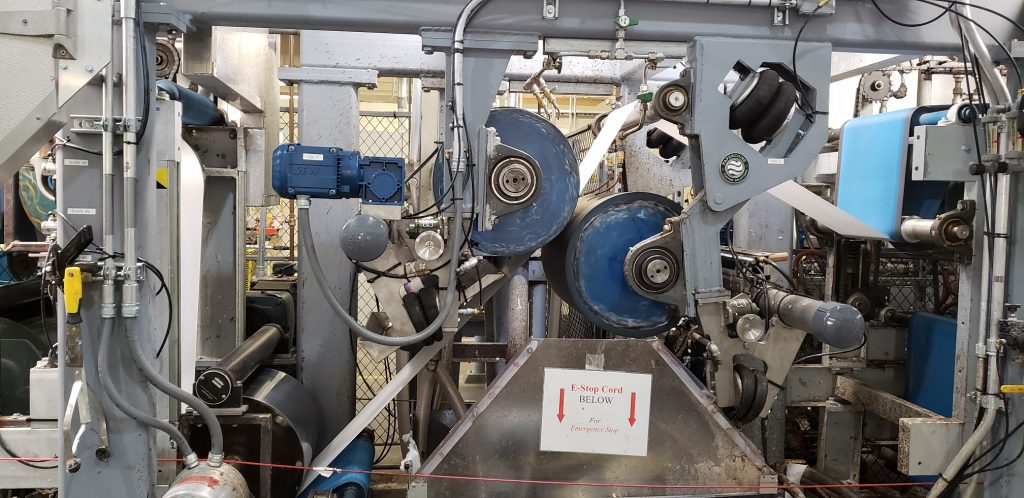
PDC’s pilot paper machine is available for raw material and process operation studies. The paper machine may also be used to evaluate equipment components. Steady state is reached in less than thirty minutes, allowing multiple trials in a single day. Come work with us, or let us make your paper for you.
The PDC’s pilot paper machine is capable of several processes, including complete equipment analysis, raw material studies, and process operation studies.
Specifications
Equipment List
The Power of Dynamic Formation
Unlike conventional static sheet formers, the Canpa unit replicates the high shear forces and dynamic drainage conditions found on a full-scale commercial paper machine. This ensures that the handsheets produced are highly representative of production-level materials, minimizing the risk and cost associated with scaling up new formulations.
Key Features & Capabilities
- Commercial-Relevance: Produces sheets that closely mimic full-scale machine conditions, including velocity and fiber orientation effects, which are vital for predicting material performance.
- Precision Control & Speed: Features automatic, repeatable control over key variables for consistent results. The system is also capable of forming multiple layered sheets and achieves a high throughput of 4-8 sheets per hour.
- Sample Quality: Produces consistent, large 12.5” X 38” large hand sheets in a controlled laboratory environment suitable for detailed physical and structural analysis. Sheets undergo integrated pressing, followed by restrained drying for superior consistency.
Integrated Support and Advanced Processing
Beyond the core forming process, the PDC offers comprehensive services to support your entire research project:
- Expert Operation: The equipment is operated by our experienced staff to ensure optimal results and process reliability.
- Furnish Preparation: We provide pulp refining services to precisely prepare the furnish to your specifications.
- Advanced Materials: We have the unique ability to produce handsheets with up to 100% Cellulose Nanofibrils (CNF), enabling advanced material development.
Versatile Applications
The equipment is ideal for testing and optimizing a wide range of materials and formulations:
- Traditional Grades: Research on standard paper grades (fine paper, linerboard, specialty paper).
- Next-Gen Materials: Testing Specialty Fibers such as Cellulose Nanofibrils (CNF), Microfibrillated Cellulose (MFC), and synthetic fibers.
- Advanced Products: Use in developing non-wovens and composites, focusing on fiber distribution and bonding.
This extensive capability allows users to optimize formulations and gain deeper insights into how different fibers interact under dynamic conditions.
Accelerate Your Research
Leveraging the Canpa Dynamic Sheet Former at the UMaine PDC allows you to:
- Reduce Scale-Up Risk: Get accurate, predictable results early in the development cycle.
- Optimize Formulations: Rapidly test and refine changes to fiber blends, additives, and chemistries.
- Analyze Fiber Dynamics: Gain deeper insights into how different fibers interact under dynamic conditions.
- Process Challenging Stocks: Effectively dewater difficult-to-dewater stocks
Book Your Trial Today
Partner with the University of Maine PDC to move your fiber research from concept to commercial reality faster.
Contact: james.hargreaves@maine.edu
A size press is an option in the operation of the pilot paper machine. This sophisticated piece of equipment allows for the addition of surface sizing, as well as a light coating on the base sheet. Our upgraded size press allows for a wide range of coating and surface treatments to be applied, such as silicone and barrier coatings, and therefore, expand the types of high-value, specialty paper, and composite prototypes that can be produced. In addition, the new module significantly improves efficiency and reduces the time required to produce prototypes for market testing.
Equipment details:
The Wet End Process Simulator (WEPS) from Sam Bo Scientific is specially designed to investigate the effects of raw material variation and chemical additives on paper quality, drainage, retention, and uniformity by replicating a paper machine or fiber thermoforming machine under vacuum dewatering and vibration.
The WEPS can be used for controlling and setting new chemicals, testing new wires, identifying additive problems and developing new paper products. The unit enables tight control on suspension shearing intensity, additives’ contact time optimization and drainage conditions, and produces sheets that have technical characteristics closely related to actual machine-made papers.
Sheet Formation Specifications
Sheets can be tested for TAPPI standard physical properties.
Coating
The PDC routinely works with clients to improve product properties and lower costs by formulating and applying coatings to their products. Coating a thin layer of material on the surface of paper, film, foil, or composites is a very effective method of adding functionality and value to a product. Printing papers, paper cups, grease-resistant food packaging, and high-strength composites all benefit from quality coatings. For applying coatings, the PDC has a bench drawdown coater as well as a Faustel Labmaster coater.
Faustel Labmaster Coater
Coating application is one of the most important steps in making paper, foil and other materials, and the PDC is now able to coat commercially made basepapers or specialty basepapers produced on our pilot paper machine using a variety of methods. The Faustel Labmaster coater offers a versatile range of coating applications for papers, films, foils, non-wovens, and specialized composite materials.
The pilot coater has flexible, three-roll coating configurations for:
Some of the pilot coater’s other features include:
Calendering
Calendering improves printing properties, particularly roughness and gloss. The values attained depend on the speed, pressure, and temperature of calendering, the properties of the base sheet, the average moisture content, and the composition of the coating. The options available for calendering include:
On-line calender stack
Off-line calender stack
Capabilities
To begin working with us, visit our Working with the PDC page.