Experiment Station News

New way to track toxic algae that threatens shellfish industries developed by researchers

Tiny organisms called algae can have an outsized impact on working waterfronts. While many benefit their ecosystems, others can cause devastating economic and ecological effects.  University of Maine Ph.D. candidate Sydney Greenlee, alongside researchers Robin Sleith and Peter Countway from the Bigelow Laboratory for Ocean Sciences, have developed a faster, more accurate way to detect […]

Read more

Mech receives public service award from Maine Forest Products Council

Angela Mech, associate professor of forest entomology at the University of Maine, received the Maine Forest Products Council’s 2025 Abby Holman Public Service Award in recognition of her passion, loyalty and dedication to Maine’s forest products industry, government and economy. As director of UMaine’s Spruce Budworm Processing Lab, Mech has led research to support the […]

Read more

Kelp farming is expensive, but a new resource points to lower costs

Farming kelp to sell as food, beauty products, fertilizer additives and other goods is a growing industry in Maine, but also a costly one. One key barrier for new farmers is a lack of cost-analysis tools to help reduce expenditures and develop sustainable business plans.  Researchers from Kelson Marine in Portland, Maine and the University […]

Read more

Forest with sensor on tower

Forty years of forest ecology research from canopy to floor

Established in 1986 through a partnership between the University of Maine and International Paper Company, the Howland Research Forest is a forest ecosystem research site in central Maine, representing a low-elevation conifer/northern hardwood transitional forest dominated by spruce and hemlock. In 2007, the Howland Research Forest was purchased by the Northeast Wilderness Trust. Home to […]

Read more

UMaine research highlights how PFAS uptake differs among crops

One way people ingest a group of toxic chemicals known as PFAS is through consuming produce, dairy and meat products that have been exposed to contaminated soil and irrigation water. Some guidance is available on how growers can try to mitigate the uptake of PFAS, but it’s limited due in part to a lack of […]

Read more

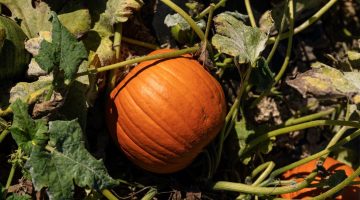
Highmoor Farm keeps pumpkin and apple season alive in Maine

Pumpkin season starts at the University of Maine’s Highmoor Farm early in June. David Handley, a small fruit and vegetable specialist at University of Maine Cooperative Extension, and Mark Hutton, associate professor of vegetable crop, watch as the pumpkins grow, taking calls along the way from farmers in Maine who may be experiencing their own […]

Read more

State’s future economy anchored in the sea, University of Maine president says

Joan Ferrini-Mundy highlighted the university’s leadership at today’s Maine Blue Economy Innovation Summit. ‘You don’t get to focus on an economy without thinking about the people who make and drive that economy,’ she said. On Maine’s rugged coast, where shipbuilding, fishing and working waterfronts have defined generations, leaders say the future is once again tied […]

Read more