
Pips Veazey and developing research networks
Biography
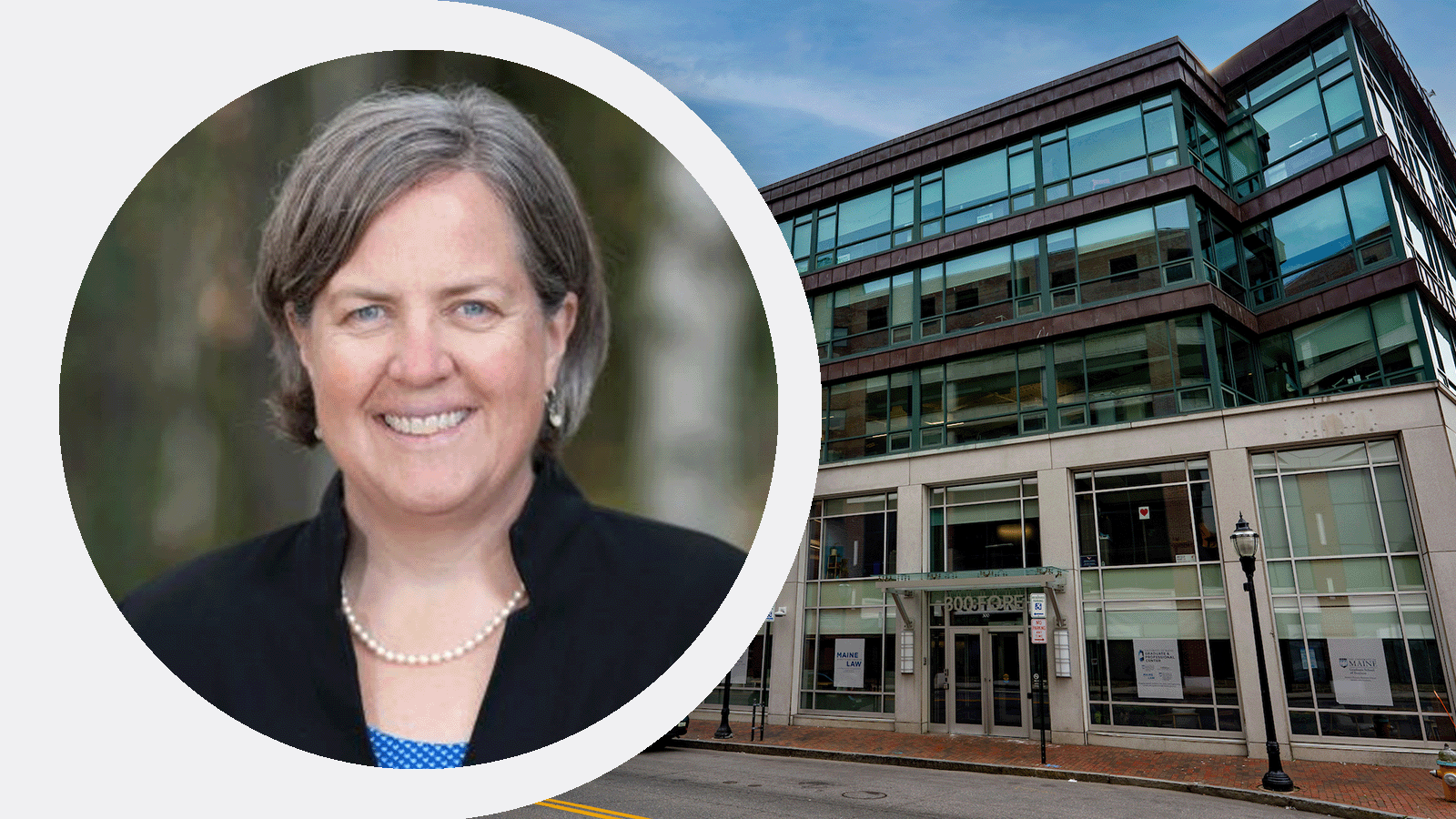
Pips Veazey is the inaugural director of the University of Maine Portland Gateway, a strategic hub providing streamlined access to UMaine’s comprehensive research, education and outreach resources. Previously, Veazey led the Alaska NSF Established Program to Stimulate Competitive Research (EPSCoR), where she developed extensive expertise in leading large-scale, interdisciplinary research initiatives. In her current dual capacity with the Portland Gateway and the NSF E-CORE RII Maine-SMART (Strengthening Maine’s Research Ecosystem and Pathways Through Strategic Capacity Building) project, she facilitates the growth of research and development networks at the state and national level. A Maine native, she brings a profound dedication and unique regional perspective to her leadership role.
Q: How did you become involved with the Gateway?
Prior to my start at the University of Maine, several colleagues identified this role as a natural extension of my professional background. I was immediately drawn to the position’s strategic location and the opportunity for an inaugural director to define the Gateway’s institutional mission. I felt compelled to establish a presence in Portland that could effectively bridge diverse capabilities, disciplines, and perspectives. One of my objectives was to leverage the field of team science to bolster the research infrastructure within the State of Maine. My previous work centered on “co-creative” frameworks—initiatives designed to facilitate cross-boundary collaboration and build collective team capacity. The vision for the Portland Gateway aligned perfectly with that experience. It has been a privilege to collaborate with amazing colleagues, curate cross-sector engagements, and expand the state’s research capacity through innovative, high-impact connections.
Q: What work does this entail?
The mission of the Portland Gateway is defined by our core pillars: “Connect, Convene, and Converge.” We facilitate novel partnerships between ideas and stakeholders, inviting experts from diverse sectors to engage in rigorous dialogue about the challenges facing Maine today. Issues such as limited housing, food security, changes in our natural systems, human migration and social polarization are global in scope, yet we address them through a localized, disciplinary lens. By convening research teams alongside legal experts, business executives, municipal and state policymakers, and non-profit organizations, we foster an environment conducive to holistic and shared problem-solving.
In addition to these statewide engagements, we oversee a flagship graduate course, “Complex Problem-Solving for Future Leaders.” This year, 15 graduate students representing law, business, policy, and interdisciplinary research met weekly to analyze complex challenges and the sophisticated methodologies used by experts to mitigate them. The students’ final projects were remarkably diverse, proposing integrative solutions to global issues by synthesizing multiple methodologies. This work cultivates a rigorous academic environment that prioritizes innovative, cross-functional thinking over traditional, siloed approaches.
Q: How does this overlap with your work for Maine-SMART?
I have been fortunate to have a partner in all of this work, Associate Director Anne Heberger Marino—who also serves as the Associate Director for Maine EPSCoR— and who possesses an extensive background in Team Science. We have dedicated much of our careers to studying and optimizing the efficacy of large-scale research teams. This work involves developing formal collaboration plans, clarifying roles, establishing robust communication protocols, and creating shared cognitive maps for complex projects. We use evidence-based research to guide teams through the intricacies of collaboration. Anne and I have designed a suite of exercises that allow teams to integrate their expertise and recognize the interdependencies required for success. Given that EPSCoR functions as a “team of teams,” it is essential that these units remain integrated and interdependent as they pursue a unified strategic objective.
Q: What is the process like to expand Maine’s network of resources?
The collaborative network within Maine is exceptional, and its expansion is a primary strategic driver for our office and NSF’s interests with an E-CORE RII project. Our methodology involves identifying synergies between University of Maine faculty and external partners in the private and public sectors—including business, law, and engineering—to address specific challenges. As these key constituencies engage with us, our network evolves organically. Partners recognize the capabilities within EPSCoR and the broader University system, and they increasingly look to us as a long-term resource. This creates a self-sustaining cycle of growth that strengthens the state’s intellectual and economic infrastructure.
Q: Do you find there are a lot of similarities between working for EPSCoR in Maine and Alaska?
Upon returning to Maine, I was struck by the significant parallels between the two universities and the potential for strategic alignment. Several years ago, we secured funding from the National Science Foundation through the Arctic Research Consortium of the U.S. to facilitate a researcher exchange between Maine and Alaska. This initiative allowed participants to identify areas of complementary expertise, such as UMaine’s preeminent engineering programs and Alaska’s leadership in cold-weather and Arctic engineering.
Both Maine and Alaska are rural, resource-dependent states that serve as critical entry points to the Arctic. Maine has a vested interest in the North Atlantic regarding trade, tourism, and emerging geopolitical shifts. As the Arctic becomes increasingly accessible, new opportunities and challenges will emerge, requiring proactive collaboration. Maintaining this interstate relationship is essential for exploring these collaborations and preparing for future global developments.