
common law and statutes
A concise overview of the common law and statutory framework that governs shoreline ownership and public access in Maine.
what is the public trust doctrine?
The public trust doctrine in an ancient legal principle. Scholars have traced the doctrine back to the Roman emperor Justinian who declared that the air, running water, sea, and the shores of the sea are all common property. Under English common law, the sovereign owns all navigable waters and submerged lands as trustee for the benefit of the public. The public trust doctrine provided legal protection against those, including kings and emperors, who might impede the public’s interests in important activities such as fishing, commerce, and navigation. This English common law tradition applied in the English colonies and was inherited by the United States upon independence.
Simply stated, the Public Trust Doctrine is a common law principle that supports the public’s right of coastal access for certain coastal-dependent activities. While the Public Trust Doctrine has certain elements that apply to all states (i.e., the state holds certain legal interests in the coastal area for the benefit of its citizens) each state applies the Public Trust Doctrine in accordance with its property law and historical background.
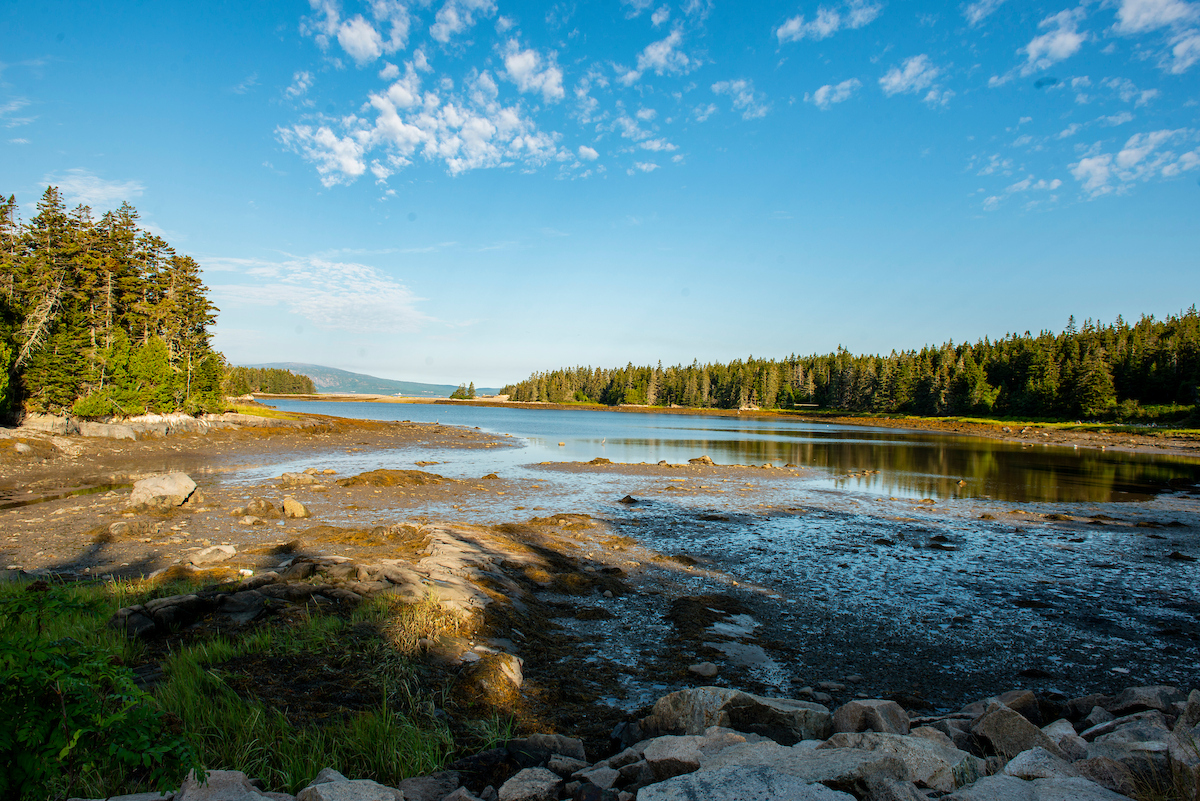
The historical background of the doctrine is quite unique in Maine. In 1647, the Massachusetts Bay Colony (which then still included the geographic area that would become Maine) enacted an ordinance that extended private property rights from the high-water to the low-water mark. Although the 1647 ordinance preserved public access to the intertidal zone for “fishing, fowling, and navigation,” it was a significant departure from existing property law at the time. In most other coastal states, the land between the high-water and low-water mark is owned by the state in trust for the public. The grant of private rights to the low-tide mark remained in Maine’s legal codes following their separation from the Massachusetts Bay Colony in 1820.
The background and history of both the Public Trust Doctrine in Maine and the Colonial Ordinance of 1647 are extensively set out in the 1989 decision Bell v. Town of Wells (“Moody Beach”), as well as in the 2011 McGarvey v. Whittredge case. An in-depth review of these cases is available in Public Shoreline Access in Maine: A Citizen’s Guide to Ocean and Coastal Law. A broad overview of public and private rights to the Maine shoreline is provided below.
Who has rights to the shoreline in Maine?
In Maine, the answer is usually a combination of private property owners, the government (either the state or the town), and the public.
The legal title to the shoreline above the low-water mark may be held by private individuals, businesses, or nonprofit organizations such as land trusts. Shoreline property might also be owned by the federal, state, or local government in the case of a public beach or park.
Regardless of who holds the legal title, the public retains access to the intertidal area for the purposes of fishing, fowling and navigation. This is granted to the public by the Public Trust Doctrine and the colonial ordinance described above. For each space and use of a space, there is a balance between public and private rights.
Private property owners have a legal right to prevent the use of their property by others. This is known as the right to exclude. Although coastal property owners cannot exclude members of the public exercising fishing, fowling, and navigation rights, they can prevent people from gaining access to the shoreline of their land for recreational or other purposes. Gaining access for unauthorized uses- either perpendicularly or horizontally to the shore- may be trespassing for which one may have charges brought up against them in a court of law.
There are legal means by which private landowners may lose their right to exclude. In Maine, the public may acquire certain rights to use the land of another through long and historic use. This is known as a prescriptive easement. In the 2000 case Eaton v. Wells, the Maine Supreme Judicial Court found that the Town of Wells and the public had a right to use Wells Beach despite its private ownership via a prescriptive easement which it established by providing evidence of historic use including beach maintenance and seasonal lifeguard stands. However, prescriptive easement claims will only succeed if they can overcome the legal presumption in Maine that public recreational uses are undertaken with the permission of the landowner. In the 2014 case Almeder v Kennebunkport, the Town of Kennebunkport failed to establish a prescriptive easement for public use of Goose Rocks Beach because it did not present sufficient evidence to overcome this presumption. Although the effort to establish a prescriptive easement failed, the Town of Kennebunkport was eventually able to prove through subsequent litigation that it held legal title to the beach. Almeder II (2019).
The government has the authority under its police powers to make laws protecting the welfare of its citizens, including regulating lands next to beaches and shores. Under the public trust doctrine, the government is obliged to act on behalf of the public to protect publicly-owned submerged lands below the mean low tide line, and publicly owned natural resources such as fish, shellfish, and seaweed that might be harvested from the shore. For example, the state may set commercial and recreational harvesting limits and towns may enact local ordinances that establish hours of operation for public beaches.
The U.S. Constitution and many state constitutions also give the government the right to take private property under the power of eminent domain but only if the landowner receives appropriate compensation. Sometimes the government’s attempts to merely regulate behavior on or use of land goes so far as to amount to a “taking” requiring the government to pay the landowner for the lost value of the land. For example, a state or local regulation prohibiting any development of a particular parcel of land would require compensation. You can read more about eminent domain and takings here.
What are the Public’s Access Rights in Maine?
The Maine Supreme Judicial Court has been addressing the question of who can access the Maine coast, on a case-by-case basis since the early nineteenth century. The current battles over public access in the Maine courts trace their origins to a court ruling in 1989.
In March 1989, the Maine Supreme Judicial Court ruled on a conflict between public versus private rights to the shore in Maine in Bell v. Town of Wells, also known as the Moody Beach case. The court ruled that the only public rights recognized in the intertidal areas were those articulated in the Colonial Ordinance—fishing, fowling, and navigation. Further, the court determined that the 1986 Public Trust in Intertidal Lands Act, which guaranteed public recreational use of intertidal lands, was an unconstitutional taking of private property for public use.
Since the Moody Beach decision, access to Maine’s coastline has continued to be a contentious issue as litigants fight to determine what “fishing, fowling, and navigation” means. Since many of the cases defining fishing, fowling, and navigation date from the mid-nineteenth century, the case law is of limited help in defining the modern parameters of these terms. Nonetheless, the case law does demonstrate that the legal meaning of “fishing,” “fowling,” and “navigation” extends beyond a simple dictionary definition of each individual term.
The courts have found that the term “fishing” applies to finfish such as cod, herring, and bluefish, and also includes digging for worms and clams, harvesting shellfish, and taking sea manure (organic detritus and waste of marine organisms) and floating seaweed. However, court decisions have placed restrictions on removing some resources from the intertidal area. In the 2019 case Ross v. Acadian Seaplants, the Maine Supreme Judicial Court held that rockweed in the intertidal zone belongs to the upland property owner, finding that the activity of harvesting living rockweed attached to the intertidal bed was neither a form of “fishing” or “navigation”. Permission from the upland property owner would be needed to engage in such activities.
The term “fowling” has not received nearly the same judicial scrutiny but is generally interpreted to mean bird hunting. Some commentators have suggested that the meaning should be widened to include bird watching, but there is no indication that the Court would be willing to extend the ordinance beyond the obvious meaning of the word.
The term “navigation” has always been construed to mean that the public can sail over the intertidal lands, can moor craft upon them, and can allow vessels to rest upon the intertidal land when the tide is out. These activities may be conducted for profit, such as ferry services in which the boat operator picks up and discharges passengers on intertidal land. In the 2011 case McGarvey v. Whittredge, the Maine Supreme Judicial Court re-examined the Moody Beach case to consider the scope of the term “navigation.” Beachfront property owners filed suit against a commercial scuba diving company, arguing the divers had no right to walk across their intertidal land to get to the ocean to scuba dive. The Court disagreed, unanimously determining that crossing the intertidal zone to scuba dive was a permissible public use. The decision was a narrow one, however, only addressing the rights of the public to cross intertidal land for scuba diving and did not clarify the public’s right to access and use this land for other activities (surfing, jet-skiing, etc.). This right to travel through the intertidal lands also does not include the right to remain on the intertidal lands for bathing, sunbathing, or recreational walking.
What state statutes are relevant to access issues?
State Statutes: