
Accessing the Maine Coast: Case studies
Explore real-world examples of successful strategies, partnerships, and community efforts that have expanded and improved public access to Maine’s coast.


Case Studies: acquiring and transferring access
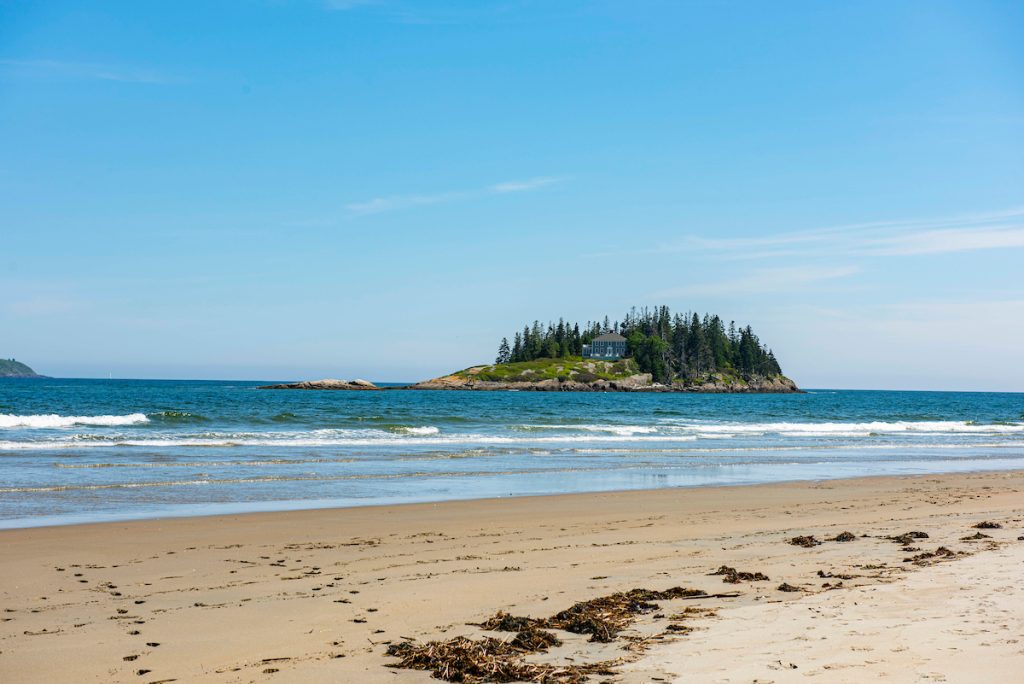
Scarborough Beach
Scarborough Beach’s long-uncertain public access was secured when the state – supported by Land for Maine’s Future and the Trust for Public Land – purchased the beachfront parking and right-of-way in 1999, ensuring permanent, publicly managed access to this coastal resource.
The Sewall Bridge Dock
Private fishermen and the York Land Trust partnered to purchase and protect the Sewall Bridge Dock, using a conservation easement to ensure the property remains working waterfront, maintains some public access, and preserves its scenic and economic value for the community.
case studies: Contracting for access
Maine Island Trail System
The Maine Island Trail System relies on partnerships with public agencies, land trusts, and generous private landowners to provide recreational access to over 350 miles of islands and coastal sites, with MITA balancing use and conservation through annual stewardship agreements that allow landowners to set conditions and revoke access at any time.
Parson’s Beach
Parson’s Beach illustrates voluntary landowner generosity, as private owners allow public use without any formal agreement while retaining full control over parking, conditions, and the right to revoke access at any time.
scarborough beach state park
Scarborough Beach’s long-uncertain public access was secured when the state – supported by Land for Maine’s Future and the Trust for Public Land – purchased the beachfront parking and right-of-way in 1999, ensuring permanent, publicly managed access to this coastal resource.
case studies: using tax policy for access
Federal Excise Tax Models
The Dingell-Johnson and Pittman-Robertson Acts demonstrate how excise taxes on outdoor equipment can be channeled into state conservation programs, offering a potential model for creating dedicated federal or state funding streams to support working waterfront conservation and coastal access.
Maine Voluntary Municipal Farm Support Program
This state-level model illustrates how municipalities can voluntarily offset property taxes for qualifying farmland in exchange for agricultural conservation easements, and—with its emphasis on local criteria, tax mechanisms, and conservation agreements—could offer a useful template for similar programs aimed at protecting working waterfront properties.
Real Estate Transfer Taxes and Land Banks
The Nantucket Land Bank demonstrates how dedicating real estate transfer tax revenues to a public land acquisition program can successfully protect coastal and open-space resources – offering a potential model for Maine to fund coastal access and working waterfront preservation, though implementation would require careful consideration of political, legal, and market dynamics.
Tremont Bond Financing
Bond financing – such as the Town of Tremont’s voter-approved purchase of working waterfront land using a local bank loan – offers a politically feasible tool in Maine for supporting coastal access and land banking when increases to the real estate transfer tax are unlikely to succeed.
Working Waterfront Access Protection Program (WWAPP)
WWAPP provides matching funds to enable fisheries businesses, cooperatives, municipalities, and other qualified parties to permanently secure working waterfront properties—through property acquisition or legally binding covenants—so that these sites remain available and affordable for commercial fishing and aquaculture uses in Maine.
Case Studies: common law and statues
moody beach
The Moody Beach (Bell v. Town of Wells) decision reaffirmed that, under Maine’s unique interpretation of the Colonial Ordinance, private landowners hold title to the intertidal zone and the public may use it only for fishing, fowling, and navigation—sharply limiting public coastal access and fueling ongoing controversy over shoreline rights.
case studies: government and public entities
Lamoine
Lamoine preserved commercial and recreational access to the intertidal zone by leveraging existing land-use ordinances during a proposed development, negotiating with the developer to secure a public walking path and parking—demonstrating how municipalities can use their own regulatory tools to protect coastal access.
LUbec
To address shrinking access for wild clam harvesters, the Town of Lubec is exploring the purchase of a narrow strip of land along the upper intertidal zone to create a permanent shoreline path—maintaining safe, reliable access for harvesters while allowing adjacent properties to remain desirable “waterview” parcels.
harpswell case study
Harpswell strengthened intertidal access by hosting landowner appreciation events that built relationships between harvesters and coastal property owners—resulting in 11 newly secured access points and ongoing outreach, including distributing The Scuttlebutt to help new landowners understand working waterfront culture.