Experiment Station News

Edith Patch and colleagues

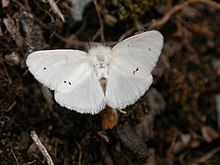
Biography of Edith M. Patch published

Miscellaneous Publication 763–Without Benefit of Insects: The Story of Edith M. Patch of the University of Maine–is available from the Maine Agricultural and Forest Experiment Station. Visit our Digital Commons site to download a version.

Read more

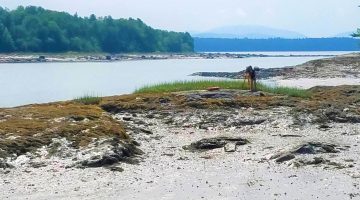
New miscellaneous report on profiles Downeast fishing communities

The Maine Agricultural and Forest Experiment Station has published Miscellaneous Report 446–Profiles of Sixteen Eastern Maine Fishing Communities, by Teresa R. Johnson, Kevin Athearn, Sara Randall, Marina Garland, Katelyn Ross, Ken Cline, Chris Peterson, Robin Alden, Carla Guenther. Visit our Digital Commons site to download a copy of the publication.

Read more

Holsteins

Bulletin on the cost of producing milk in Maine

Bulletin 853–Cost of Producing Milk in Maine: Results from the 2010 Dairy Cost of Production Survey, by Kersbergen, Anderson, Criner, and Davis (2013) is now available from the Maine Agricultural & Forest Experiment Station. Visit our Digital Commons site to dowload a pdf version.

Read more

lady bird beetle

Technical bulletin on biodiversity of the Schoodic Peninsula

Technical Bulletin 206–Biodiversity of the Schoodic Peninsula: Results of the insect and arachnid bioblitzes at the Schoodic District of Acadia National Park, Maine, by Chandler, Manski, Donahue, and Alyokhin (2012) is now available from the Maine Agricultural & Forest Experiment Station. Visit our Digital Commons site to download a pdf version.

Read more

wood frog

Conserving vernal pools and other wetland resources through coupling natural and human systems

Vernal pool conservation strategies that incorporate the best available science and social and economic needs of Maine citizens. Since the passing Significant Vernal Pool regulation in Maine in 2007, there has been a political backlash to dismantle all regulations associated with Significant Wildlife Habitats. In particular, in developing landscapes, vernal pool resources are rapidly disappearing […]

Read more

small fish

Ecology, conservation, and recovery of Maine native fishes in a changing environment

Native fishes of commercial, recreational, or ecological importance in Maine, such as Atlantic salmon, brook trout, alewife, and sea lamprey, have experienced range-wide decline because human activities have degraded freshwater habitats. Recently humans have sought to mitigate these negative impacts and restore native fisheries, especially for migratory species, by removing dams and restoring access to […]

Read more

blue-spotted salamander

Maintaining biological diversity in managed landscapes

Natural resource management is a critical driver in the economic, social, and ecological well-being of a state like Maine and one of the fundamental elements of natural resource management is biodiversity. It encompasses everything from the raw material of natural resource based industries to the fabric that forms our ecosystems. This project will investigate the […]

Read more

grouse

Population ecology of grouse in Maine

Maine’s forest wildlife are an important resource that contribute to the state’s economy through wildlife-centric recreation, and have intrinsic value as native species to the state. The forest habitat on which these species depend also provides an important economic and cultural resource to Maine citizens through the harvest of forest products. Ruffed grouse are a […]

Read more