
Dr. Jennifer Newell-Caito
Name: Dr. Jennifer Newell-Caito
Title: Senior Lecturer of Biochemistry
Department: Molecular and Biomedical Sciences
How long have you been teaching? Since 2012
How long have you been at UMaine? Started in August 2017
SEATLE Award for: “The Accessible Catalyst”
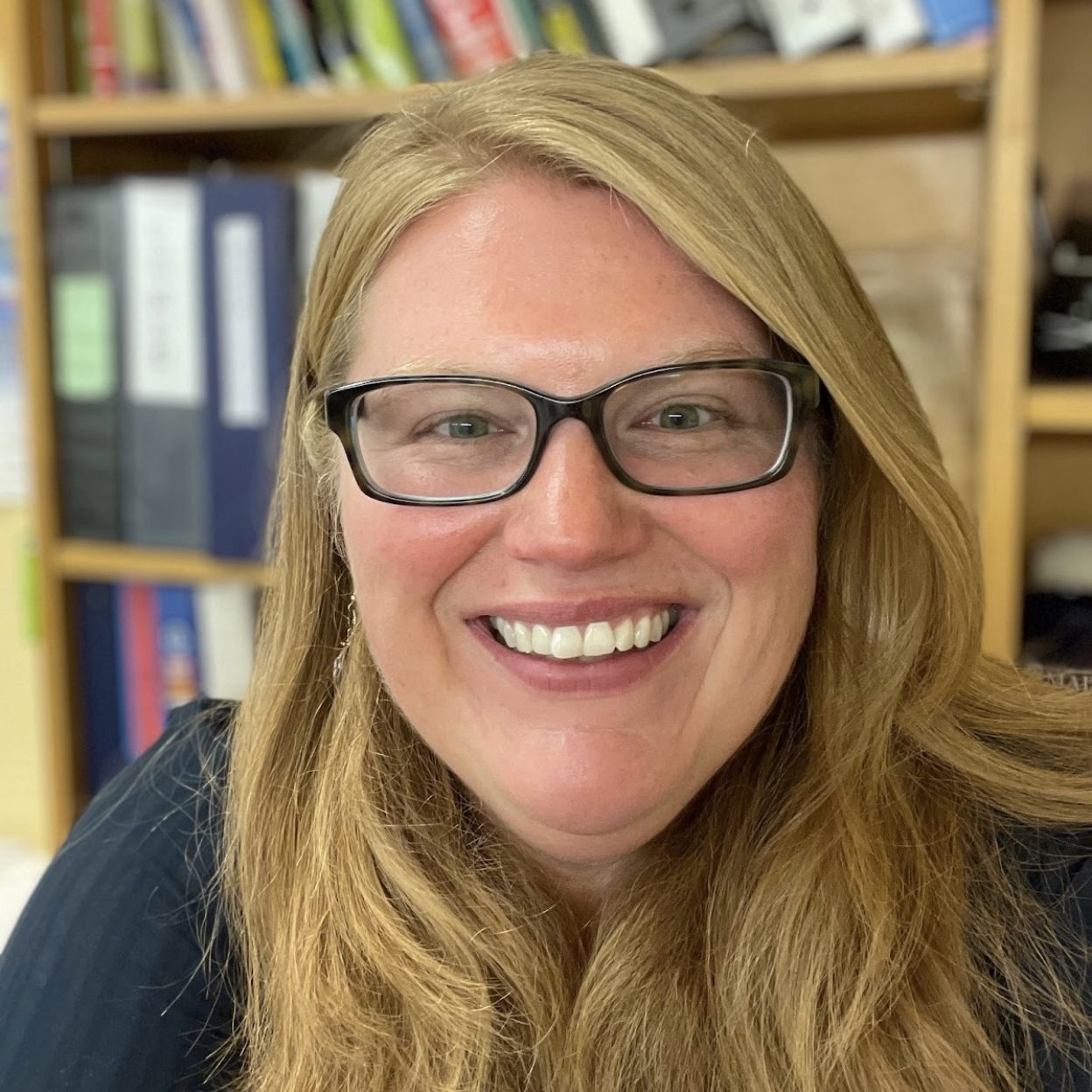
Meet Jennifer
Courses you Teach
Fundamentals of Chemistry, Elementary Physiological Chemistry, Organic Chemistry, Biochemistry lab, Analytical & Preparative Biochemical Laboratory Methods
Tell us a bit about you
What’s something you have always wanted to learn, but haven’t yet?
I took one art history class in college and have always wanted to further explore the connection between art and history.
What’s the most surprising thing a student has ever taught you?
I have learned so much from my students over the years, it is hard to pinpoint just one moment that has surprised me. There are moments in my teaching, based on conversations with students, that have given me the courage to completely transform the way that I teach. A pivotal moment was when one of my students told me that it was difficult for them to feel like they belong because the whole system of education doesn’t feel like it was built for them. This motivated me to pursue Universal Design for Learning and incorporate ungrading in my classroom.
What’s something you would secretly love to teach, even if it has nothing to do with your field?
I would secretly love to teach a course on snake venom and toxicology. I have a background in the subject , but don’t have an outlet on campus to share that knowledge.
Tell us a bit about your approach to teaching
How would you describe the changes to your course design or approaches to teaching?
My teaching style has changed dramatically over the past five years. I have not only focused on mental health and Universal Design for Learning (UDL), but have also expanded into ungrading and developing course-based undergraduate research experiences in my teaching spaces.
I used to have active lectures, but now I have flipped lecture courses. Class time is no longer spent lecturing but having students actively practice course content. This has helped me bring fun and relationships back into my classroom, from incorporating Choose Your Own Adventure Chemistry Modules to foster relationships with Pet Pals discussion posts. This has changed my role in the classroom from someone who delivers content to someone who facilitates learning.
How would you describe the impact of these changes on the students in your classes?
My classrooms have transformed into spaces where students feel comfortable taking risks and developing relationships with me and their peers. Most students want to build meaningful relationships with one another and with me. When I can create space for that connection to grow, deeper learning has followed. In terms of incorporating UDL and ungrading practices into my teaching, all of my students-especially my neurodivergent students- are more successful.
As a result of this work, what has changed for you as an instructor and/or colleague in terms of your own teaching.
These efforts have led to greater job satisfaction because I am creating a classroom space that I want to participate in. I think my best teaching is when I am facilitating and not lecturing: it is where I am most comfortable. Changing my classroom spaces to active learning classrooms has allowed me to get to know my students better, which shows them how much I care about them and their learning. It has also led to opportunities to explore active learning techniques that I have learned about, but not been able to implement due to the constraints of a traditional classroom structure. This freedom to try new approaches and take risks in the classroom has built my confidence as an instructor.
What would be a piece of advice you might give a new instructor at UMaine?
As you are learning about student-centered learning practices, don’t try to change too much. One change at a time can make a big difference for all your students and won’t overwhelm you.