
About the Research
The University of Maine has partnered with three coastal communities – Bar Harbor, Bath, and South Portland – to tackle one of the largest sources of waste and marine pollution: disposable food packaging. Our research project is designed to explore the potential to scale reusable food packaging systems in coastal Maine municipalities, where waste prevention programs can also reduce damage to sensitive marine and coastal ecosystems.
A small number of businesses in each community will pilot reusable packaging systems. Customers at participating establishments will have the option of having their food and/or beverages served in reusable containers. These pilots are supported by community partners who will assist in the creation and diffusion of outreach and education materials as well as University of Maine researchers who will work with businesses to track results through surveys, packaging inventories and tracking, and interviews with business owners, employees, and customers. Read our baseline survey report.

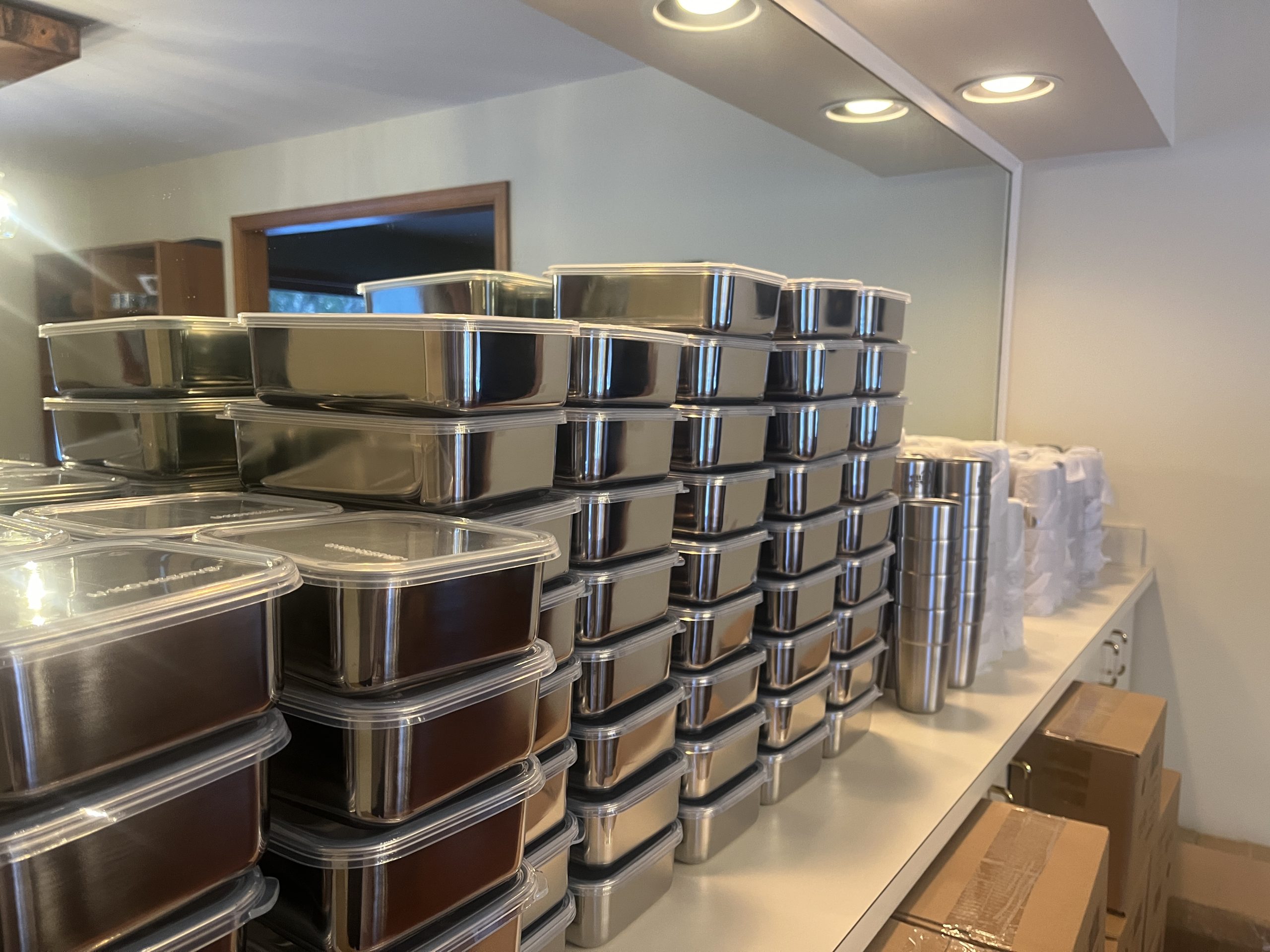


The University of Maine research team is trying to better understand the variables that shape decisions about the adoption of reusable programs as well as those that influence success in specific communities. Our goal is to develop a decision support model for restaurants and municipalities that are considering the adoption of reusable packaging systems.
This research is part of a larger, interdisciplinary marine debris reduction challenge funded by NOAA, Maine Sea Grant, and the Maine Department of Environmental Protection. Reuse ME is Track IV of the project. While Track IV focuses on source reduction through reusable systems, Tracks I through III focus on the material replacement of single-use food packaging. Track I is working to replace flexible, oil-resistant packaging with nano-sized cellulose fibrils. These materials are different from plastic because they are compostable and can disintegrate into non-toxic, natural elements. Likewise, Track II is working to replace styrofoam with material derived from lobster chitin to develop marine-degradable, thermally-insulative packaging. Track III is using wood and chitin from lobster shells to develop improved Molded Pulp Products (MPP)–a packaging material that is typically made from recycled paperboard and/or newsprint.

Meet the Researchers
Cindy Isenhour

As an ecological and economic anthropologist, I am particularly interested in the cultural construction and contemporary reproduction of linear production-consumption-disposal systems and their associated effects on the environment and climate. Several current research projects examine the market logics and global relations of trade/negotiation that enable uneven accumulation and degradation. Other research projects are focused on policies, practices and social movements intended to shift contemporary economies and consumer culture toward more sustainable forms.
William Brenneman

William Brenneman, originally from southern Maine, is an MA student in Anthropology and Environmental Policy at The University of Maine. Will received his BA in Anthropology from Lawrence University in Appleton, Wisconsin. In Wisconsin, Will became an avid gardener, concentrated his studies on anthropology of food and food systems scholarship, and contributed anthropological theory and methods to multiple community-based research projects. Will’s honors thesis investigated agency in the meal-making practices of families with young children in Wisconsin through an evaluation of local family cooking classes. At the University of Maine, Will is a research assistant in the George J. Mitchell Center for Sustainability Solutions, studying and participating in food waste reduction efforts in Maine schools.
Gianna DeJoy

Gianna is a Ph.D. candidate in Anthropology and Environmental Policy, a research assistant with the NOAA/Sea Grant Marine Debris challenge and the Margaret Chase Smith Policy Center, a research fellow with the UMaine Canadian-American Center, and part-time faculty at UMPI. Her dissertation research examines the shifting reproductive healthcare landscape in Northern New England and Atlantic Canada and the effects of climate change on rural communities’ access to care. Gianna is originally from Blue Hill, Maine. She earned a B.A. in Sociology with a minor in Women, Gender, and Sexuality Studies from the University of Richmond and a M.S. in Social Work with a focus on policy practice, health, mental health, and disabilities from Columbia University School of Social Work. She worked in politics and state government before coming to the University of Maine.
Catherine Segada

Catherine Segada, originally from Buffalo, NY, is an MA student in anthropology and environmental policy. Catherine received her BA in anthropology and environmental science from Mercyhurst University in 2024. During her time at Mercyhurst University, Catherine prioritized an interdisciplinary and diverse experience. Her undergraduate research focused on projecting carbon sequestration amounts of a Miyawaki-style forest and understanding the creation and value of the American suburban lawn. Catherine has worked in many sectors, including environmental consulting, ethnography, sustainability, community engagement, and campus involvement. At the University of Maine, Catherine is a graduate assistant for Commuter and Non-Traditional Student Programs under Student Life
Chyanne Yoder

Chyanne is a Ph.D. student in the Anthropology and Environmental Policy Program and Research Assistant for the NOAA/Maine SeaGrant Marine Debris project. She earned her MS in anthropology with a concentration in medical anthropology from Idaho State in 2023, having received her BA in 2021. Her research interests revolve around the intersecting ecological, economic, and social determinants of health in underserved communities. She prioritizes phenomenological, multimodal, and collaborative approaches. Chyanne’s current project focuses on the the political, economic, and bodily experiences of communities overburdened by the making and wasting of plastics, exploring the dangers, vulnerabilities, and resiliency therein.