
Bulletin #3101, Recipe to Market: How to Start a Specialty Food Business in Maine

Bulletin #3101, Recipe to Market: How to Start a Specialty Food Business in Maine (PDF)
Prepared by Extension Food Science Specialist and Associate Professor Beth Calder and Professor Emeritus Alfred Bushway.
For information about UMaine Extension programs and resources, visit extension.umaine.edu.
Find more of our publications and books at extension.umaine.edu/publications/.
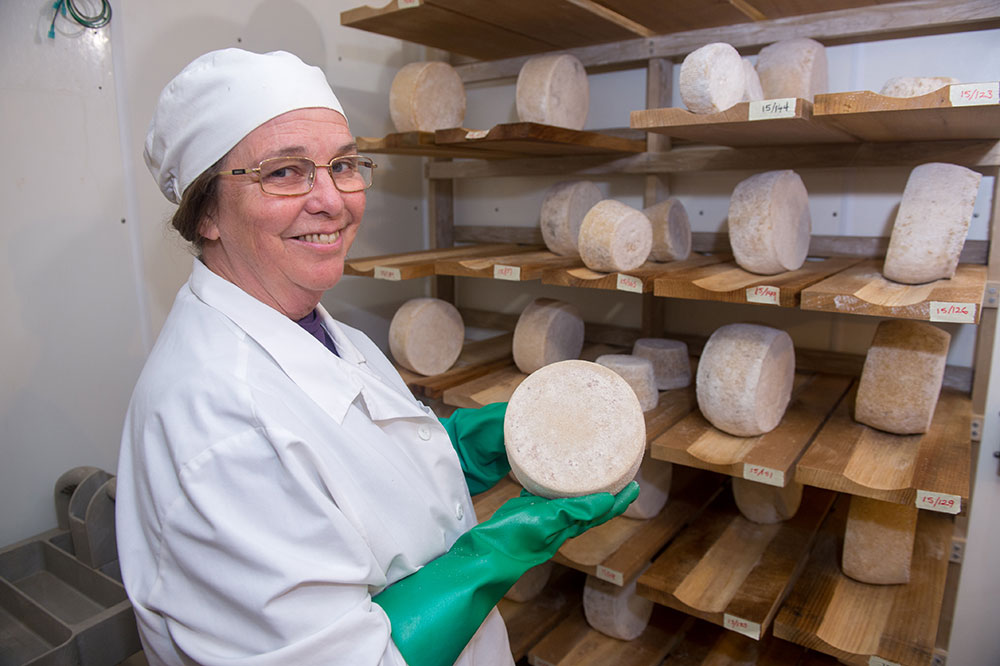 Do you have a recipe that has been passed through your family for generations? Do family and friends rave about a food product that you make and encourage you to start your own food business? Are you an entrepreneur who sees a niche market for your food product? Are you a small-scale farmer who wants to develop value-added food products? Are you a caterer or restaurant owner who would like to provide one of your signature products to the retail market?
Specialty food producers — often operating home-based microenterprises — are a growing Maine industry. Yet starting a Maine home-based food business will require you to face challenges including licensing, food safety, and building business skills. In addition, some recipes and food products for sale may need to be sent to UMaine for testing. We have developed this publication to answer the questions that we are most frequently asked about starting a small food business in Maine.
1. Is starting a food business right for me?
It’s okay to decide against owning a food business after reading this publication. Starting a food business is a huge commitment of time, capital, and energy. Also, not all food products can be easily converted to retail items. Marketing research may show that your food product will not have a strong enough demand. But if you choose to proceed, having the right personality and a solid business plan will help you to be successful!
2. Where do I begin?
“How do I start, and where do I turn as I begin the process of starting my own food business?”
When cooking for family and friends, most cooks have their recipes memorized, or they use a pinch of this or that. When developing a food product for customers, you have to develop standardized recipes with exact measurements, temperatures and times noted during the process.
Recipes should be formulated onto a weight basis to ensure batch-to-batch consistency. A scale will help you to convert cups and teaspoon measurements to grams, ounces or pounds and the scale should have an accuracy of 0.1 grams the unit of measure you are working with.
3. What sort of license do I need to sell my food product and who issues these licenses?
A state food license is required for anyone who sells processed food products in Maine. The two regulatory agencies that license food businesses are the Maine Department of Agriculture, Conservation and Forestry for prepared foods for retail/wholesale, and the DHHS, Health Inspection Program for restaurants, catering, food trucks, bed & breakfasts, and inns or food producers interested in producing food products for immediate consumption by consumers. Contact information for the Health Inspection Program can be accessed at their website: Business Answers About Licensed Facilities (Maine.gov’s Division of Environmental and Community Health website).
The two common food licenses obtained from the Maine Department of Agriculture, Conservation & Forestry are 1) a home food processor or 2) a commercial food processor license. If you are interested in selling at the farmer’s markets, a mobile food vendor license will be required in addition to your other food license. Food license applications can be obtained online from the Maine Department of Agriculture, Conservation, and Forestry, Quality Assurance and Regulations: Permit and License Application Forms. If your water source is from a well, the license application requires water test results for coliforms, nitrates, and nitrites. For a list of certified laboratories in Maine that offer water testing, please visit the Maine Health and Environmental Testing Laboratory website.
If you have further regulatory questions, please feel free to contact Michelle Newbegin, Maine Department of Agriculture, Quality Assurance and Regulations at 207.287.3841 or michelle.newbegin@maine.gov; additional contact information is available at Maine Department of Agriculture, Conservation, and Forestry: Quality Assurance and Regulations.
You can contact Michelle if you are interested in having the inspector in your area assess your home or commercial kitchen prior to making investments in renovating your space and help answer your questions prior to applying for a home or commercial kitchen license.
4. Where do I get my food license? What are the food laws and rules for my product?
The Maine Department of Agriculture, Conservation, and Forestry Division of Quality Assurance & Regulations issues food licenses/permits, provides food inspections before and after you start your food business, and provides information about state food regulations. Inspectors are also available to conduct pre-inspections to look at your kitchen or space and to discuss ideas before you renovate. For more information on their inspection programs, visit the Maine Department of Agriculture, Conservation, and Forestry: Inspections.
To view the Maine statutes and rules for maple syrup, beverage redemption information, and other food laws and rules, see The Maine Department of Agriculture, Conservation, and Forestry: Statutes and Rules.
If you are interested in selling foods from a mobile food cart, starting a restaurant, Bed and Breakfast or Inn, or becoming a caterer, the Maine Department of Health and Human Services, Health Inspection Program issues licenses to food producers selling or providing foods for immediate consumption to their customers. Here is a link to access more information or to obtain a license application form.
Suggestions for success
We highly recommend that you obtain a copy of the State of Maine Food Code (PDF) early on from the Maine Department of Agriculture, Conservation, and Forestry (207.287.3841). This guide ultimately helps you to follow the FDA’s Current Good Manufacturing Practices (CGMPs), including proper sanitation, employee hygiene, and certain facility requirements. You must follow CGMPs by law. Keep in mind that these regulations are in place to make sure that you are producing foods under sanitary conditions. These sanitation fact sheets help outline the proper sanitation practices that you also need to follow: Basic Elements of a Sanitation Program for Food Processing and Food Handling and Basic Elements of Equipment Cleaning and Sanitizing in Food Processing and Handling Operations (PDF). Although not required, you may find a ServSafe class to be helpful in expanding your knowledge of safe food handling practices.
If you decide to use bleach as a sanitizer, only use unscented bleach labeled as germicidal bleach that includes an EPA registration number. Follow the directions for sanitizing food contact surfaces. Never exceed a concentration of 200ppm. Use test strips to check the effectiveness of your sanitizer and never use hot water when diluting bleach, as it will reduce its effectiveness. Germicidal bleach can be purchased at Home Depot, Lowe’s or other hardware stores and test strips can be purchased online or through restaurant supply stores. Peroxyacetic acid is another approved sanitizer for food contact surfaces and is approved for organic processors. Keep in mind, that anything that comes in contact with the food product and/or your ingredients must be made of food-grade materials (especially plastic). If using food grade plastic, be sure it is in acceptable working condition. Scratches in plastic are great areas for bacterial biofilms to form, which are extremely stubborn and no amount of cleaning or sanitizing will adequately clean cracks. If you see scratches forming in plastic containers, it is time to purchase new ones.
You should also become familiar with the current food safety regulatory changes and requirements that are now affecting the entire food industry. The Food Safety Modernization Act (FSMA) is the most widespread changes to food laws the industry has experienced in decades. For more FSMA information, see FDA Food Safety Modernization Act (FSMA). If you sell produce, you should be aware of FDA’s Produce Safety Rule.
All of these regulations and best practices are for the health and well-being of your customers!
5. Can I produce my food product at home?
Depending on the type of product that you want to sell, you may be able to obtain a home food processor license and produce non-perishable food products (foods that do not require refrigeration or freezing) and are considered shelf-stable foods in your home kitchen. Jams, jellies, pickles, relishes, sauces, marinades, dry mixes, dry spices/rubs, most candies/confections and baked goods (unless the finished baked goods have butter/cream cheese frostings or custard fillings) are examples of products that can be safely processed in your home kitchen.
Maine Department of Agriculture, Conservation, and Forestry defines perishable products as “potentially hazardous foods.” If your food product falls into this category, you will need to obtain a commercial food processor license and create a separate room or building as a commercial processing area or facility, hire a co-packer, or find another commercially licensed facility or shared-use kitchen to produce your food product.
6. What makes a food “potentially hazardous”?
This term may seem strange, but it’s actually the label for food products that are dependent on refrigeration or freezing to reduce microbial growth. A food is categorized as potentially hazardous based mainly on its pH and water activity levels (aw). A perfect example is pesto. Fresh pesto has a pH above 4.6, has an aw of greater than 0.85, and requires refrigeration to minimize microbial growth. If you were interested in producing fresh pesto, you would have to produce it in a commercial facility, not in the home kitchen. If you have further questions, please contact the Maine Department of Agriculture, Conservation, and Forestry. For more information on potentially hazardous foods, please visit the Safe Practices for Food Processes page (U.S. Food and Drug Administration website).
7. When do I need to send in my food product for testing at UMaine?
If you are a Maine food processor, most baked goods (that do not contain dairy-based frostings/fillings), plain, berry-based jams/jellies (raspberry, blueberry and strawberry jams/jellies), and candies/confections, dry spices/rubs or dry mixes do not need to be sent to UMaine for food testing. However, jams and jellies that have combinations of fruit, or do not contain fruit (wine, spice or pepper jellies) have to be tested. If you have questions if your food product requires testing at UMaine before it is sold, please contact us.
Most all canned/bottled, shelf-stable foods, such as acidified canned foods (pickles, salsas, marinades, dressings), dessert sauces (caramel/chocolate sauces), fermented foods and dehydrated fruit/vegetable products with minimal processing are a few examples of food products that do require food testing.
The testing is conducted at the University of Maine Cooperative Extension’s Food Testing Services. Dr. Beth Calder and Kathy Davis-Dentici provide a team approach to conduct food testing on a part-time basis and write review letters to determine whether your food product falls under the appropriate food safety guidelines and/or standards of identity. For example, 21 CFR, Part 150 outlines the standard identity for fruit butter, jams, jellies, and preserves. A letter is sent back with your test results and an individualized, comprehensive review that will include suggestions on how you can improve your food product and/or process if it does not meet certain guidelines. Food tests typically include:
- water activity (aw) — to determine the amount of “free” water in baked and other foods available to support bacterial growth;
- pH — to measure the acidity of pickled foods and salsa (most bacteria will not grow in acidic foods and reduces the risk of botulism);
- Brix — to determine the concentration of dissolved sugars in jams, jellies, and syrups and dessert sauces;
- titratable acidity — to measure the actual amount of acids in vinegars or fermented foods; and
- water phase salt — to determine the percentage of salt in smoked or dried seafood and fish products.
Please view the Food Testing Services page for more information on how to send in a product for testing.
Questions on submitting a sample? Please contact Beth Calder at 207.581.2791 or beth.calder@maine.edu or Jason Bolton at 207.581.1366 or jason.bolton@maine.edu
Note: If you make any changes to your packaging, recipe or process, later on, you must resubmit that food product and information to UMaine for another review.
Suggestions for Success
Your review letter from UMaine is written just for you in regards to your product, process, and package. You must review the letter carefully, as changes may have been made to your formulation or processing methods to ensure the microbiological safety of your products. You must follow the critical factors (for example, maximum pH levels, and processing methods outlined in your letter). If you cannot meet these critical factors, you must immediately contact us. You must keep these review letters in your records in case you need to refer back to the letter or if your inspector has future questions during the inspection.
8. Are there special considerations for producing acidified and low-acid canned foods?
The answer is yes! Improperly processed canned foods can present life-threatening hazards.
Acidified foods
Acidified foods are defined by the FDA as low-acid foods (cucumbers, peppers, green beans, onions, etc.) to which acid (vinegar or lemon juice) and/or acid foods (tomatoes) are added to reduce the equilibrium pH below 4.6. We recommend when producing acidified foods to aim for a pH level of 4.2 or below as an extra precaution. Equilibrium pH is the final pH in the food product after the acidic brine (usually vinegar) acidifies and balances with the other ingredients.
For more guidance on acidified and low-acid canned foods, please visit this page, Acidified & Low-Acid Canned Foods Guidance Documents & Regulatory Information on the FDA website.
If you are producing acidified foods, you will need to file additional paperwork with the FDA before your food product will be sold outside of Maine (Guidance for Industry: Submitting Forms). You must also register your facility with the FDA. Guidelines for registering your facility or scheduled process can be accessed at the FDA’s Instructions for Establishment Registration and Processing Filing for Acidified and Low-Acid Canned Foods.
Acidified foods need to be tested by UMaine to ensure that the equilibrium pH is below 4.6, which prevents the potential growth of Clostridium botulinum, the bacterium that can produce the botulinum toxin. You must buy an accurate pH meter to test each batch of your food product. Acidified foods need to be tested 24 hours after production and the equilibrium pH of each batch must be documented in your records. You will be permitted to produce acidified foods in your home kitchen if the UMaine test results show that your product falls within safe ranges (pH of 4.2 or less for every component within 24 hours of thermal processing).
For guidance on how to purchase a pH meter, please visit these helpful fact sheets: Cornell University’s Purchasing a pH meter (PDF) and the University of Wisconsin’s Purchasing and Using a pH meter (PDF). If you are producing a food product with a pH of 4.0 or higher, you must purchase a pH meter with an accuracy rating of 0.01± pH units. If producing an acidified food with a pH below 4.0, you can purchase a pH meter that has an accuracy rating of 0.1± pH units.
How to Determine Accurate pH Levels
When producing acidified foods for retail or wholesale, you are required to keep accurate pH batch records for each batch that you produce. It is important to test both the liquid brine and solids separately when producing acidified foods with large solid pieces. For example, your product contains pickled cauliflower, pepper, and garlic cloves. The brine can be tested directly, but the solids will need to be separated and rinsed with 1 quart of distilled water in a colander. After rinsing, the cauliflower needs to be separated and homogenized in a food processor and the pH tested, the peppers homogenized separately and pH taken, etc. The pH levels of the liquid brine and solids should not differ more than 0.1 pH units to show that the acid is adequately acidifying the vegetables. These records should be written down for each batch.
Low-acid canned foods
Any food (other than alcoholic beverages) with a finished equilibrium pH greater than 4.6 and a water activity greater than 0.85, excluding tomatoes and tomato products, is considered a low-acid food. Low-acid canned foods, such as green beans and carrots, have to be processed in a commercial facility using a steam retort system. Although pressure canning is a safe home food preservation method, pressure canning low-acid canned foods in a home kitchen for sale is not allowed in Maine.
Be sure to register your facility with the FDA, which is required under the Bioterrorism Act for both domestic and foreign facilities that process and/or pack food for human or animal consumption. (Note: farms and food processors who fall under the jurisdiction of USDA are exempt — that is, facilities handling only meat, poultry or egg products.) You can register your facility at FDA Industry Systems’ Registration of Food Facilities page (U.S. Food & Drug Administration website) or by calling the FDA Furls Help Desk: 800.216.7331 or e-mailing FURLSSupport@FDA.hhs.gov.
Suggestions for Success
If you are considering low-acid canned and/or acidified foods, the FDA requires that a supervisor from your operation obtain Better Process Control School certification to ensure that foods are properly processed and container closures are properly sealed. This certification course is offered in Orono at the University of Maine typically every two years. Please contact Melissa Libby Babcock, at the University of Maine Cooperative Extension at 207.581.2788 or melissalibby1@maine.edu if you are interested in taking this course. Better Process Control School is also offered online through these universities:
If you have any questions about registering your facility, the acidified foods filing process, the Bioterrorism Act, or any general questions, please feel free to contact Lori Holmquist, Director of Investigations Branch, 781.587.7437 or lori.holmquist@fda.hhs.gov.
9. What do I need to have on my food label?
All food producers must list the following items on their food labels:
- the statement of identity (name of food product),
- net weight of food product (usually measured in both ounces and grams or by count),
- ingredient listing (listed in descending order by weight of ingredients),
- potential allergens in the food product, and
- name and address of the manufacturer, packer, or distributor.
Refer to the FDA’s A Food Labeling Guide online, or request a copy from the FDA at 240.402.2371.
The eight food allergens that require an allergen statement are milk, eggs, fish, wheat, crustacean shellfish such as lobster and crab, tree nuts, peanuts, and soybeans and also includes sulfites. For further guidance on listing allergens, consult the FDA’s Questions and Answers Regarding Food Allergens, including the Food Allergen Labeling and Consumer Protection Act of 2004 (Edition 4). You can call or e-mail Carol D’lima in regards to questions related to this document at 240.402.1697 or Carol.Dlima@fda.dhhs.gov. If you are using commercially produced foods as ingredients in your food product, you must also include the food ingredients of that product in the label, as well. For example: Water, sugar, Worcestershire sauce (vinegar, molasses, corn syrup, anchovies…).
10. Am I exempt from the nutrition label requirement?
If you are a retailer with less than $500,000 in annual gross sales or a food producer who sells directly to consumers and grosses less than $50,000, then you are exempt from nutrition labeling. You do not have to file a small business nutritional labeling exemption to the FDA under these circumstances.
If you sell low-volume products, employ fewer than 100 employees yearly, and sell fewer than 100,000 units in the U.S. yearly, you are exempt from nutrition labeling. You DO have to file a small business nutritional labeling exemption notice yearly with the FDA.
However, if you sell (in the U.S. only) even lower volumes — if you sell fewer than 10,000 units and hire fewer than 10 full-time employees yearly — you do not have to file a small business nutritional labeling exemption notice with the FDA.
For more information regarding nutrition label exemptions, or to submit a small business nutritional labeling exemption form, consult the FDA’s Small Business Nutrition Labeling Exemption page.
If you are interested in selling your food products wholesale (such as to grocery stores), you will need to contact GS1 US to obtain a bar code.
11. Where do I send my products for shelf-life testing, nutrition labeling, and ingredient analysis?
For environmental microbial and shelf-life testing and nutrition labels in Maine, choose one of these certified labs:
- Northeast Laboratory Services: 227 China Road, Winslow, Maine or 120 Main Street, Westbrook, Maine, 866.591.7120, info@nelabservices.com
- Katahdin Analytical Services: 600 Technology Way, Scarborough, Maine, 207.874.2400.
If you need to have your ingredients analyzed specifically because of nutrient claims (such as label claims that your product is a good source of a particular nutrient), there are several certified labs that can conduct food analyses. You can first contact Northeast Laboratories or Katahdin Analytical Services in Maine or contact other laboratories, such as Medallion Labs, Eurofins, Merieux Nutrisciences, or EMSL Analytical, Inc, as other options.
Food products must have an alcohol content of 0.5% or less or will be subjected to Maine Liquor Licensing Laws and regulated by the Alcohol and Tobacco Tax and Trade Bureau (TTB) if sold outside of Maine. You can certainly add alcohol to your food products, but you should send your products to one of the laboratories above to ensure the cooking method evaporates the alcohol to meet this requirement.
12. What records should I keep?
Several types of records should be kept on file as part of maintaining a successful food business. We recommend that you create a recall plan in the event a problem arises with your food product in the future and product needs to be recalled from the marketplace. The FDA has guidelines online: Guidance for Industry: Product Recalls, Including Removals and Corrections.
Currently, the FDA has implemented new food safety laws under the Food Safety Modernization Act (FSMA). New requirements on food safety recordkeeping will be developed soon and will impact the Maine food industry. We recommend that you stay updated with these new FDA rules and regulations by visiting their website: Food Safety Modernization Act (FSMA).
If you are monitoring certain parameters of your food product such as pH batch records, water phase salt, and/or microbiological quarterly tests, these records should be maintained and kept for three years if you are producing shelf-stable (canned) food items. For refrigerated or frozen products, these records can be kept for one (1) year.
If you have sent food products to UMaine for testing, these process review letters must be kept in your records in case you or your inspectors have future questions.
Depending on what foods you process (seafood, meat, poultry or juice), the FDA or USDA may require you to have a food safety plan called a HACCP (Hazard Analysis Critical Control Point) plan. One requirement is you must attend a HACCP certification workshop, which UMaine Cooperative Extension offers each year. You will learn from the workshop that several records need to be created and monitored on a set schedule that will be outlined by your HACCP plan. For more information in regards to HACCP, please visit these websites: FDA’s Hazard Analysis & Critical Control Points (HACCP), USDA FSIS HACCP, and Pathogen Reduction & HACCP Guidance Documents.
13. What other services does the University of Maine offer?
To view other services that UMaine Cooperative Extension and the School of Food & Agriculture offers, please visit these pages: Food Safety page (Cooperative Extension: Food & Health website) and Supporting Resources page (UMaine’s School of Food and Agriculture). We encourage you to visit UMaine’s Dr. Matthew Highlands Pilot Plant food processing facility, Consumer Testing Center, and commercial kitchen to learn more about our services and how we can assist you with research and development. Fees vary depending upon the scope of your project. The Pilot Plant is not commercially licensed, but the Commercial Kitchen is a state-licensed commercial facility and is available for processors producing shelf-stable food products. We can also help you resource equipment, ingredients, and packaging supplies. For a tour of the Pilot Plant, please contact Robert Dumas, Innovation Coordinator, and Facility Manager, at robert.dumas@maine.edu or call 207.581.3139.
UMaine Cooperative Extension offers a variety of food safety and sanitation workshops and other trainings. A list of our educational programs and trainings can be found on our website on the Food Safety Training Opportunities page.
Questions about our services? Please contact Beth Calder at 207.581.2791 or beth.calder@maine.edu, Jason Bolton at 207.581.1366 or jason.bolton@maine.edu or Rob Machado at 207.581.3144 or robson.machado@maine.edu.
14. Where can I get help with improving my business skills, writing a business plan, and marketing my food product?
University of Maine Cooperative Extension offers small-business education in certain counties. Contact your local UMaine Cooperative Extension county office or call 800.287.0274 (in Maine) to find your local office and to inquire about small business educational workshops. You can also browse UMaine Extension’s Small Business Library and UMaine Extension’s Resources for Small Food Businesses in Maine page including Recipe to Market Workshops on how to start a food business in Maine. You may be interested in UMaine Cooperative Extension’s specialty foods website Resources for Maine Food Entrepreneurs, which is a comprehensive resource for people interested in specialty foods.
- Maine Small Business Development Centers (207.780.4420) provide small-business development assistance.
- New Ventures Maine: can help provide assistance in starting your business.
- CEI (Coastal Enterprises Inc) can provide assistance with starting an agricultural and food-based business.
- You can also consider marketing your food product through the Maine Department of Agriculture’s get real. get maine! campaign.
Other resources:
New England Extension Food Safety Consortium, Online Support for New England Food Entrepreneurs
Hall, Stephen F., 2015. From Kitchen to Market – Sell Your Specialty Food: Market, Distribute and Profit from Your Kitchen Creation. 6th Edition.
Lewis, Jennifer., 2014. Getting Your Specialty Food Product Onto Store Shelves: The Ultimate Wholesale How-To Guide for Artisan Food Companies. Rabbit Ranch Publishing.
Northeast Center for Food Entrepreneurship, 2001. Small Scale Food Entrepreneurship: A Technical Guide for Food Ventures. Geneva, NY: New York State Agricultural Experiment Station. Includes information on business and marketing, general and specific food products, food safety and sanitation, labeling, processing facilities, and equipment.
Are you considering organic certification? Please contact MOFGA Certification Services.
15. What if I need to find a co-packer, commercial kitchen, or shared-use kitchen in Maine?
We have several options in Maine if you are interested in finding a commercial kitchen or co-packer to produce your product:
- High Mountain Hall has a licensed community kitchen in Camden, 207.236.0003
- Cobscook Bay Resource Center and Marketplace has a licensed kitchen in Eastport, Contact Elizabeth and Will Hopkins at 207.853.6607.
- Fork Food Lab offers a shared-use kitchen and tasting room in Portland.
- Halcyon Grange Community Kitchen has a licensed community kitchen in Blue Hill, 207.664.3487 or kitchen rental email: grange345rental@gmail.com.
- Kitchen Partners of Maine, dba Pemberton’s Food co-packs shelf-stable canned and refrigerated foods in Gray, contact Chris Shorey at 207.657.6446.
- Public Market House has a licensed community kitchen in Portland, 207.284.1016.
- Acorn Kitchen offers a licensed shared-use kitchen in Kittery, contact Susan Tuveson at 207.332.4425.
Other options would be to contact a local restaurant, school or inn to ask if it might be possible to rent their commercial facility during times when their kitchen isn’t being used and contact the Maine Department of Agriculture, Conservation and Forestry to have a pre-inspection of the space to determine if it can be used as a commercial kitchen.
Good luck with your food endeavors!
We would be glad to hear from you if you have any further questions or feedback in regards to this fact sheet, please contact Beth Calder at beth.calder@maine.edu or 207.581.2791.
Reviewed by Jason Bolton, Associate Professor of Food Safety and James McConnon, UMaine Extension Business and Economics Specialist and Professor of Economics.
Special thanks to Steve Giguere of the Maine Department of Agriculture, Conservation, and Forestry Division of Quality Assurance and Regulations and Lori Holmquist (Director Investigations Branch, New England FDA District Office).
Brand names, trade names, and company names are included for educational purposes. No endorsement is implied nor is discrimination intended against similar products or services.
Information in this publication is provided purely for educational purposes. No responsibility is assumed for any problems associated with the use of products or services mentioned. No endorsement of products or companies is intended, nor is criticism of unnamed products or companies implied.
© 2009, 2017, 2019, 2020
Call 800.287.0274 (in Maine), or 207.581.3188, for information on publications and program offerings from University of Maine Cooperative Extension, or visit extension.umaine.edu.
The University of Maine is an EEO/AA employer, and does not discriminate on the grounds of race, color, religion, sex, sexual orientation, transgender status, gender expression, national origin, citizenship status, age, disability, genetic information or veteran’s status in employment, education, and all other programs and activities. The following person has been designated to handle inquiries regarding non-discrimination policies: Director of Equal Opportunity, 101 North Stevens Hall, University of Maine, Orono, ME 04469-5754, 207.581.1226, TTY 711 (Maine Relay System).