Fact Sheets
![]() |
||
INSECTS: ![]() |
OTHER: | |
| |
||
|
||
| Listados de insectos en Español (Penn State) | Frequently Asked Questions about EEE: UMaine Extension || Maine.gov | |
Maine Household Pests:
- American Cockroach
- American Dog Tick (often carried in from outdoors via one’s clothing or a family pet)
- Ants
- Assassin Bugs – see also listing for Masked Hunter
- Bald-faced Hornets
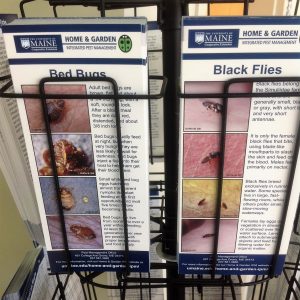
- Bed Bugs
- Black-legged Tick / Deer Tick (often carried in from outdoors)
- Blow Flies (and Flesh Flies)
- Booklice
- Camel Crickets
- Carpenter Ants
- Carpet Beetles
- Clothes Moths
- Cluster Flies – People often mistake cluster flies for house flies.
- Cockroaches
- Crickets (often found in basements)
- Deer Tick (often carried in from outdoors)
- Dog Tick (often carried in from outdoors)
- Drain Flies (also called Moth Flies)
- Dust Mites (House Dust Mites)
- Earwigs
- Firebrats (and Silverfish)
- Fleas
- Flesh Flies (and Blow Flies)
- Flour Beetles
- Fruit Flies
- Fungus Gnats
- Grain Beetles
- Head Lice
- Hornets: Baldfaced Hornets (Iowa State Univ) see also Hornets / Wasps / Yellowjackets (Univ. of Kentucky) En Español
- House Centipedes
- House Dust Mites
- House Flies (University of Florida) – see also listing for Cluster Flies.
- Indian Mealmoth (Penn State)
- Ladybugs (Multicolored Asian Lady Beetle) (USDA) and Lady Beetles in Homes (Cornell)
- Larder Beetles
- Lesser Mealworms
- Masked Hunter (Univ. of Minnesota)
- Mealworms – see also html (Univ. of Guelph)
- Millipedes – see also pdf (Univ. of Maryland / UMD Cooperative Extension)
- Mites (Dust Mites) (Spider Mites) (Parasitic Mites of Humans)
- Moth Flies (also called Drain Flies)
- Powderpost Beetles
- Silverfish (and Firebrats)
- Sowbugs (considered an occasional household invader) (Univ. of Maryland / UMD Cooperative Extension)
- Spider Mites
- SPIDERS — see also our spider page that is part of our ‘Frequent Specimens’ list, as well as a nice listing of spiders that Penn State has: html
- Termites – Very rare in Maine; mostly occur only in pocket areas in some southern and coastal locations.
- TICKS – Ticks are sometimes found indoors after hitching a ride on you or a family pet.
- Yellowjackets / Hornets / Wasps (Univ. of Kentucky) En Español
- Ants
- Centipedes
- Click Beetles (fly in through open windows, doors, etc. at night; attracted to lights)
- Crane Flies (resemble giant mosquitoes; sometimes a household nuisance; attracted to lights at night)
- Crickets (Camel Crickets, Field Crickets and House Crickets)
- European Red Ants (invasive) – see also the UMaine site that’s all about this ant!
- Ladybugs (Multicolored Asian Lady Beetle) (USDA) and Lady Beetles in Homes (Cornell)
- Millipedes
- Sowbugs and Pillbugs [pdf] (Univ. of Maryland / UMD Cooperative Extension)
- Springtails [pdf] (Univ. of Maryland / UMD Cooperative Extension)
- Western Conifer Seed Bugs
- Wood Cockroach / Pennsylvania Wood Roach (Penn State) (generally found outdoors in moist, woodland areas but often they enter homes as “accidental invaders”)
Yard, Garden and Woodlot Pests and Critters (Some of these critters will occasionally hitch a ride into the house on such things as firewood, clothing, a family pet, etc.)
- Allegheny Mound Ant
- American Dog Tick
- Ants
- Aphids
- Apple Maggot
- Apple Mealybug
- Armyworms
- Asian Longhorned Beetle (invasive) (no confirmed sightings in Maine as yet)
- Asiatic Garden Beetle
- Asparagus Beetle
- Aster Leafhopper
- Bald-faced Hornets
- Bark Beetles
- Black Flies
- Black Vine Weevil
- Black-legged Tick
- Blister Beetles
- Blow Flies (and Flesh Flies)
- Blueberry (specific to Maine low-bush blueberry) Insect Pests:
- Blueberry Flea Beetle
- Blueberry Maggot Fly
- Blueberry Spanworm
- Blueberry Thrips
- Spotted-wing Drosophila (invasive) (see Fruit Flies)
- Red-striped Fireworm
- Brown-tail Moth / Caterpillar
- Cabbage Looper
- Cabbage Maggot
- Cabbageworm (Imported Cabbageworm)
- Carpenter Ants
- Chinch Bugs
- Click Beetle larvae (Wireworms)
- Codling Moth
- Colorado Potato Beetle
- Common Asparagus Beetle
- Common Stalk Borer
- Corn Earworm
- Corn Rootworm (Northern, Western & Southern)
- Crickets
- Cucumber Beetle (Striped Cucumber Beetle)
- Cutworms
- Deer Flies
- Deer Tick / Black-legged Tick
- Diamondback Moth
- Dog Tick / Wood Tick
- Drain Flies (also called Moth Flies) (around sewage or other wet areas)
- Earwigs
- Eastern Tent Caterpillars
- Elm Sawfly
- Emerald Ash Borer (invasive)
- European Apple Sawfly
- European Chafer
- European Corn Borer
- European Crane Fly (invasive)
- European Pine Sawfly
- European Red Ant (invasive) – see also the brand new UMaine site that’s all about this ant!
- European Red Mite
- Fall Armyworm
- Fall Webworm
- Flea Beetles
- Flesh Flies (and Blow Flies)
- Forest Tent Caterpillars
- Fruit Flies (includes information about Spotted-wing Drosophila)
- Green Peach Aphids
- Gypsy Moth
- Hemlock Woolly Adelgid (invasive)
- Hornets: Bald-faced Hornets – see also Hornets / Wasps / Yellowjackets (University of Kentucky) En Español
- Horntails
- Hornworms
- Horse Flies
- Inchworms (also called Loopers or Geometers) (USGS)
- Imported Cabbageworm
- Japanese Beetles — see also our VIDEO: How to Get Rid of Japanese Beetles
- June Beetles / May Beetles (Texas A&M)
- Leafhoppers — see also Aster Leafhopper (Univ. of Minnesota)
- Leafminers (Univ. of Florida)
- Lily Leaf Beetles — see also html (UMass) and html (Univ. of Rhode Island)
- Longhorned Beetles (and Roundheaded Borers) (Iowa State Univ.) — see also listing for Asian Longhorned Beetle
- Loopers (also called Inchworms or Geometers) (USGS)
- May Beetles / June Beetles (Texas A&M)
- Mealybugs (Washington State Univ.)
- Mexican Bean Beetles (Univ. of Florida)
- Metallic Wood-Boring Beetles (Univ. of Minnesota Extension)
- Mosquitoes.(Maine Forest Service)
- Insect Repellents (UMaine Extension)
- Mosquito Biology (UMaine Extension)
- Mosquito Management (UMaine Extension)
- West Nile Virus (CDC)
- Northern Corn Rootworm (Northern, Western & Southern) (Univ. of Illinois)
- Oblique-banded Leafroller (Cornell)
- Onion Maggots
- Onion Thrips (Cornell)
- Pine Sawyer Beetle / Spotted Pine Sawyer Beetle / Whitespotted Sawyer Beetle (Massachusetts Introduced Pests Outreach Project)
- Plum Curculio (Univ. of Kentucky)
- Potato Leafhopper (Univ. of Kentucky)
- Raspberry Insect Pests (Univ. of Minnesota Extension)
- Raspberry Cane Borer
- Raspberry Cane Maggot
- Raspberry Crown Borer
- Raspberry Fruitworm (Ohio State)
- Spotted-wing Drosophila (invasive) (see Fruit Flies)
- Red-banded Leafroller (Cornell)
- Redheaded Flea Beetle.(Univ. of Wisconsin – Madison)
- Rose Chafer (Univ. of Minnesota Extension)
- Rose Leafhopper (Univ. of Washington)
- Round-headed Apple Tree Borer
- Sap Beetles (Univ. of Minnesota Extension)
- Seed Corn Maggot (Univ. of Minnesota Extension)
- Slugs
- Sod Webworm (Penn State)
- SPIDERS — see also our spider page that is part of our ‘Frequent Specimens’ list.
- Spider Mites – see also html (ME Forest Service)
- Spotted Asparagus Beetle
- Spotted-wing Drosophila (invasive) (see Fruit Flies)
- Squash Bug
- Squash Vine Borer (Ohio State and Penn State)
- Stink Bugs
- Strawberry Rootworm (bottom of the page) — see also html (Univ. of Illinois Extension)
- Strawberry Root Weevil — see also html [pdf] (Oregon State Univ.)
- Striped Cucumber Beetle
- Tarnished Plant Bug [Cornell: pdf] — see also Canada (Government of Ontario) Fact Sheet: English or Français
- Tent Caterpillars: Forest Tent Caterpillars and Eastern Tent Caterpillars
- Thrips
- TICKS
- Tussock Caterpillars
- Two-Spotted Spider Mite
- Viburnum Leaf Beetle (Cornell)
- Wasps / Yellowjackets / Hornets (Univ. of Kentucky) En Español
- Western Conifer Seed Bug
- Western Corn Rootworm (Northern, Western & Southern) (Univ. of Illinois)
- Whiteflies (Univ. of Missouri) — see also html (Univ. of Guelph — Ontario, Canada)
- White Grubs
- White Pine Weevil
- Whitespotted Sawyer Beetle / Pine Sawyer Beetle / Spotted Pine Sawyer Beetle (Massachusetts Introduced Pests Outreach Project)
- Wireworms
- Wood Cockroach / Pennsylvania Wood Roach (Penn State) (generally found outdoors in moist, woodland areas)
- Wood Tick / American Dog Tick
- Woodchuck Tick (Ixodes cookei)
- Yellowjackets / Hornets / Wasps (Univ. of Kentucky) En Español
Aquatics:
- Black Flies
- Deer Flies
- Diving Beetles / Predaceous Diving Beetles (BugGuide.net)
- Dobsonflies
- Dragonflies
- Fishflies
- Giant Water Bugs
- Mayflies (Texas A&M)
- Mosquitoes.(Maine Forest Service) see also UMaine Extension: Insect Repellents || Mosquito Biology || Mosquito Management || West Nile Virus(CDC)
- Oblique-banded Leafroller (Cornell)
- Predaceous Diving Beetles (BugGuide.net)
- Stoneflies (Univ. of Arizona)
- Water Scavenger Beetles (Texas A&M)
- Water Scorpions (Texas A&M)
- Water Striders (Texas A&M)
Beneficials: [Not intended to be an exhaustive list; new entries are added frequently]
- Ambush Bugs and Assassin Bugs
- Ants (Although it is true that many ants are pests and/or a nuisance from a human perspective, ants are also beneficial in many ways, as discussed in this University of Iowa publication entitled Ants in Lawns)
- Bees (of course)
- Centipedes
- Dragonflies
- Eyed Click Beetle (Eyed Elater) (Texas A&M)
- Hover Flies / Syrphid Flies.(eduwebs.org)
- Hummingbird Clearwing Moths (or Hummingbird Hawk-moths) (USGS)
- Lacewings (Wikipedia)
- Ladybugs / Ladybird Beetles [pdf] (Univ. of Kentucky) Ladybugs are beneficial but they are sometimes a household nuisance.
- Praying Mantids (Univ. of Arizona)
- Sowbugs and Pillbugs [pdf] (Univ. of Maryland / UMD Cooperative Extension) They are beneficial decomposers.
- SPIDERS
- Springtails: html (Univ. of Arizona) and html (Wikipedia) A few species are agricultural pests but by and large springtails are beneficial to agriculture (Read the ‘Relationship with Humans’ section of the Wikipedia page).
- Syrphid Flies (also called Hover Flies or Flower Flies) (eduwebs.org)
- Tachina (Tachinid) Flies (Wikipedia)
- Tiger Beetles (Wikipedia); (Common genus: Cicindela) (USGS: species listing for Maine)
Curiosities:
For a listing of butterflies in Maine (with photos), visit the Maine Butterfly Survey site. And, for a comprehensive listing of backyard tree caterpillars (with photos), check out the USGS’s Caterpillars of Eastern Forests.
- Cecropia Moth
- Cicadas
- Click Beetles
- Crane Flies (sometimes a household nuisance; attracted to lights at night)
- Dobsonflies
- Fishflies
- Flying Ants (Colorado State University)
- Giant Water Bugs
- Horntails
- Horsehair Worm (Iowa State University)
- House Centipedes
- Hover Flies / Syrphid Flies.(eduwebs.org)
- Hummingbird Moth / Clearwing (USGS) Caterpillar stage (Univ. of Missouri)
- Katydids (BugGuide.net)
- Luna Moth (USGS)
- Mayflies (Texas A&M)
- Polyphemus Moth (Virginia)
- Predaceous Diving Beetles (BugGuide.net)
- Pseudoscorpions (BugGuide.net)
- Rove Beetles (Iowa State Univ.)
- Scorpionflies (Texas A&M)
- Silverfish and Firebrats
- Slug Caterpillars (USGS)
- Springtails / Snow Fleas: html (University of Arizona) and html (Wikipedia)
- Stoneflies (University of Arizona)
- Syrphid Flies (also called Hover Flies or Flower Flies) (eduwebs.org)
- Tiger Beetles (Wikipedia); (Common genus: Cicindela) (USGS: species listing for Maine)
- Tussock Caterpillars
- Water Boatmen (Texas A&M)
- Water Scavenger Beetle (Texas A&M)
- Water Scorpions (Texas A&M)
- Water Striders (Texas A&M)
- Western Conifer Seed Bug
- Woollybear / Woolly Bear Caterpillars (Univ. of Missouri Extension): Banded Woolly Bear and Yellow Woolly Bear