
Relative impacts of human-induced and natural wave erosion and deposition processes on large alum treated lakes: A case study on East Pond
Location: Colby College
Sponsor: Maine Water Resources Research Institute 2022 (104b)
Research Team
- Team Leader: Dr. Alejandra C. Ortiz, Assistant Professor, Geology, Colby College
- Dr. Alison Bates, Assistant Professor, Environmental Studies, Colby College
- Dr. Danielle Wain, Lake Science Director, 7 Lakes Alliance
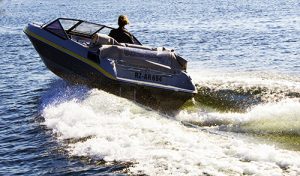 The use of alum treatments to bind phosphorus to control algal blooms has been expanding to larger lakes, where there is no historical precedent for success. These larger lakes can have larger wind-created waves that are more energetic, potentially moving more sediment in the lake. The team’s study aims to understand whether boat created waves (such as from wakeboarding or water skiing) or wind created waves on East Pond are decreasing the efficacy of the alum treatment on the lake bed. The team will use a mix of computer modeling and fieldwork to tease out the relative impact motorized boats may have on disrupting alum treatments in larger lakes. They will also interview and meet with local stakeholders of East Pond and visitors to the lake to understand boating and lake user preferences to inform management measures. While working with the 7 Lakes Alliance and stakeholders, the team will provide concrete evidence of the viability of using alum as a treatment for stopping algal blooms in large lakes, and develop potential guidelines for boaters to minimize their impact on the large investment the East Pond community made to protect their lake.
Project Update
The research project focused on investigating the potential impact of waves on water quality via a case study of East Pond in Maine focusing on any potential disturbances of the existing alum treatment in East Pond. Historically, alum treatments have proven effective in smaller ponds, but their success in larger lakes and more intense boating activity has been uncertain. The study
delved into the impact of wind-driven waves and boat-wake waves on sediment erosion and alum treatment disturbances. Through a combination of field experiments, computational modeling, and surveys of lake users, the research aimed to provide insights into the impacts of boat wake waves and wind driven waves as well as public support for minimizing disturbance of the alum-treated lake.
Field experiments revealed that while boat wakes can generate significant wave heights, they did not significantly disturb alum-treated sediments in East Pond. Computational modeling further supported these findings, indicating minimal sediment movement near the boat due to wake activity. Survey data highlighted strong public support for alum treatments as a means to combat algal blooms, yet also revealed concerns about potential impacts on lake ecology and human health. Despite the overall positive perception of alum treatments, a significant portion of lake users expressed uncertainty regarding their long-term effects.
Moreover, the study shed light on public attitudes towards boating management regulations aimed at preserving alum treatment effectiveness. While there was general support for existing regulations, such as water safety zones near shorelines, proposed regulations to limit impacts from large wakes faced more resistance. Policy implications emphasized the need for further research to inform science-based regulations, particularly regarding the depth and shoreline impact of boat wakes. Regulations that restrict boating based on water depth could potentially affect boating activity on a significant number of lakes in Maine, prompting careful consideration in policy development. Overall, the findings underscore the complex interplay between water quality management, recreational activities, and environmental conservation in lake ecosystems.
Products
Presentations:
- Community Surface Dynamics Modeling Systems Annual Conference, May 17-19, 2023, Boulder, CO. Poster: “Modeling the impact of boat wakes and wind waves on lake bed morphology: a case study of East Pond”. Presented by Alejandra Ortiz, Colby College.
- Maine Water & Sustainability Conference, March 30, 2023, Augusta ME. Poster 1: “Stirring up Trouble: Wakeboat Management on East Pond”. Presented by student Margo Kenyon, Colby College. Poster 2: “A case study of boat wake waves vs wind wave impact on alum treatment of East Pond.” Presented by Dr. Alejandra Ortiz, Colby College.
- Colby Undergraduate Liberal Arts Symposium (CUSSR). “Relative impacts of human actions and perceptions on large alum-treated lakes: A case study on East Pond” July 27, 2023. Presented by Student Emma Rothwell. “The Effect of Aluminum Water Treatment on Zooplankton Populations” July 27, 2023. Presented by Rome Banaitis
- Mitchell Center for Sustainability Solutions. November 13, 2023. “Navigating Water Quality: Understanding the Impact and Perceptions of Boat-Generated Waves on an Alum Treated Lake in Maine.” Presented by Alejandra Ortiz and Alison Bates, Colby College
- Lake Trust of Maine. September 20, 2023, Belgrade, ME. “East Pond: Wind and Wake Impacts on the Alum Treatment.” Presented by Dr. Ortiz & Dr. Wain.
- Lakes Environmental Association. January 6, 2023, Bridgton, ME. “East Pond: Wind and Wake Impacts on the Alum Treatment.” Presented by Dr. Wain.
- North American Lake Management Society. October 24, 2023, Erie, PA. “A Case Study of Boat Wake Waves vs Wind Waves Impact on the Alum Treatment of East Pond, Maine.” Presented by Dr. Wain
- River, Coastal, and Estuarine Morphodynamics. September 23-28, Urbana-Champaign, IL. “A Case Study of Boat Wake Waves and Wind Waves on East Pond.” Presented by Dr. Ortiz.