
Guinea Fowl May Be the Solution to Insect Pest Problems
 By Richard J. Brzozowski, Extension Educator, University of Maine Cooperative Extension
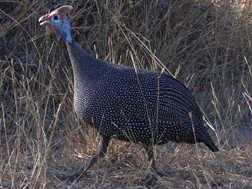
Are you a frustrated gardener with insect pest problems in your yard, flower or vegetable garden? Do Japanese beetles typically have a field day at your expense? Do you have an abundance of ticks on our property? Have different methods to control or manage these or other insect pests been ineffective? Are you interested in a natural solution to garden pest problems? Having a few Guinea fowl graze your property may be just the solution. Guinea fowl are natural grazers as they will eat weed seeds, insects and worms. They are fairly easy to keep and quite effective in keeping your property and gardens clean of insect pests.
Before you try Guineas in your garden here are some factors to consider:
- Are you zoned for keeping poultry? To find out, check with your town or city hall. If you are not properly zoned for poultry, then forget the idea of raising Guineas.
- Do you have facilities to keep poultry? Poultry need protection from the elements. Proper feed, water, and housing must be provided for birds to be healthy and productive. Adult Guineas will prefer to stay outdoors even at night where they roost in trees. To get Guineas inside use millet seed as the feed bait.
- Will noise be a problem to you or your neighbors? Guineas will make a racket. They don’t crow like a rooster every morning but they will let you know when they are alarmed. They will warn you of any intruders (people, predators or perceived strangers) entering their territory with a shrill call.
- Do you have the time and energy to care for poultry? Guinea fowl need to be looked after especially when they are young. Guinea fowl will need to be trained to their “home” so they return to the poultry house or roost. They will also need to be trained to their “keeper” – the person(s) who care for them.
- Do you have the space for grazing Guineas? Guinea fowl do not recognize property lines or boundaries. You may need to speak to your neighbors about your “Guinea experiment.” Two to six birds should be adequate as a small starter flock. Be ready for babies in proceeding years. Females begin to lay eggs at about 12 months of age.
- Do you have a space for them through the winter months? Guineas will need adequate winter housing. You will need a plan for winter timekeeping of the birds. Will you keep them through the winter or have them processed for human consumption? The meat from 6-month-old Guineas is tasty and often substituted for game birds on the menu in fine restaurants. Older birds are also consumed.
- Have you seen signs of wildlife in your area such as owls, hawks, coyote, skunks or raccoons? Predators will be a threat even though Guineas can fly to roost in heights of 20 feet or more. The ground and air-borne predators will be a threat to the keets (young Guineas) while the air-borne predators will target adult birds typically during roosting.
- What does it take to train them to graze properly? You will need to train Guineas not to harvest fruit and vegetables from your garden. Avoid feeding garden vegetable waste from crops you wish for them to protect or keep them out of the garden during fruiting time.
Background Information
Guinea Fowl are native to Africa and have been domesticated as farm poultry all over the world. They fit well on small farms and with gardeners in New England. They are comical and entertaining to watch and are generally vigorous with little or no health problems. Males and females are difficult to distinguish until they reach maturity. The American Poultry Association recently recognized Guineas and now have a class for them at agricultural shows.
Starting with Guinea Fowl
To purchase Guinea fowl, locate a reputable breeder in your area or order a small batch from a poultry mail order company. Ask at your farm feed store for local breeders or check the Internet. The Guinea Fowl Breeders Association (Phyllis Bender, 4 Coach Lane, Westport, CT 06880) has a directory of breeders or visit the Guinea Fowl International Association website for more information. You may find a supplier or Guineas for sale at local agricultural fairs in the “poultry pavilion.” The most common and inexpensive variety of Guineas is the pearl. You can start with birds ranging from day-old keets or mature birds. Mature birds will need several weeks of orientation to their new home and keeper. This means keeping them inside until they learn where they get fed and cared for. If you purchase day-old keets, the baby birds will need several weeks of inside care through their brooding period. Brooding is the time when the proper feed, fresh water, and supplemental heat is provided in adequate amounts from the age of one day old to they grow their feathers (three-five weeks). The keets must be kept dry and warm throughout this period. The feed used through the brooding period is “turkey starter” or “game bird starter.” Keets are easier than adult Guineas to train as they will quickly grow to recognize you as their keeper and your place as their home and territory. Guineas mix well and can be raised with chickens. Often a broody chicken hen is the one to naturally incubate and care for new keets. Thirty or more eggs can be laid by a Guinea hen during her laying period. They do not lay eggs year round. Learn as much as you can about Guineas before buying the birds from books, the internet or experienced keepers.