
Soil Insect Pests of Vegetables

Pest Management Fact Sheet #5045
James F. Dill, Pest Management Specialist
Clay A. Kirby, Insect Diagnostician
Charles D. Armstrong, Cranberry Professional & Staff Entomologist
For information about UMaine Extension programs and resources, visit extension.umaine.edu.
Find more of our publications and books at extension.umaine.edu/publications/.
Description & Biology
The most significant soil insects attacking home garden plants in Maine are:
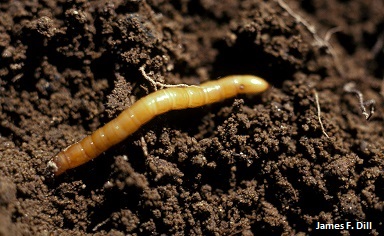
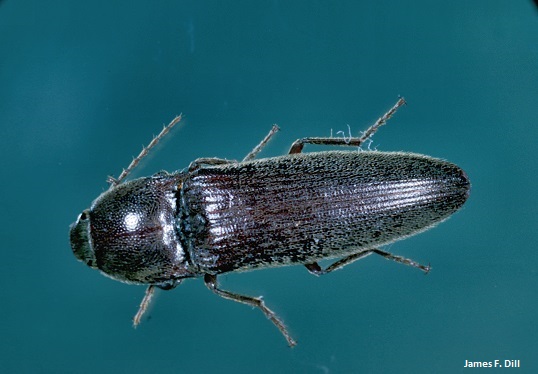
- Wireworms – these are the immature stage (larva) of the click beetle. Wireworms are cylindrical, about 1½ inches long, brownish to yellow and are rather hard-bodied. These insects eat seeds, cut into small shoots and often bore into stems, roots, and tubers. They attack many vegetables including potatoes, onions, corn, carrots, peas, beans, and melons.
-
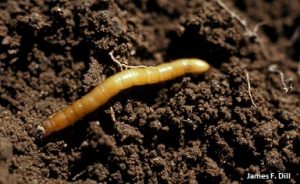
- Wireworm (larva)
-
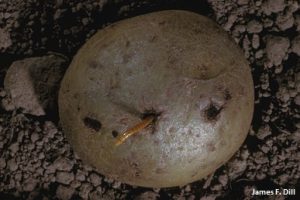
- Wireworm larva feeding on a potato

-
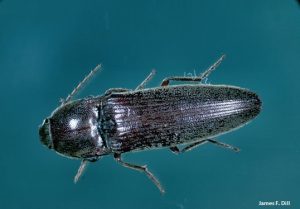
- Click Beetle (adult stage of a wireworm)
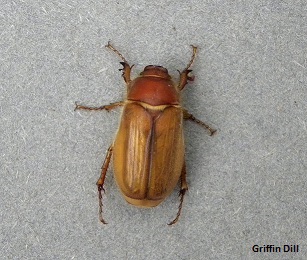
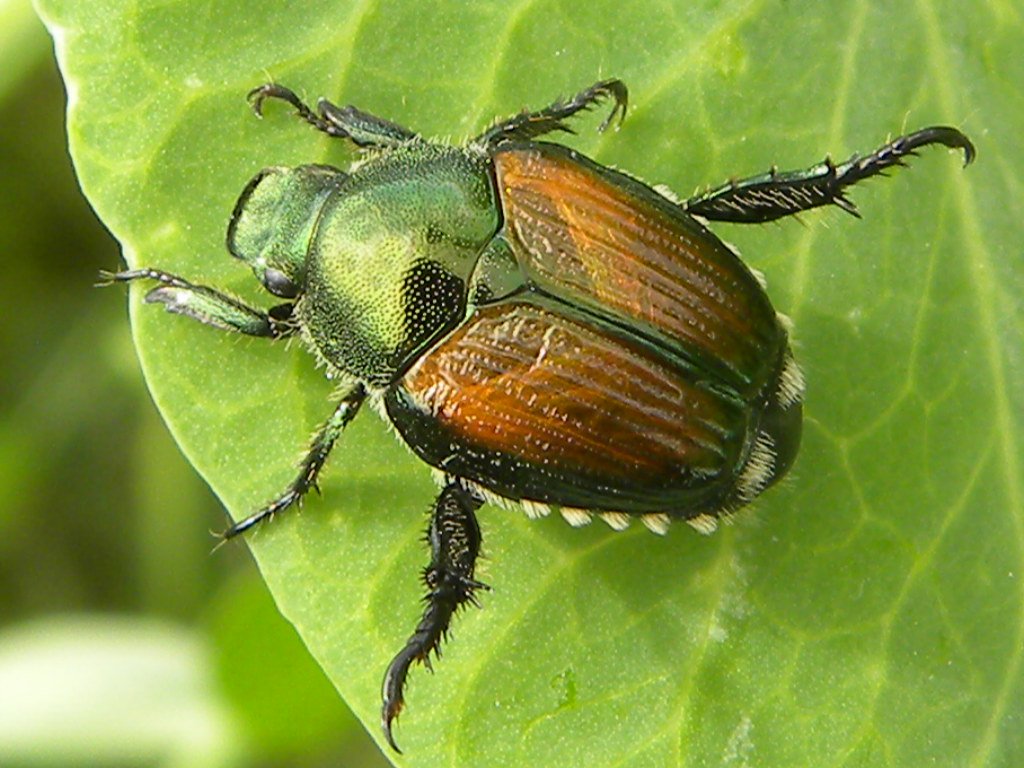
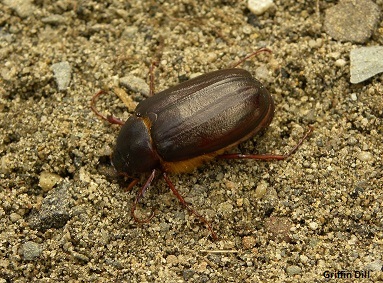
- White grubs — “White grubs” are a group of beetle larvae (Family Scarabaeidae) that are cream-colored and C-shaped with brown heads. They include the immature stage of European chafer, Japanese beetle, and beetles from the genus Phyllophaga (May beetles/June bugs). They stay in the soil and feed on the roots of corn, beans, peas and other vegetables. They are most likely to damage plants in or near ground that was recently sod-covered.
-
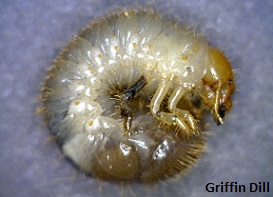
- White Grub
-
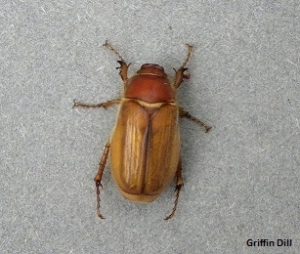
- Adult European Chafer Beetle
-
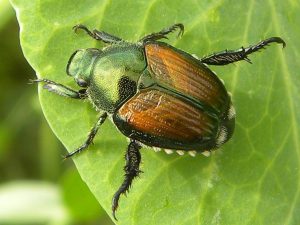
- Adult Japanese Beetle
-
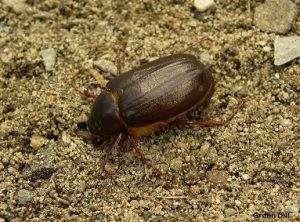
- Adult May Beetle/June Bug
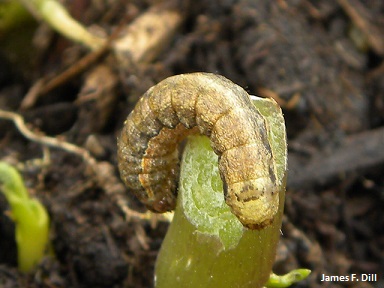
- Cutworms are the larval, or immature, stage of certain moths. They can often destroy a stand of plants in a garden. Cutworms are night-feeders and are seldom seen during the day. These insects cut off small plants at or near the ground level and feed on the tender stem. Some types climb up the stem and feed on the foliage. Many plants are attacked by cutworms, but they are especially damaging to corn, beans, tomatoes and peppers.
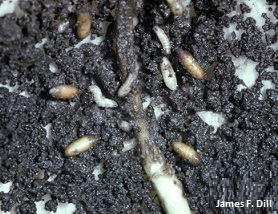
- Cabbage maggots (Delia radicum) are the larvae of small flies in a family of root-maggot flies called Anthomyiidae. They feed on fine roots, eventually tunneling into the taproot. They attack cabbage, broccoli, turnips and similar crops. Other maggots which attack vegetable crops include the carrot rust fly and the onion maggot.
. - Seedcorn maggots (Delia platura) are the larvae of another species of fly in the Anthomyiidae family. They develop in the soil and feed on seed and seedlings of corn, beans, peas, potatoes, cabbages, melons and other crops. Cool wet springs and soils with a high concentration of organic matter favor the development of this pest. (No pictures available of this pest as yet.)
Management
Beneficial nematodes can be used for controlling the soil-dwelling larval stages of the above pests. Cardboard plant collars, spinosad, Bt (Bacillus thuringiensis), and carbaryl (Sevin®) sprays and baits can be used to control cutworms. Row covers can be used to prevent maggot problems.
When Using Pesticides
ALWAYS FOLLOW LABEL DIRECTIONS!
Pest Management Unit
Cooperative Extension Diagnostic and Research Laboratory
17 Godfrey Drive, Orono, ME 04473
1.800.287.0279 (in Maine)
Information in this publication is provided purely for educational purposes. No responsibility is assumed for any problems associated with the use of products or services mentioned. No endorsement of products or companies is intended, nor is criticism of unnamed products or companies implied.
© 2016, 2018, 2020 | Reviewed & Revised: 2023
Call 800.287.0274 (in Maine), or 207.581.3188, for information on publications and program offerings from University of Maine Cooperative Extension, or visit extension.umaine.edu.
In complying with the letter and spirit of applicable laws and pursuing its own goals of diversity, the University of Maine System does not discriminate on the grounds of race, color, religion, sex, sexual orientation, transgender status, gender, gender identity or expression, ethnicity, national origin, citizenship status, familial status, ancestry, age, disability physical or mental, genetic information, or veterans or military status in employment, education, and all other programs and activities. The University provides reasonable accommodations to qualified individuals with disabilities upon request. The following person has been designated to handle inquiries regarding non-discrimination policies: Director of Equal Opportunity, 101 Boudreau Hall, University of Maine, Orono, ME 04469-5754, 207.581.1226, TTY 711 (Maine Relay System).