
Fruit Flies
Genus “Drosophila” is the genus name for what we call “fruit flies” or, sometimes pomace, vinegar, or wine flies, which speaks to their propensity–in the case of many species–for hanging around and feeding on overripe or rotting fruit. The entire genus, however, contains more than 1,500 species and is very diverse in appearance, behavior, and breeding habitat. The larvae of at least one species, Drosophila suzukii (which people know more by the name of Spotted Wing Drosophila or the Asian Fruit Fly), is a newly introduced species from Asia that can also feed in fresh fruit and has become a major threat to soft-skinned fruits throughout much of Maine, New England, and elsewhere across the nation. Keep up with Maine Spotted Wing Drosophila alerts during the growing season at our Highmoor Farm SWD Alerts page here: Highmoor Farm’s Spotted Wing Drosophila page
-
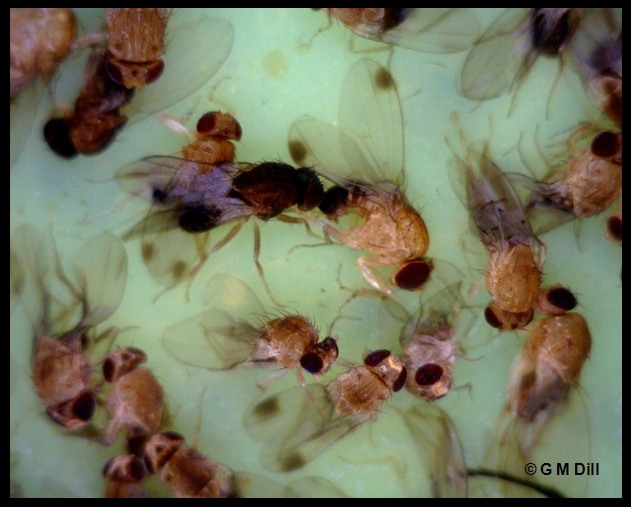
- Spotted Wing Drosophila fruit flies (Drosophila suzukii) (a.k.a. the Asian fruit fly) stuck to a UMaine Extension sticky trap; The males have a prominent, dark spot on each wing, as can be seen in this photo.
-
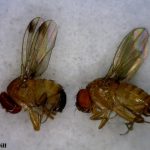
- Male (left) and Female (right) Spotted Wing Drosophila, photo by Griffin Dill. Actual size: 2-3 mm.

-
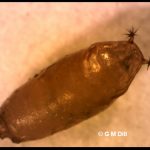
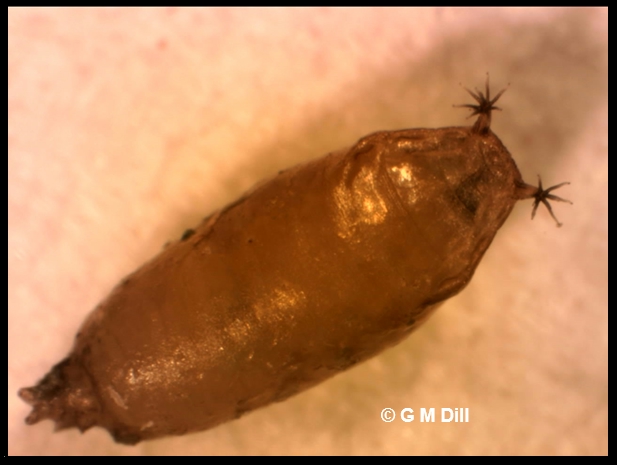
- Pupa of a Spotted Wing Drosophila
-
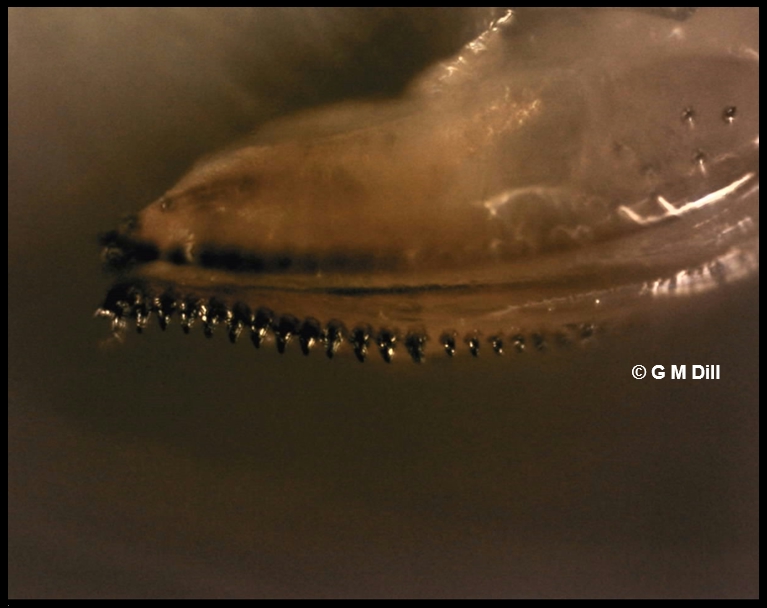
- Closeup view of the saw-like ovipositor which allows Spotted Wing Drosophila to cut into healthy soft-skinned fruits
-
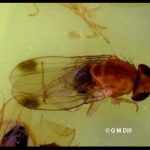
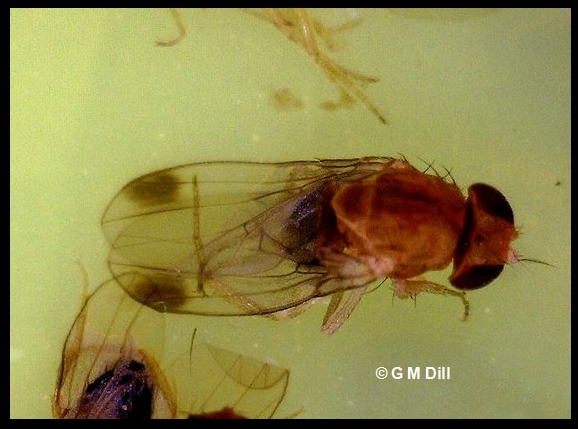
- A male Spotted Wing Drosophila
-
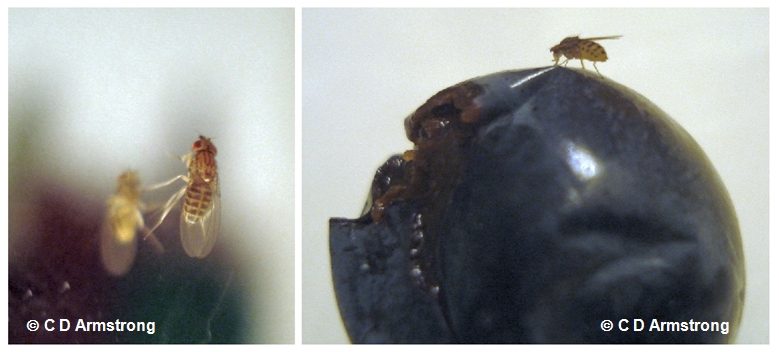
- A common household fruit fly (Red-eyed Fruit Fly) resting and feeding on a Concord grape
-
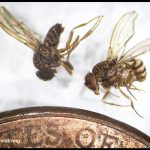
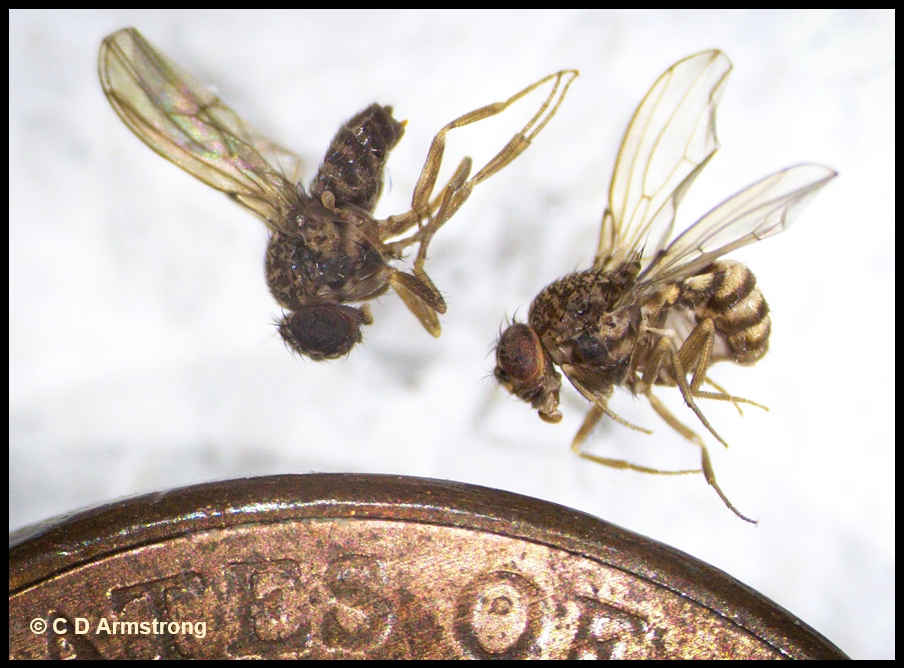
- Dark-eyed Fruit Flies (Drosophila repleta) beside a US penny (From a greenhouse in Madison, ME; 9/28/2023)
-
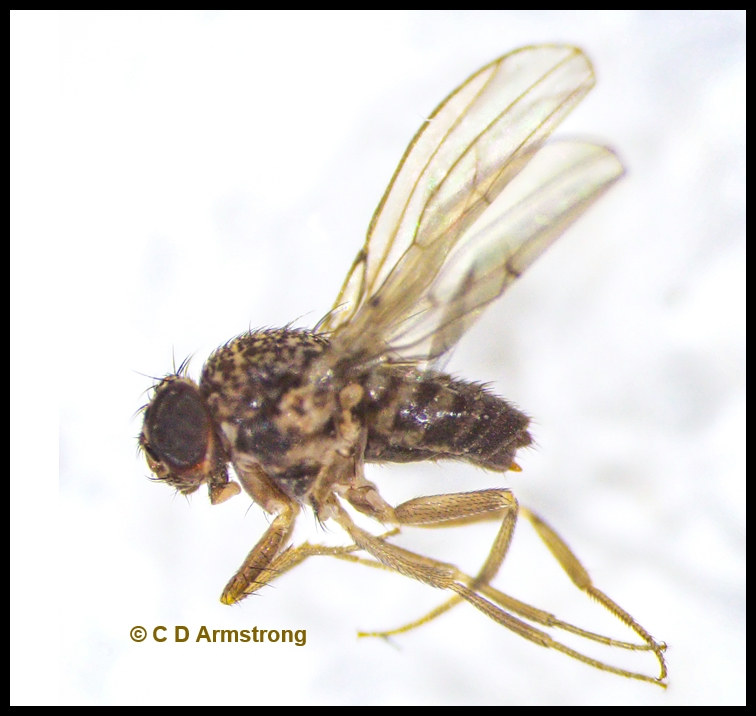
- Dark-eyed Fruit Fly (Drosophila repleta) (from a greenhouse in Madison, ME; 9/28/2023)
Additional Information And Photos:
- Fruit Flies (Cornell) (includes mention of the “Dark-eyed Fruit Flies” species group)
- Fruit Flies Fact Sheet (Iowa State University)
- See also: Humpbacked Flies (very similar to fruit flies; one common species indoors is Megaselia scalaris) (BugGuide.net)
- Spotted Wing Drosophila Resources:
- How Do I Manage Spotted Wing Drosophila in my Garden? (Cornell Cooperative Extension)
- Highmoor Farm’s Spotted Wing Drosophila page (includes good photos) (University of Maine Cooperative Extension)
- UMaine News: “UMaine testing natural control for berry-eating pest” (8/29/2022) | “Fanning awarded $3M from USDA for spotted-wing drosophila research“ (9/26/2022)
- Spotted Wing Drosophila (University of New Hampshire)
- Spotted Wing Drosophila (Michigan State University)