
Growing Grapes in Maine
David T. Handley, Vegetable & Small Fruit Specialist, University of Maine Cooperative Extension
January 2013
Table of Contents
- Grape Expectations
- The Grape Plant
- Grape Growth
- Grape Varieties
- Hardy Grape Varieties
- Hybrid Types
- Site Selection
- Site Preparation
- Planting Grapes
- Establishing the Vineyard
- Trellising Grapes
- Irrigation
- Training Grapes
- Growing Grapes
- Pruning Grapes
- Fertilizing Grapes
- Harvesting Grapes
- Grape Problems
- Maine Grapes: Bottom Line
- Grape Resources
Grape Expectations
What are your goals?
- Personal
- Financial
- Grapes = high-risk crop
- Invest wisely
- Or not at all
- Scale
- Home Garden/Hobby
- Commercial
- Table Grapes
- Market?
- Quality, quantity, competition
- Market?
- Wine Grapes
- Variety very limited
- Quality/quantity of product
- Market?
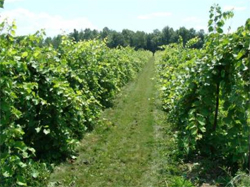

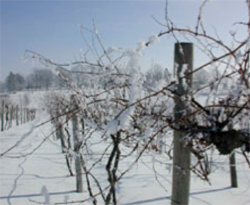
Potential (likely) Problems
- Winter injury
- Buds, Cane, Trunk
- Short growing season
- need early maturity
- Pest Problems
- Diseases, insects
- Markets
The Grape Plant
Perennial Vines
- Long-lived (?) trunk
- Fruit on 1 yr. old canes
- Lubrusca types: buds 3-5
- Vinifera types: buds 1-3
- Self-layering (rooting)
- Self-fertile (mostly)
- Long growing season (160+ days)
- Winter-tender
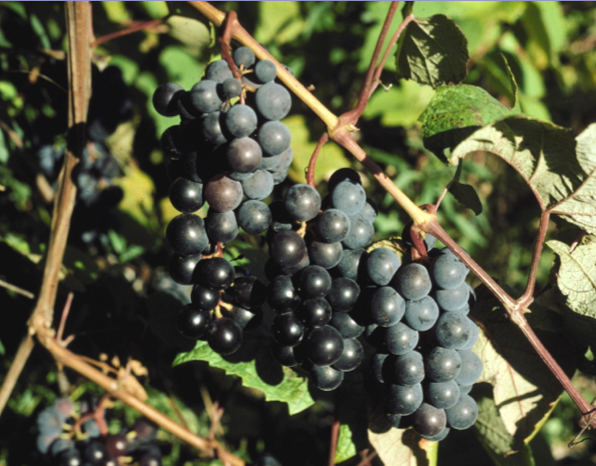
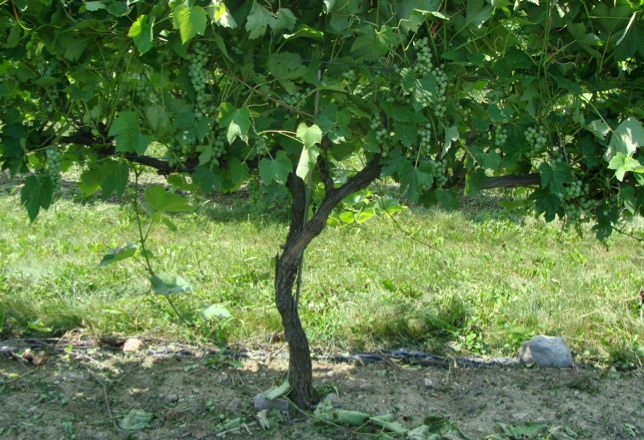
-
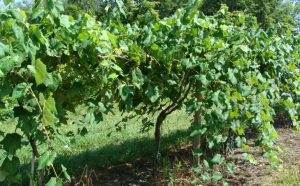
- Cordon, e.g. Geneva Double Curtain
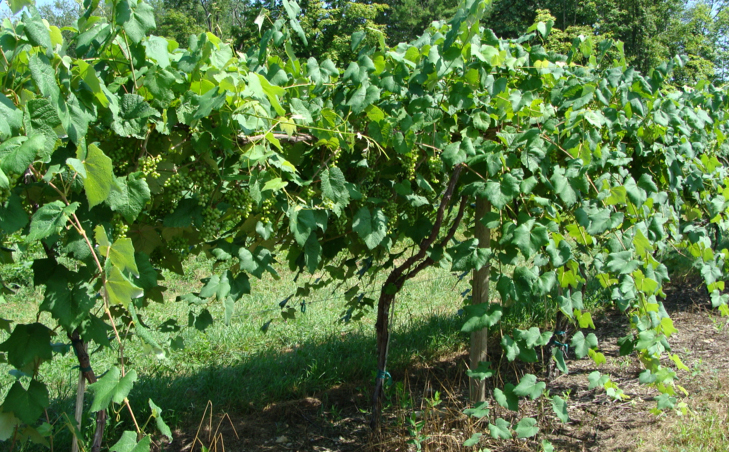
Trunk
- Long-lived (?), perennial
- 1’-7’ tall, depending on the training system
- Winter hardy to -10º to -40º
Cordon
- Permanent branch, perpendicular to the trunk
- Supports fruiting (1 yr old) canes
- Improves exposure, eases harvest
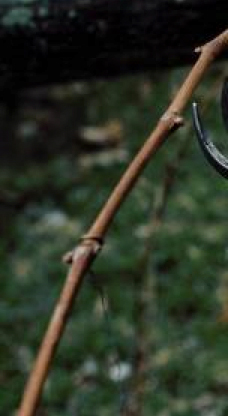
Cane
- One-year-old vine growth
- Supports buds, fruiting shoots
- Health of cane determines the quality of the crop
- Most productive: moderate vigor
- 3/8” thick
- Chocolate brown color
- Internodes: space between buds
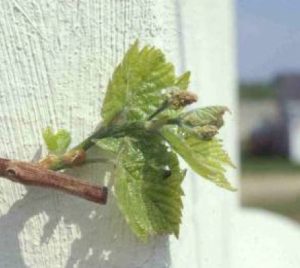
Shoots
- Current year’s growth (green)
- Support fruit at nodes
- Will be canes next year
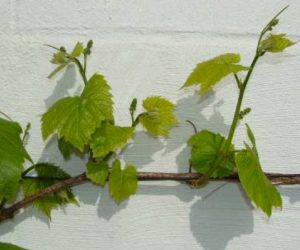
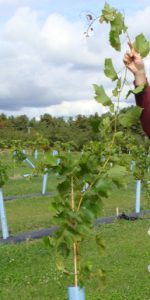
Grape Growth

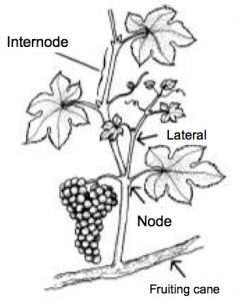 Shoot Growth
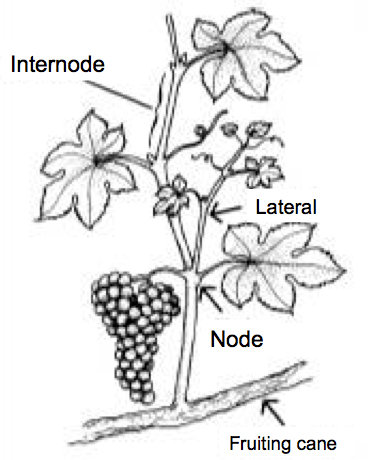
- Buds form at nodes
- At leaf base
- Next years shoots (dormant)
- May produce laterals
- Fruit clusters
- 1-2 cluster/shoot
- Remove excess clusters
- Furthest from base
- Better fruit size, ripening
Vine Growth
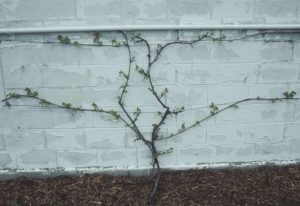
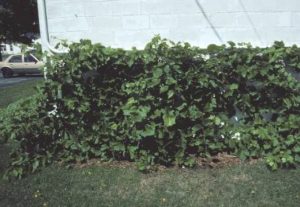
Vines can grow 15’+/year! Make sure they have adequate space and light.
Grape Varieties
What should you look for?
- Hardiness
- Early maturity
- Hardiness
- Table vs. wine quality
- Hardiness
- Disease resistance
- Hardiness
Lubrusca Types
(Vitus labrusca)
- Native, hardy
- Sweet, strong “foxy” flavor
- e.g. “Concord”
- Blue/black, red, white
- Some seedless
- Mostly table quality
- Limited wine utility
Vinifera Types
(Vitus vinifera)
- European orgin
- Not hardy
- No “foxy” flavor, less sweet
- e.g. “Chardonnay”, “Cabernet”
- Blue/black, red, white
- Limited table utility
Hybrid Types
(labrusca x vinifera [x ripera])
- Interspecific crosses
- Improved hardiness over vinifera
- Improved wine quality over labrusca
- Active northern breeding programs
- Improved potential for NE wines
Hardy Grape Varieties
Concord (Lubrusca) Types
(Click on thumbnails to view enlargements.)
Blue/Black: Table and Juice
 Beta
Beta- King of the North
- Valiant
- Bluebell
- Fredonia
- Worden
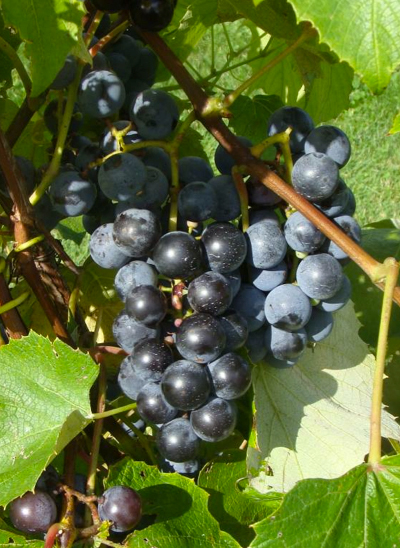
Beta, King of the North
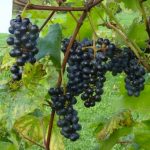 Very hardy
- Early maturity
- Small, blue/black fruit
- Seeded
- Juice, jelly, table
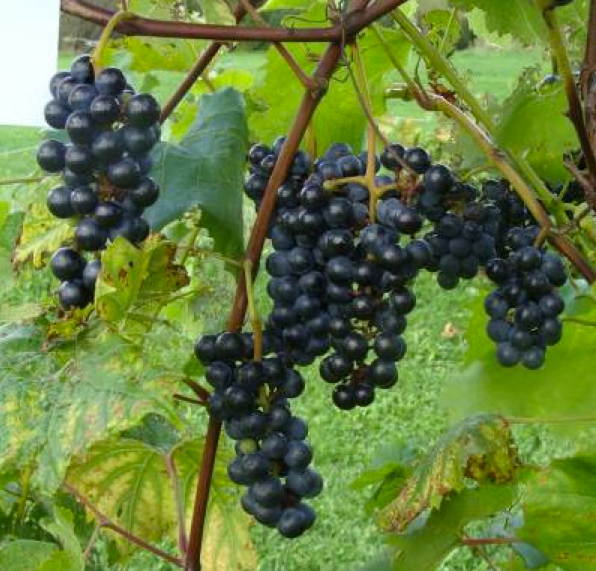
Valiant
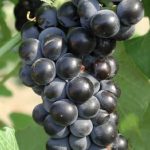 Very hardy (ripera cross)
- Early maturity
- Small, blue/black fruit
- Seeded
- Juice, jelly, table
- Flavor only fair
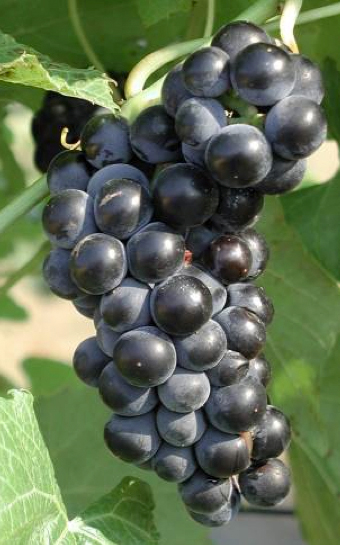
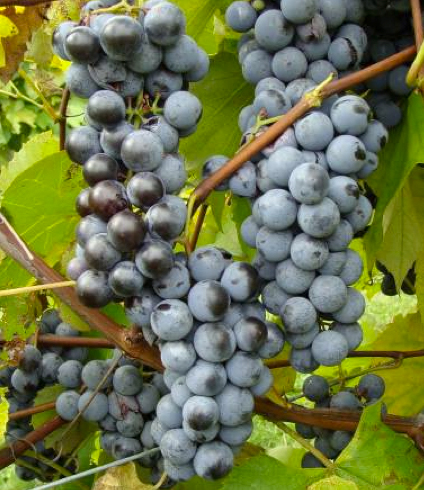
Bluebell
 Very hardy
- Early-mid maturity
- Medium, blue/black fruit
- Seeded
- Juice, jelly, table
- Good flavor
- Disease resistant
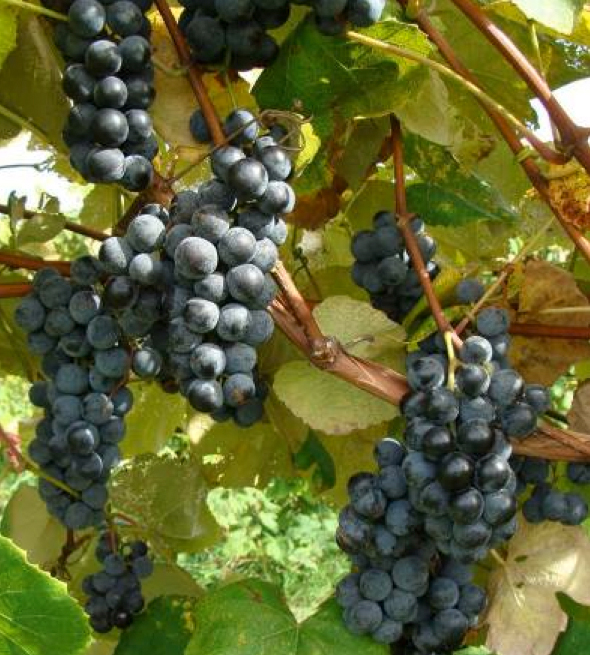
Fredonia
 Hardy
Hardy- Mid-late maturity
- Med-large blue/black
- Seeded
- Juice, jelly, table, wine?
- Good flavor (Concord)
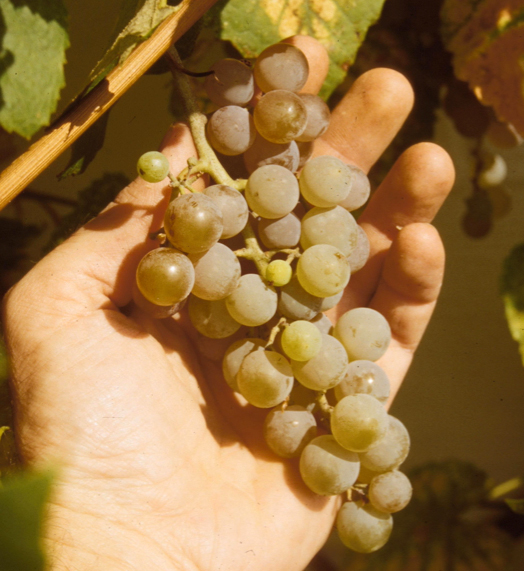
Candice
 Hardy?
- Early-mid maturity
- Small-med red/pink fruit
- Seedless
- Table, juice
- Good flavor; v. sweet
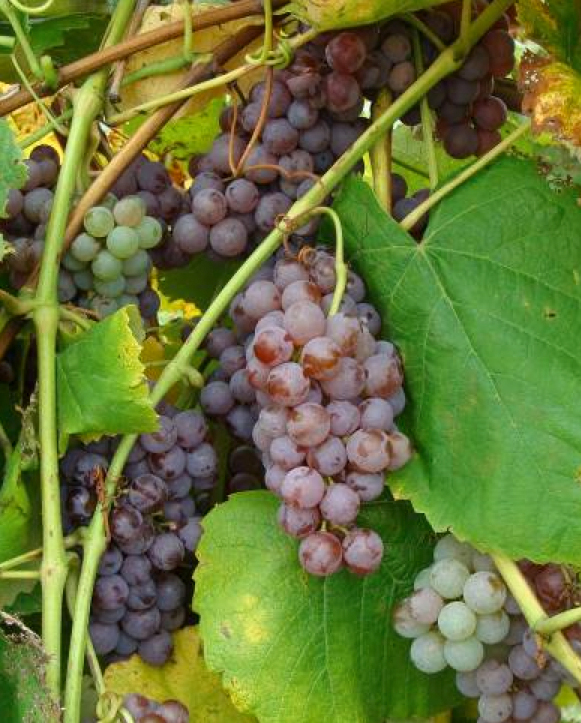
Reliance
 Hardy?
- Early-mid maturity
- Med. red/pink fruit
- Seedless
- Table, juice, wine?
- Good flavor
Vanessa
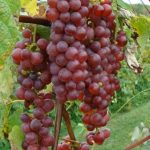 Hardy?
- Early-mid maturity
- Med. red fruit
- Seedless
- Table, juice, wine
- Good flavor, texture

Somerset
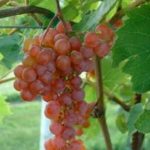 Hardy
Hardy- Early-mid maturity
- Med. red fruit
- Seedless
- Table, juice, wine
- Good flavor, texture
- Disease resistant

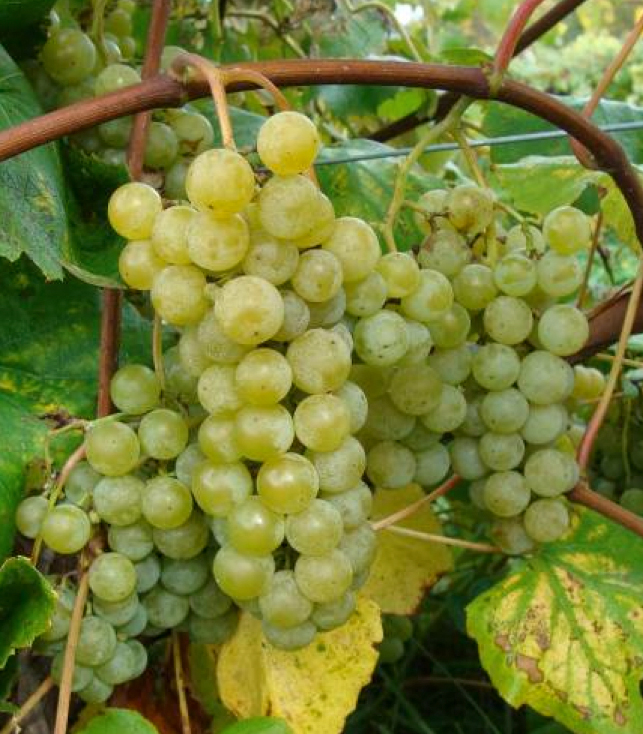
Edelweiss
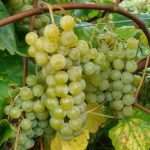 Hardy
Hardy- Early-mid maturity
- Med. white fruit
- Seeded
- Table, juice, wine
- Good flavor, texture
- Disease resistant
Hybrid Types
(Click on thumbnails to view enlargements.)
Frontenac, +Gris, +Blanc
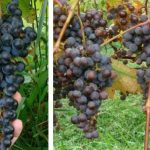 Very Hardy
- Mid-late maturity
- Small, blue/black fruit
- Amber (Gris)
- White (Blanc)
- Wine
- Disease resistant

Marechal Foch
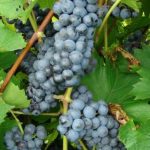 Very Hardy
- Early-mid maturity
- Small, blue/black fruit
- Wine (blending)
- Disease resistant
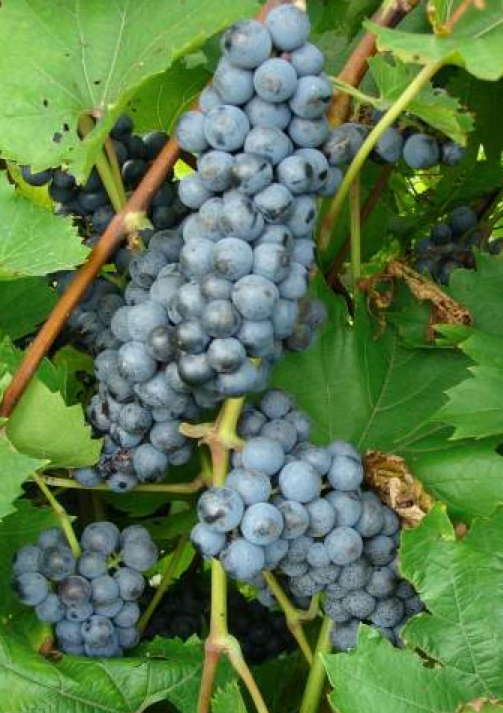
St. Croix
 Very Hardy
- Early-mid maturity
- Small, blue/red fruit
- Wine, table
- Disease resistant
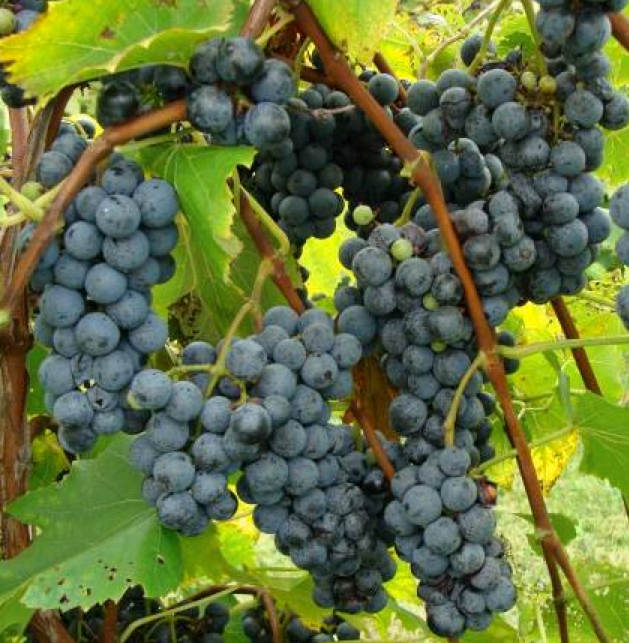
Sabrevois
 Very Hardy
- Early-mid maturity
- Small, blue/red fruit
- Wine
- Disease resistant
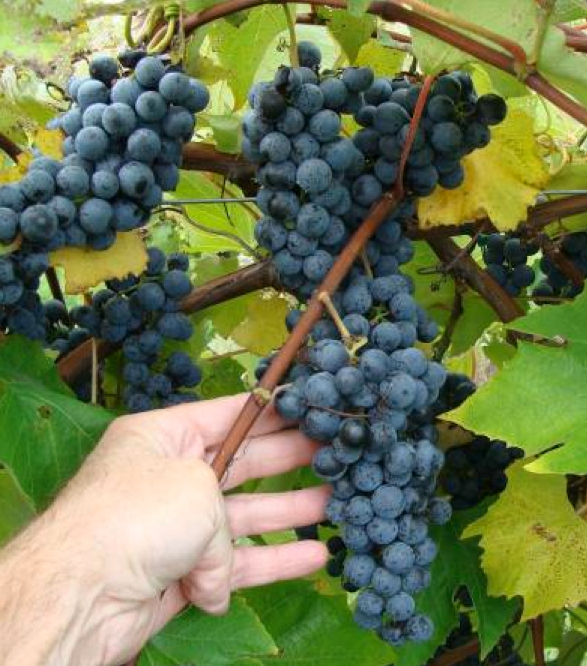
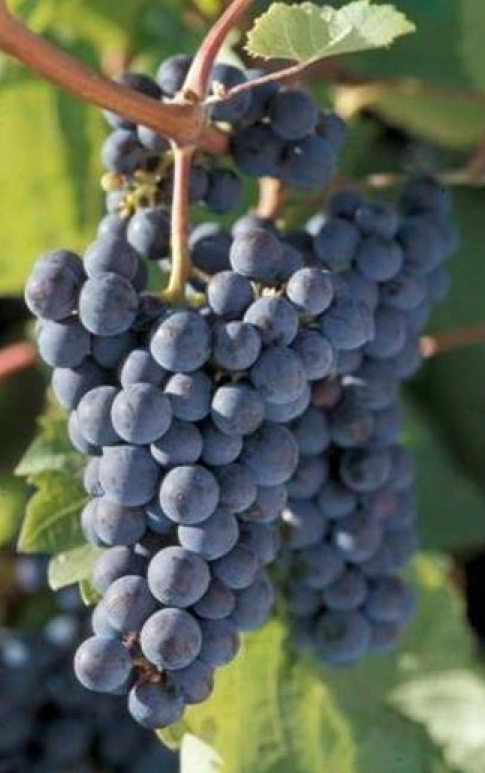
Marquette
 Very Hardy
- Early-mid maturity
- Small, blue/red fruit
- Wine
- Disease resistant
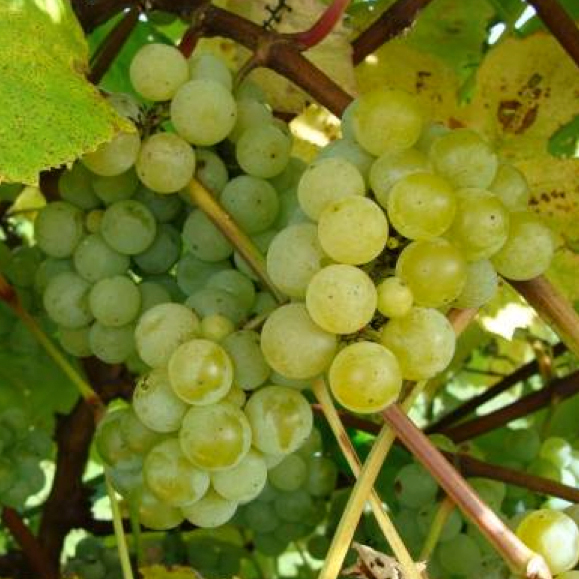
Kay Gray
 Very Hardy
- Early-mid maturity
- Med-Large, white fruit
- Wine
- Disease resistant
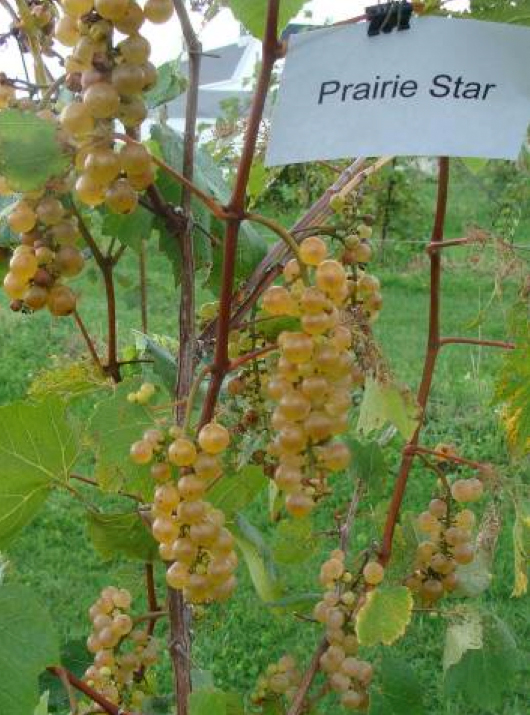
Prairie Star
 Very Hardy
- Early-mid maturity
- Medium, white fruit
- Wine
- Disease resistant
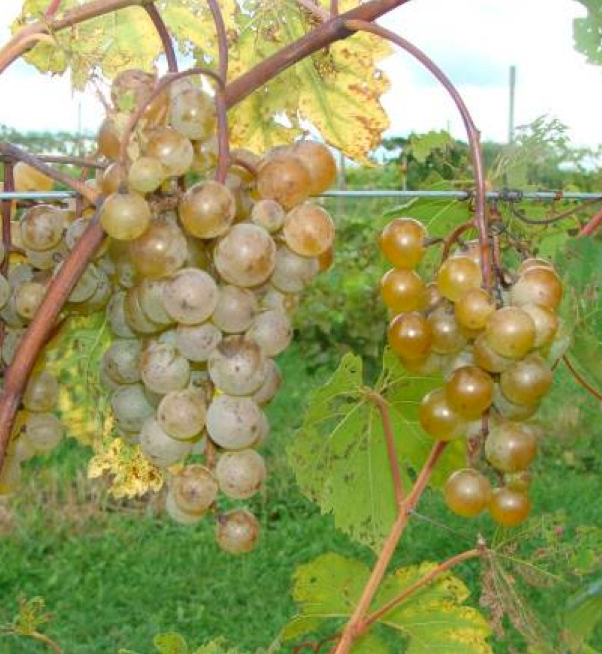
St. Pepin
 Hardy
Hardy- Early-mid maturity
- Medium, white fruit
- Wine (sweet)
DIY Grape Variety Trials
- Test them yourself!
- Talk to other growers
- Always trial new varieties in small plantings (reduce risk)
- Plant new varieties next to a standard for your area
- Observe for at least two harvest seasons before “buying in”
- Get customer feedback
Site Selection
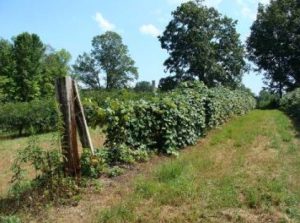
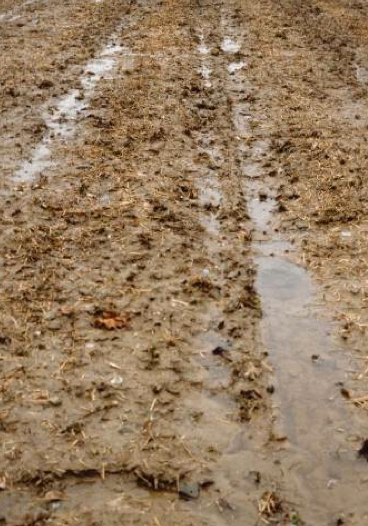
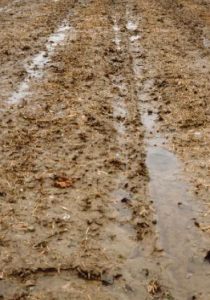 Exposure
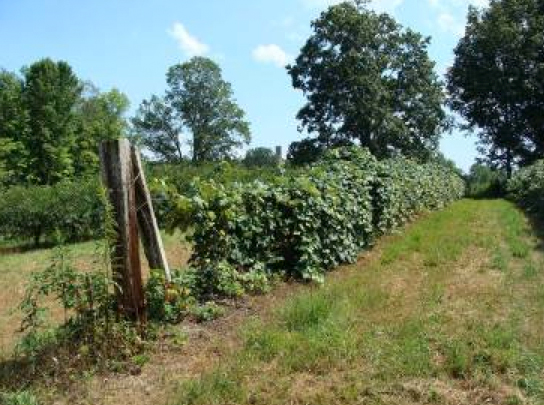
- Full Sunlight
- Protected from wind
- Windbreaks
- Run rows North to South
- 0 to 8% slope
Soils
- Many types acceptable
- Sand to silt, but not clay
- Well-drained
- High % organic matter
- (4-6% or more)
- Soil pH: 6.0 to 6.8
- Take a soil test!
Site Preparation
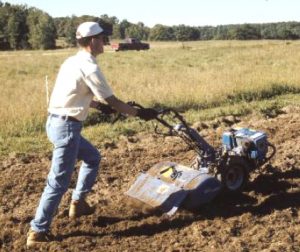
 Soil Test

- pH, nutrients, o.m.
Soil Amendments
- Lime, dolomite, sulfur
- Modify pH to 6-7
- Fertilizer (N-P-K)
- Organic Matter
- Compost, manure
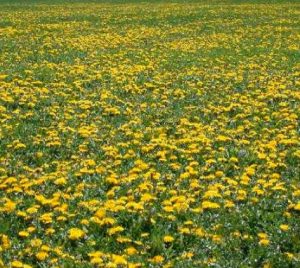
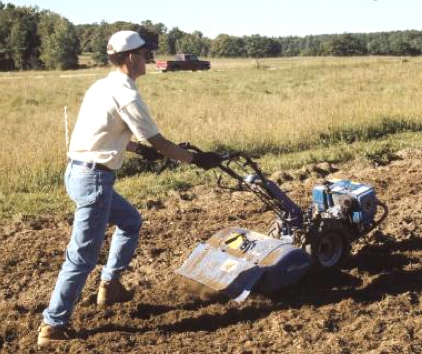
Eliminate Weeds
- Tillage
- Herbicides
- Pre-Plant Cover Crops
- ↓ Weeds
- ↑ Organic Matter
- Fallow
Planting Grapes
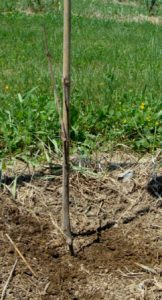
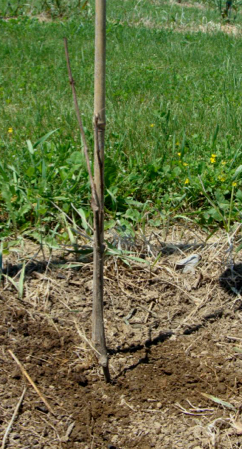
 Use 1-year old plants
- Bare root or potted
- $5-10 ea.
- 600 to 800/acre
- Bare root or potted
- Soak roots before planting
- 1-3 hours (don’t drown them)
- Plant at nursery depth
- No fertilizer!
- Add compost to backfill
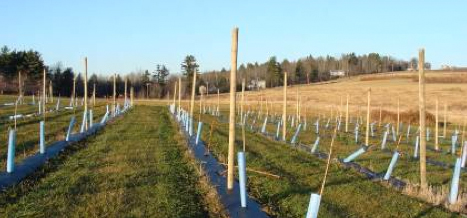
- Support stake
- Prune to 1-2 shoots
- Water in
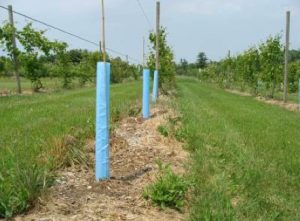
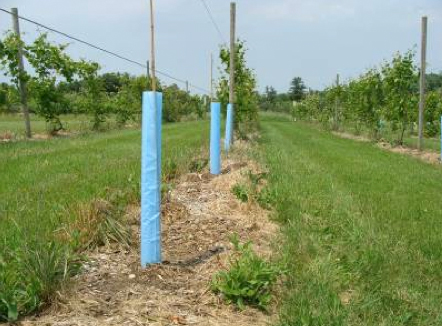
- Apply grow tubes?
- 3.5” dia. x 30” height
- Mulch: ↑ moisture, ↓ weeds
- Woodchips, bark, plastic
- Remove in fall
- Sun & mouse damage
- Spacing:
- 8-10’ between plants
- 8-14’ between rows
- 600 to 800/acre
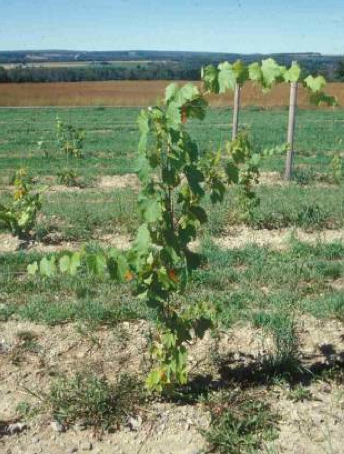
- Use stakes or string to train shoot up to trellis wire (or grow tubes)
 Establishing the Vineyard
- Establish sod between rows
- Fall prior to planting
- Eases planting activities
- May compete with vines
- Fall after planting
- No competition
- Must control weeds
- Use slow-growing lawn mix
- Hard fescue/bluegrass
- Fall prior to planting
Trellising Grapes
- Endposts
- Set at least 2’ deep
- Angle away from row 45º
- Anchor with wire
- Posts every 24’
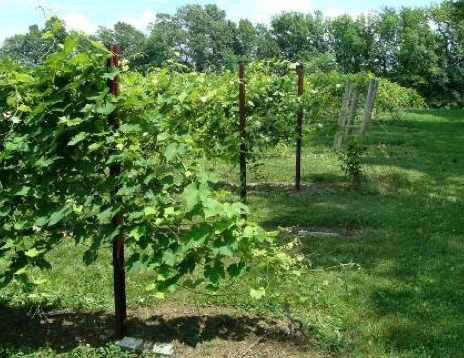
- Attach two trellis wires
- At heights of 2.5’ and 5’
- #9 galvanized wire
- Adjustable tension
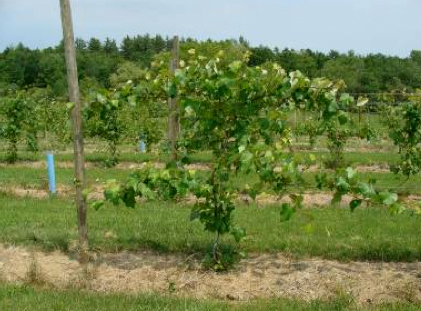
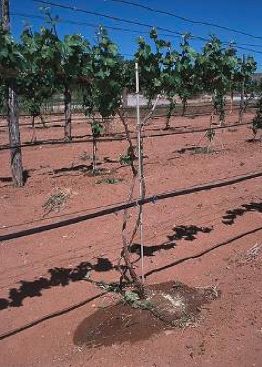
(Click on thumbnails to view enlargements.)
-
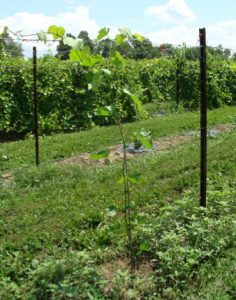
- First – second year.

 Irrigation
- Adequate water is critical!
- Establishment
- Fruit sizing, quality
- Avoid watering foliage
- Encourages disease
- Wastes water
- Trickle or drip systems best
- Require less water & pressure
- Require clean water
- Filters
Training Grapes
Video: Caring for Young Grape Vines (YouTube)
Video: Four Arm Kniffin System for Growing Grapes (YouTube)
-
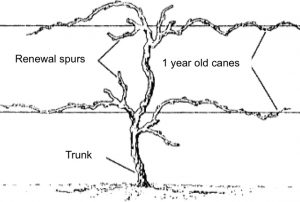
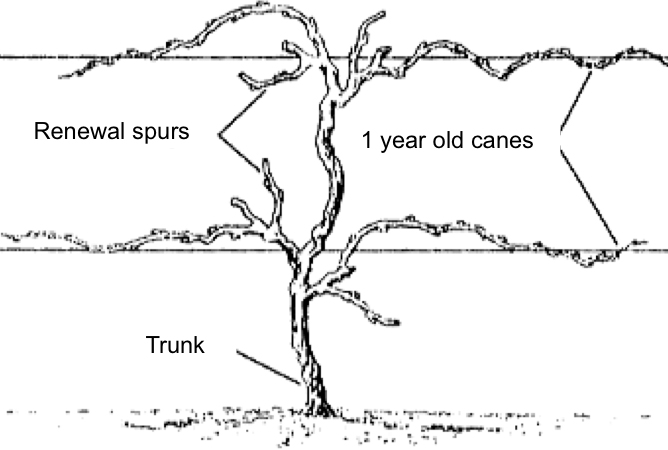
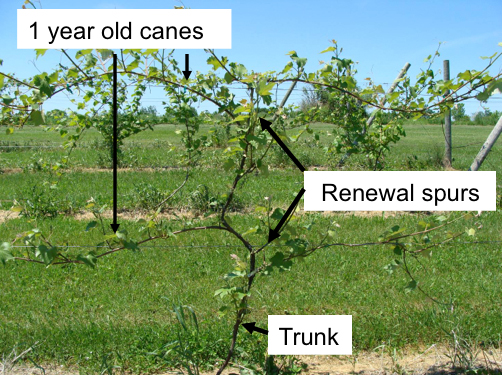
- Perennial trunk, annual cane renewal.
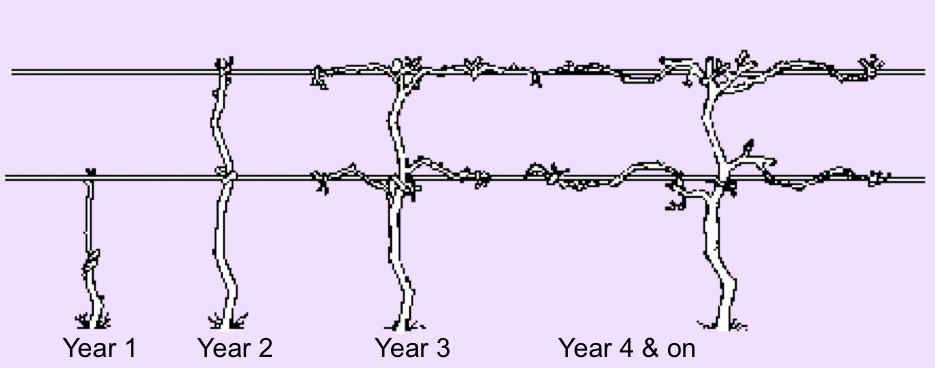
Trellis: 4-Arm Kniffin
- Two Wires
- Low wire, 3 feet
- High wire, 5 feet
First Year:
- Remove all but one strong cane
- Cut remaining cane to 2 buds
- Tie to stake for support
Second–Third Year:
- Train trunk to the top wire
- Remove all shoots between wires
- Cut shoots on the low wire to two buds
Mature Vines
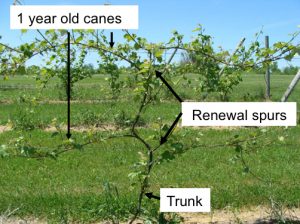
- 4 to 6 canes (1-year-old)
- 5 to 12 buds each
- 4 to 6 renewal spurs
- 2 buds each
- Total 40-60 buds per plant
(Click on thumbnails to view enlargements.)
-
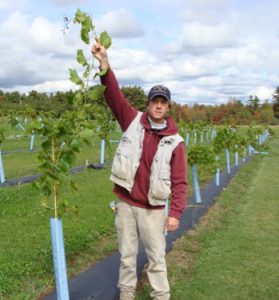
- First year.

-
- First – second year.
-
- Mature vines.
Video: Umbrella Kniffin System for Growing Grapes (YouTube)
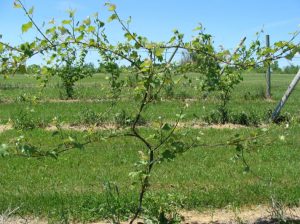
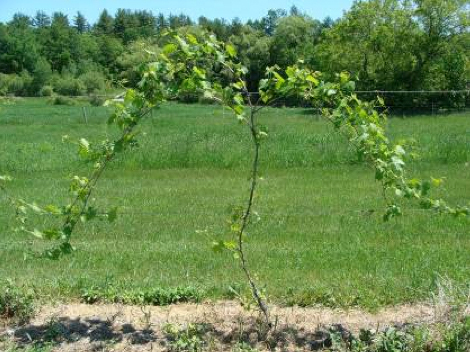
First – Second Year:
- Remove all but one strong cane
- Cut remaining cane to two buds
- Tie to stake for support
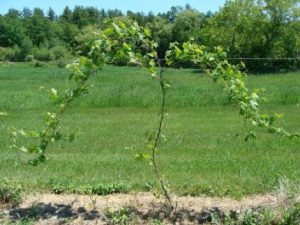
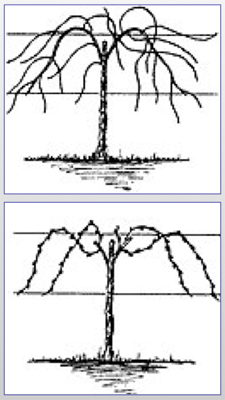
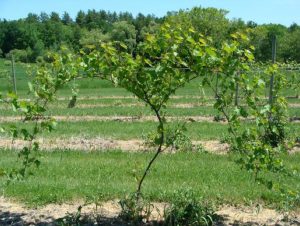
Second – Third Year:
- Train trunk to the top wire
- Remove all but two shoots at top of the trunk
- Drape over top wire, secure to low wire
Mature Vines
- 4 canes (1-year-old)
- 10 to 12 buds each
- 2 to 4 renewal spurs
- two buds each
- Total 40-50 buds per plant
Click on images to view enlargements.
-
- First – second year.
-
- Second-third year
-
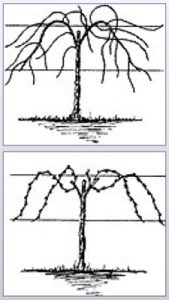
- Mature vines.
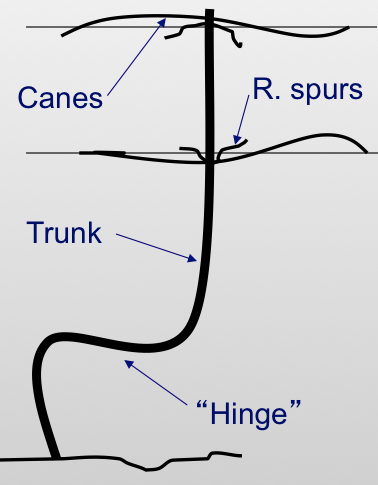 Tender Varieties & Cold Sites
- Bend 1st-year shoot 90º for ~12”
- Bend back up to form “hinge”
- Use stakes & wire to train shoot
- Pull plant off trellis in fall
- Hinge allows trunk to bend
- Cover with soil or mulch
- Return to trellis in spring
Fan System or VSP (Vertical shoot positioning)
First – Second Year:
- Remove all but one strong cane
- Cut remaining cane to two buds
Second – Third Year:
- Shorten two canes to 3-4 buds
- Remove all others
- Tie 2-4 canes to wires
- Spread to fan pattern
Mature Vines
- 4 to 6 canes (1-year-old)
- 10 to 12 buds each
- 2 to 4 renewal spurs
- 2 buds each
- Total 40-50 buds per plant
(Click on thumbnails to view enlargements.)
-
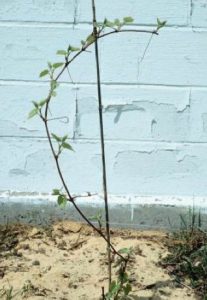
- First – second year.

-
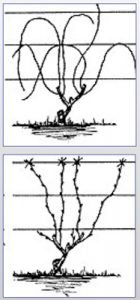
- Second – third year.

-
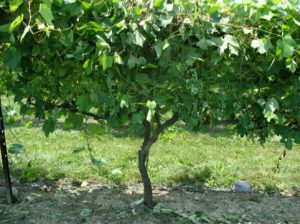
- Mature vines.
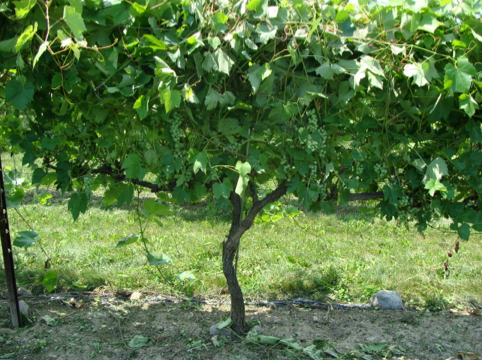
Growing Grapes
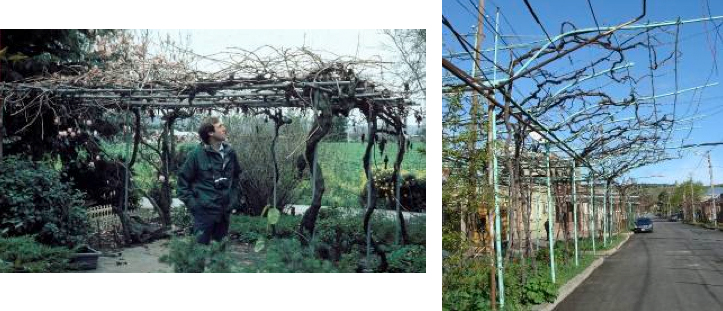 Walls, fences, arbors, etc.
- Protected, full sunlight
- Keep trunk, canes low
- Lower and cover for winter
- Prune to 40-60 buds/plant
- 5-15 buds/cane
- 4-15 canes or spurs/trunk
Pruning Grapes
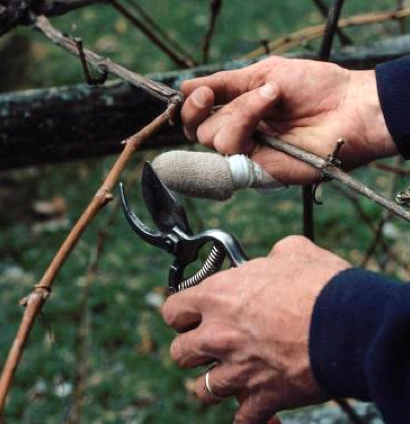 December – March
- When canes are fully dormant
Prune out
- old canes (2+ years)
- weak canes
- injured\diseased
- “bull wood” (> ½” thick)
Select 1-year old canes
- 3/8” diameter
- Chocolate brown
- Healthy (green interior)
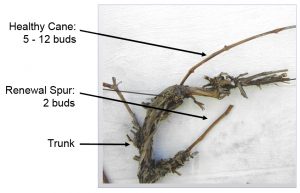
Retain 1-6 fruiting canes
- 5-12 buds each
Retain 2-6 renewal spurs
- two buds each
Fertilizing Grapes
- Maintain pH at 6-7
- Soil test every two-three years
- Spring
- Apply ~ 2oz. N, 1 oz. P & K
- Or ½ lb. 10-6-4 per plant
- ~20 lbs. N per Acre
- Mid-June
- Repeat application
Harvesting Grapes
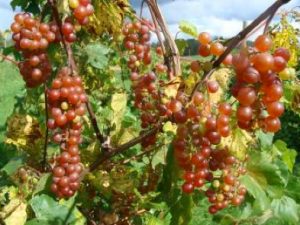 Long Season Crop
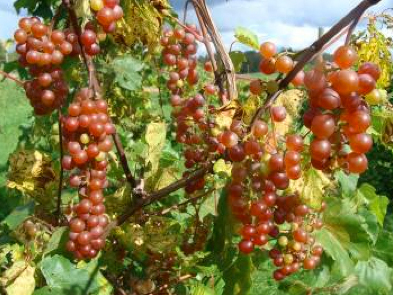
- 120-160 frost-free days
- Color before ripe
- Need to develop sweetness
- Brix: 15-20+
- Test by taste
- Won’t improve postharvest
- Yield 0-25 lbs. per plant
- 0-4 tons/acre
- 12 lbs. yields ~ 1 gal. juice
Grape Problems
Winter Injury
- Dry, light brown or gray canes
- No green within canes
- No green within buds
- Labrusca types
- -15 to -20º: bud & cane injury
- -25 or lower: trunk injury
- Vinifera hybrids
- 0 to -10º: bud & cane injury
- -15 or lower: trunk injury
Weeds
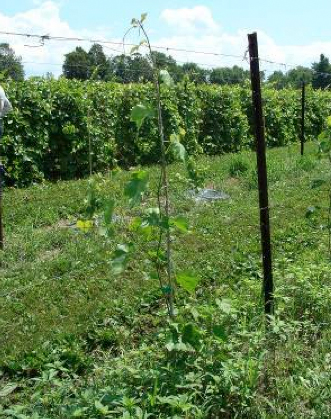
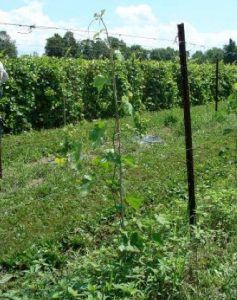 Most significant pest
- Delay establishment
- Reduce plant growth
- Reduce yield and quality
- Harbor insects and diseases
- Management
- Eliminate pre-plant
- Cultivation
- Mulch
- Some hand-pulling will be necessary!
Diseases
- Caused by fungi
- Favor moist environment
- Management Keys:
- Good air circulation
- Good pruning
- Sanitation
- Fungicides?
Black Rot
- Management
- Good air circulation
- Good pruning
- Sanitation
- Remove mummies
- Fungicides
- Apply spring to ripening
- Flint, Pristine, Ferbam
- Copper
- Apply spring to ripening
Botrytis Bunch Rot
- Management
- Good air circulation
- Good pruning
- Sanitation
- Remove mummies, debris
- Fungicides
- Apply spring to ripening
- Captan, Pristine, Elevate
- Copper
- Apply spring to ripening
Downy Mildew
- Management
- Good air circulation
- Good pruning
- Sanitation
- Remove debris
- Fungicides
- Apply late spring to ripening
- Prophyt®, Pristine®,
- Copper, Sulfur*
- Apply late spring to ripening
Powdery Mildew
- Management
- Good air circulation
- Good pruning
- Sanitation
- Fungicides
- Apply at first sign of infection
- Pristine, Sovran®, Flint®, Procure®
- Copper, Sulfur*
- Apply at first sign of infection
Insects
Management Keys:
-
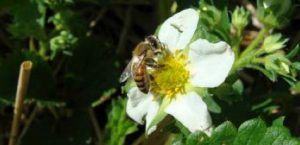
Most insects are not pests! Keep plants healthy
- Remove alternate hosts
- Especially weeds
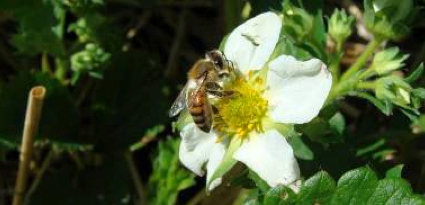
Management Options:
- Hand picking
- Predators/parasites
- Sanitation
- Insecticides
Japanese beetle
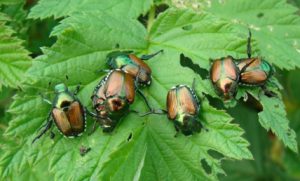
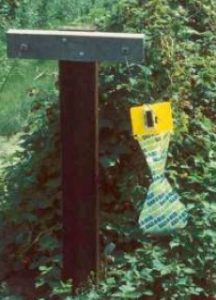 Feed on leaves, fruit
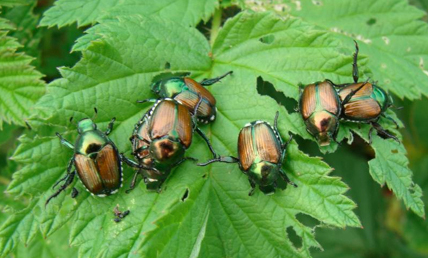

Management
- Hand picking
- Insecticides
- Sevin®, Assail®
- Neem, Surround®
- Traps: ineffective
- Grub control: ineffective
Leaf Hoppers
- Feed on leaf underside
Management
- Sanitation
- Remove debris
- Insecticides
- Provado®, Assail®, Sevin®
- JMS Stylet oil®
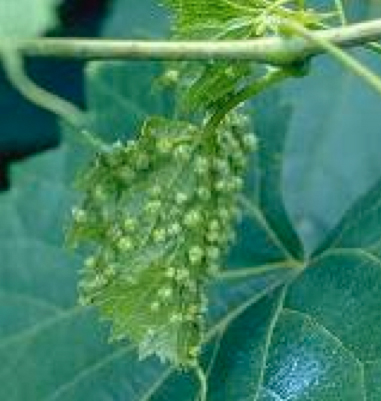
Phylloxera
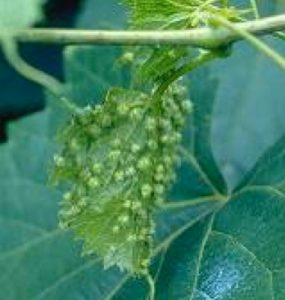 Cause galls on leaves
- Usually not significant
Management
- Remove infected leaves
- Insecticides
- Malathion, Sevin®
Spray Schedule
| When | Why | What |
|---|---|---|
| Dormant | Black Rot, Anthracnose | Lime Sulfur |
| Bud Swell | Flea Beetle | Sevin®, Pyrethrum |
| New Growth ~4” long | Black Rot | Captan Fixed Copper |
| Post Bloom | Black Rot | Captan, Fixed Copper |
| Cover Sprays 10-14 day apart | Black Rot, Botrytis Powdery Mildew | Captan, Copper, Oil? |
| Whenever | Japanese Beetle, Leafhopper | Sevin® Pyrethrum |
Spotted Wing Drosophila
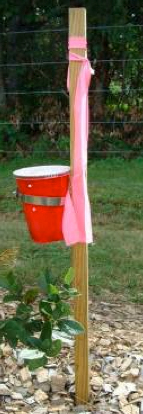
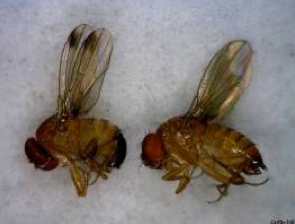
Symptoms:
- Prematurely rotten fruit
- Small, white maggots
Management
- Traps for flies
- Clean up all rotten fruit
- Insecticides
- At first sign of damage
- Delegate
Birds
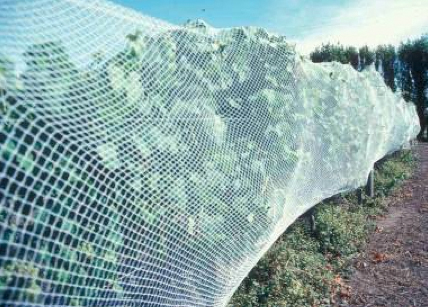
- Netting
- Best method
- Costly
- Visual deterrents
- Scarecrows, owls, tape
- Set up at ripening
- Move often
- Combine with noise
Herbicide (2,4-D) injury
- Grapes very sensitive
- Avoid lawn/brush herbicides
- Spray & granular
- Talk to your neighbor?
Maine Grapes: Bottom Line
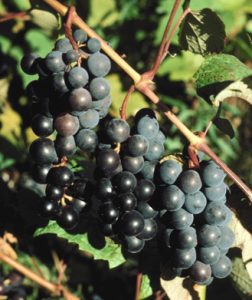 High Risk Crop
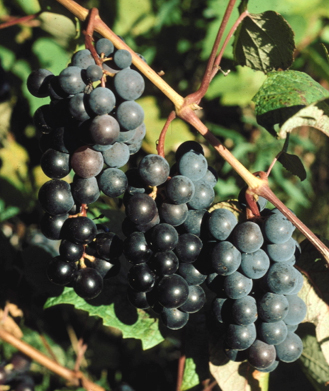
- High establishment costs
- High labor demands
- Winter injury likely
- Challenging pest complex
- Difficult to get high quality
- Questionable market
- 4 to 5 years to production
- High establishment costs
- 10,000-$15,000/A
- High maintenance costs
- $3000/year
- Mostly labor
- Returns can be variable
- $0-1000 labrusca
- $0-2000 hybrids
Optimistic View:
- New hardy varieties
- Global warming
- Market for local produce
- Specialty items
- Wine, juice, jelly, vines
- Fun to grow!
Good luck!
Grape Resources
Cold Climate Grape Production, University of Vermont, UVM Grapes: Horticulture